
Common scab of potato
Streptomyces tumemacerans
Description
Symptoms
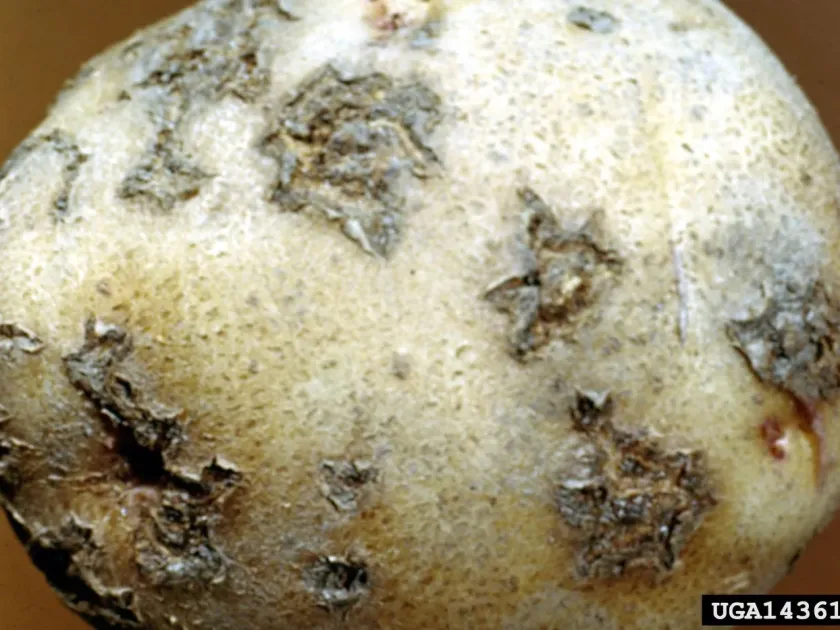
The disease primarily affects potato tubers, manifesting as superficial, raised, or deeply pitted lesions on the skin.
The texture of these spots is typically corky and brown, often causing the surface of the tuber to crack and appear scaly.
While tubers are the most noticeable site of infection, symptoms can also appear as small necrotic spots on roots and underground stems.
In severe cases, individual lesions merge, covering a significant portion of the tuber surface and distorting its overall shape.
These signs are usually most visible after harvest, although they begin to develop during the rapid growth phase of the tubers in the soil.
Pathogen
The primary causal agents are soil-borne bacteria of the genus Streptomyces, with Streptomyces tumemacerans being one of the noted species.
These organisms are saprophytic, surviving in the soil by decomposing organic matter and plant residues for many years.
They are particularly active in soils with a neutral or slightly alkaline pH, which is why liming often exacerbates the severity of the disease.
Infection occurs when bacteria enter the tuber through lenticels, stolon attachment points, or small wounds on the skin.
The biology of these pathogens is complex, as they exist as part of the soil microflora, making total eradication nearly impossible.
Conditions for development
The development of common scab is heavily influenced by dry and hot soil conditions during the critical tuber initiation period.
A soil pH above 6.0 is a primary environmental factor that promotes the rapid growth and virulence of Streptomyces bacteria.
Low soil moisture during tuber formation leaves the developing skin unprotected, allowing the bacteria to penetrate the lenticels easily.
Frequent cropping of potatoes on the same field leads to an accumulation of pathogenic spores in the topsoil layer.
Highly aerated, light, and sandy soils often experience more severe outbreaks due to the aerobic nature of the pathogen.
Why it matters
The main impact of common scab is a significant reduction in the marketability of the crop, rendering it unsuitable for retail sale.
The lesions caused by the disease break the skin barrier, leading to increased water loss and shrivelling of the tubers during storage.
These open wounds serve as entry points for secondary decay-causing organisms, which can rot the tubers in storage.
The overall quality and taste of the potato may be degraded, negatively affecting its culinary and nutritional value.
Using infected tubers as seeds continues the disease cycle and introduces the pathogen to previously clean fields.
Protection
Implementing a long-term crop rotation cycle, with at least a 4-year interval between potato crops, is the most effective management strategy.
Avoiding the application of fresh manure just before planting is crucial, as it provides a favorable medium for the pathogen.
Using physiological acidifying fertilizers, such as ammonium sulfate, can lower soil pH and create a less favorable environment for the bacteria.
Planting resistant or tolerant potato varieties is one of the most reliable ways to minimize the impact of the disease in infested soil.
- Maintain adequate soil moisture during the tuber initiation stage.
- Avoid over-liming fields used for potato production.
- Treat seed tubers with appropriate fungicides before planting.
- Use certified disease-free seed potatoes.
Discussion
No discussions yet — be the first.