
Common scab of potato
Streptomyces olivaceus
Description
Symptoms
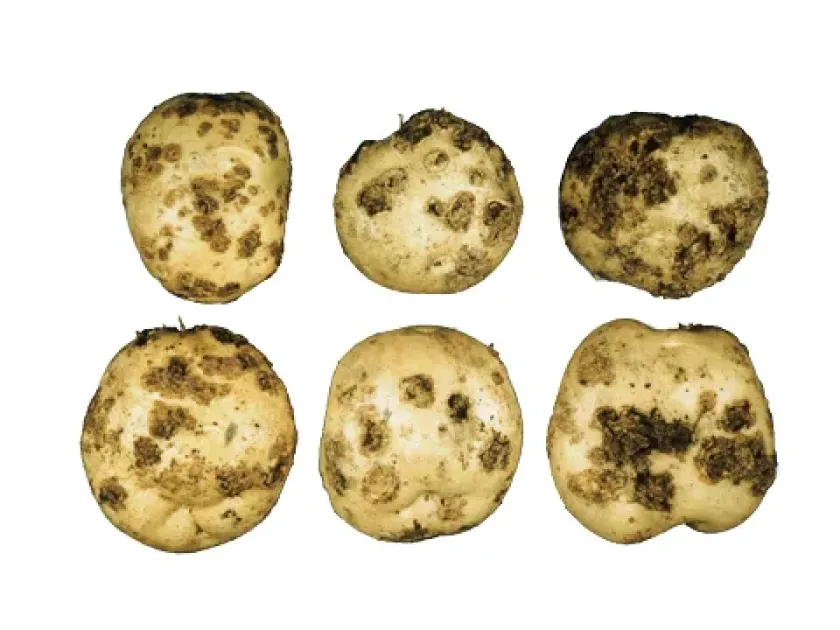
The most recognizable symptoms of common scab are superficial lesions on the tuber skin, which can vary significantly in appearance and texture.
Symptoms manifest as raised, pitted, or russetted scabs, often forming a corky layer that gives the skin a rough, scaly, or cracked appearance.
In many cases, the lesions remain superficial, affecting only the periderm, although severe infections can result in deep, unsightly pits across the surface.
The lesions may appear as circular spots, which can coalesce to cover large areas of the tuber, significantly detracting from its overall visual quality.
While the internal tissues of the potato generally remain unaffected, the physical deformity makes the produce undesirable for fresh market sale.
Pathogen
The causative agent of this disease is the actinomycete Streptomyces olivaceus, along with several other related Streptomyces species inhabiting the soil.
These organisms are Gram-positive filamentous bacteria that primarily exist as saprophytes, surviving on decomposing organic matter within the soil profile.
Streptomyces species are remarkably persistent and can remain viable in the soil for extended periods, even in the absence of a suitable host plant.
The bacteria typically enter the tubers through lenticels, natural openings, or mechanical injuries on the skin during the initial stages of tuber development.
Upon infection, they release specialized metabolites and enzymes that break down plant cell walls, leading to the formation of characteristic scab-like lesions.
Conditions for development
Common scab development is heavily influenced by soil pH, with neutral to alkaline soils (pH above 6.0) providing an ideal environment for Streptomyces activity.
Soil moisture levels play a critical role; conditions that are dry during the tuberization stage significantly increase the incidence and severity of the disease.
High soil temperatures, typically ranging from 20 to 25 degrees Celsius, are known to accelerate the growth of the pathogen and the development of infection.
The addition of large quantities of uncomposted organic matter or excessive lime application creates conditions that favor the proliferation of pathogenic actinomycetes.
Long-term monocropping of potatoes often leads to the accumulation of these bacteria in the soil, which in turn elevates the disease pressure over time.
Why it matters
The primary impact of common scab is the depreciation of the tuber's market value due to cosmetic defects that do not meet consumer standards.
Affected tubers exhibit increased susceptibility to post-harvest storage rots, as the damaged skin serves as a portal for secondary opportunistic pathogens.
Processing costs increase for the food industry, as deep scabs must be trimmed away, resulting in higher waste and reduced yield per processed kilogram.
In cases of severe infestation, the plant's physiological resources are diverted to forming defensive cork tissue, which can slightly affect total tuber size.
The aesthetic damage is often the limiting factor for commercial viability, especially for growers targeting premium retail or pre-packed consumer segments.
Protection
The most effective management strategy involves the use of resistant potato cultivars, which significantly mitigate the impact of the disease.
Maintaining optimal soil moisture through irrigation during the tuber initiation and enlargement phases is vital to preventing the establishment of the infection.
Modifying soil chemistry by applying physiologically acidic fertilizers, such as ammonium sulfate, can help suppress bacterial activity in the soil.
Implementing long-term crop rotation schemes incorporating green manures or non-host crops helps to interrupt the life cycle of the pathogen.
- Select high-quality, certified disease-free seed potatoes.
- Avoid applying fresh manure immediately before planting potatoes.
- Practice soil testing to monitor and manage pH levels effectively.
- Treat seed tubers with appropriate fungicides to reduce initial inoculum.
Discussion
No discussions yet — be the first.