
Common scab of potato
Streptomyces diastatochromogenes
Description
Symptoms
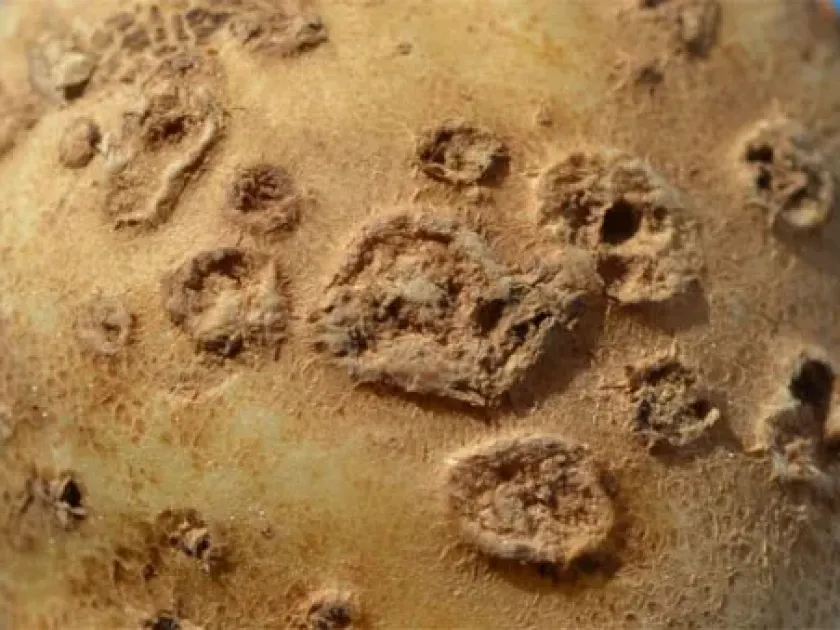
The symptoms of common scab appear as localized lesions on the surface of developing tubers, which can vary in appearance based on the host resistance.
Common forms include superficial russeting, deep-pitted lesions, or raised corky scabs that can expand and cover large portions of the tuber skin.
These lesions are caused by the potato's defense mechanism, which produces suberized (corky) tissue in response to the colonization of the pathogen.
While the tubers are the most visibly affected part, the pathogen may also infect the roots, stolons, and the lower stems of the plant.
In severe cases, the entire surface of the tuber can be covered in scabs, leading to a cracked and rough appearance that significantly lowers market value.
Pathogen
The causative agent is Streptomyces diastatochromogenes, a filamentous soil-dwelling bacterium that produces spores to survive in the environment.
This organism is a saprophyte by nature, decomposing organic matter, but it can switch to a parasitic lifestyle when it comes in contact with host plants.
It remains in the soil for years, thriving on plant debris and organic matter even in the absence of potato crops, which makes control very challenging.
The pathogen is primarily spread through infested soil particles and contaminated seed tubers used during the planting process.
Unlike true fungi, this pathogen's bacterial nature means it responds differently to treatment, often requiring integrated management strategies.
Conditions for development
Common scab development is highly favored by alkaline soil conditions, particularly when the soil pH is above 7.0.
Moisture plays a critical role; periods of dry soil during the early stages of tuber initiation increase the susceptibility of the developing skin.
Warm soil temperatures between 20°C and 25°C are optimal for the growth and infectious activity of these actinomycetes.
Heavy applications of fresh manure or lime shortly before planting raise the soil pH, creating an ideal environment for the pathogen to thrive.
Soils with coarse texture, like sandy or silty soils, tend to have poorer water retention, exacerbating the risk of infection during drought periods.
Why it matters
The primary economic impact is the reduction in marketable yield because consumers reject tubers with superficial or deep scab lesions.
Infected tubers are highly susceptible to secondary pathogens, leading to rotting during storage, which can compromise the entire harvest batch.
The disease reduces the nutritional value and cosmetic quality, making the produce unsuitable for high-end processing or fresh market sales.
Infected seed potatoes may have reduced germination rates and weakened sprouts, resulting in lower plant density and uneven field stands.
Farmers face significant losses due to the need for chemical inputs, specialized crop rotation, and the rejection of tubers at the packing facility.
Protection
Crop rotation remains the most effective long-term strategy, keeping susceptible crops away from infested fields for at least four years.
Adjusting soil pH by avoiding excessive liming and utilizing acidifying fertilizers can help inhibit the growth of the pathogen.
Maintaining consistent soil moisture during the critical tuber-setting phase is essential to protecting the skin integrity of the tubers.
Selecting resistant cultivars is a key component of integrated pest management, as some varieties are naturally less susceptible to infection.
- Using certified disease-free seed tubers.
- Applying green manure crops to improve soil microbial health.
- Avoiding the application of fresh manure just before planting.
- Utilizing bio-control agents that compete with Streptomyces.
Discussion
No discussions yet — be the first.