
Common scab of potato
Streptomyces albus
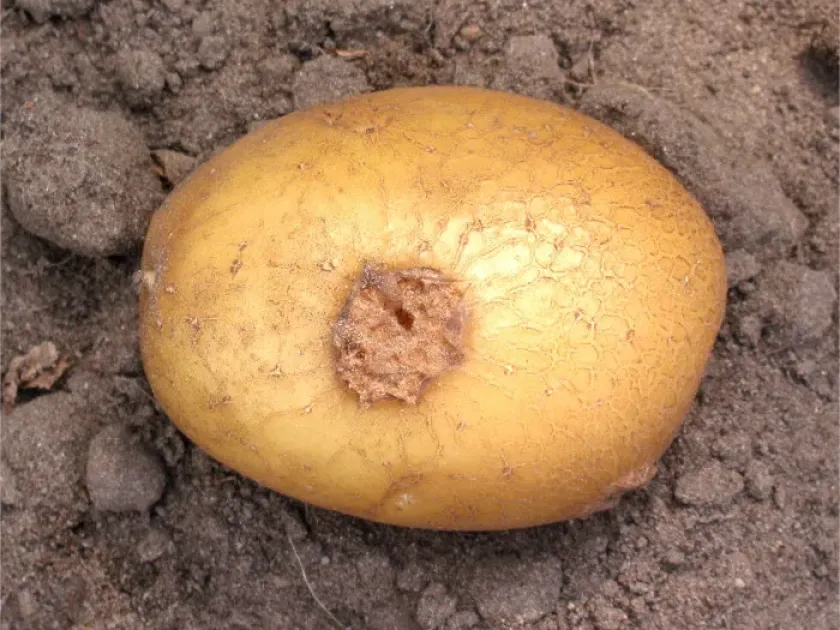
Description
Symptoms
The primary symptoms manifest as lesions on the surface of the potato tuber. These lesions begin as small spots that gradually expand and develop into corky or scab-like formations as the tuber grows.
The disease presents in several distinct forms, depending on the environment and cultivar susceptibility:
- Superficial scab — shallow, corky patches on the skin.
- Raised scab — raised, wart-like growths on the tuber surface.
- Deep-pitted scab — significant craters with raised margins, penetrating the tuber tissue.
- Russet scab — a generalized netting or cracking of the skin.
Although the internal flesh of the potato usually remains unaffected, the commercial value of the tuber is significantly compromised. The unsightly appearance makes the tubers unsuitable for fresh market sale.
If left untreated, these lesions provide entry points for opportunistic decay-causing organisms. This leads to increased rates of storage rot, further reducing the overall shelf life of the harvested potatoes.
The symptoms are most noticeable at harvest. However, in sensitive cultivars, the infection process begins early in the season when tubers are still small, potentially stunting growth if the infection is severe.
Pathogen
Common scab is caused by various species of the genus Streptomyces, with Streptomyces albus being one of the recognized causative agents. These are Gram-positive filamentous bacteria, traditionally studied as actinomycetes, that naturally inhabit soil ecosystems.
The pathogen thrives as a saprophyte, decomposing organic matter, but acts as a parasitic agent when host plants like potatoes are present. It survives in the soil for many years, making it an extremely persistent and difficult-to-eradicate threat.
The bacterium infects developing tubers primarily through lenticels, wounds, or the points of root emergence. Once the colonization of the tuber surface occurs, the bacteria release phytotoxins that induce corky tissue development.
Environmental conditions, particularly soil pH and moisture, play a decisive role in the pathogen's virulence. Streptomyces albus prefers neutral to slightly alkaline conditions, which explains why liming fields often exacerbates the incidence of scab.
The ability of the pathogen to persist in both soil and on infected seed tubers makes it a dual-threat disease. Farmers must address both soil management and seed health to effectively mitigate the risks associated with this actinomycete.
Conditions for development
Low soil moisture during the crucial stages of tuber initiation (blooming phase) is the most significant environmental trigger. Dry conditions cause lenticels to open wide, facilitating the bacterial invasion.
The addition of fresh manure or heavy liming significantly increases the risk of infection. By raising the pH levels and adding high organic content, farmers inadvertently create the perfect environment for Streptomyces albus proliferation.
High soil temperatures (between 25°C and 30°C) are optimal for the pathogen. In regions with sandy or light-textured soils that warm up quickly, the frequency and severity of scab outbreaks are considerably higher.
Soil aeration also influences the disease; well-aerated soils that remain dry are more prone to common scab. The pathogen is aerobic and thrives where oxygen is readily available in the soil matrix.
Proper irrigation management during the tuber bulking stage is a critical preventive measure. Keeping the soil consistently moist during the first few weeks after tuberization helps minimize the risk of infection.
Why it matters
The primary impact of common scab is the dramatic reduction in marketability. Even minor surface lesions are sufficient to downgrade potatoes, leading to substantial economic losses for commercial growers.
Infected tubers exhibit higher rates of moisture loss. The damaged corky skin fails to retain water, leading to shriveling and weight loss during storage, which impacts profitability for both farmers and retailers.
Quality reduction extends to processing characteristics. Tubers heavily affected by deep-pitted scab are unsuitable for the production of chips or fries, as they require excessive peeling and waste management.
Persistent presence in the field restricts the crop rotation options. Once a soil is heavily contaminated with Streptomyces albus, it remains a high-risk zone for potato cultivation for several years.
In severe cases, total yield loss through rejection can reach levels that jeopardize the viability of the entire potato enterprise, forcing producers to seek alternative fields or expensive soil amendments.
Protection
Crop rotation is the foundation of management. While it is difficult to eliminate the pathogen from the soil, a gap of 4 to 5 years between potato crops helps manage the population density of the bacteria.
Utilizing physiological acid-forming fertilizers, such as ammonium sulfate, can help lower the soil pH. Maintaining a pH below 5.5 is often sufficient to significantly suppress the growth of Streptomyces albus.
Selection of resistant cultivars is the most effective long-term solution. Breeding programs have made significant progress in developing potato varieties that can resist infection even in contaminated soils.
Seed potato treatments with appropriate fungicides can protect against the initial inoculum, but these treatments are of limited value if the soil is already heavily infested with the pathogen.
Sound agronomic practices, such as avoiding the application of fresh manure directly before planting and ensuring adequate irrigation during the tuber initiation phase, are essential components of an integrated disease management strategy.
Discussion
No discussions yet — be the first.