
Bacterial leaf stripe of sorghum
Robbsia andropogonis
Description
Symptoms
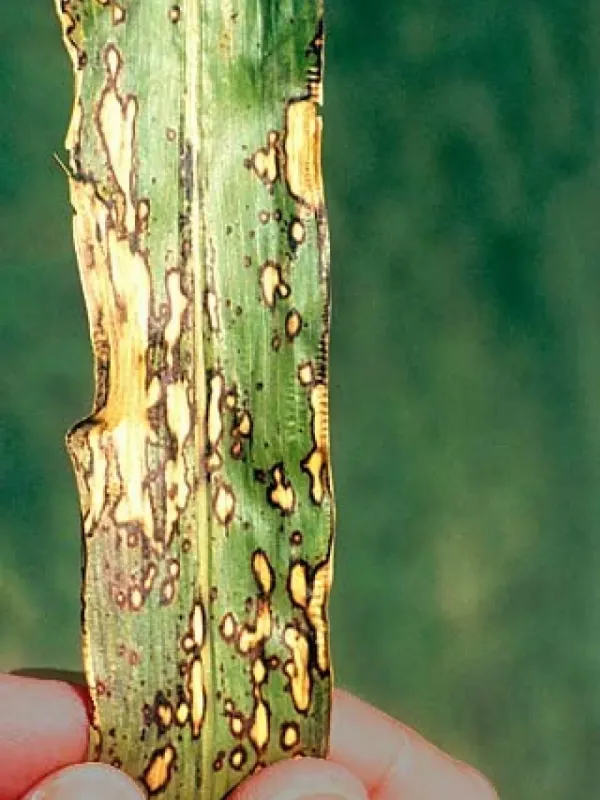
Initial symptoms are characterized by small, water-soaked, light-green spots that develop on the leaves, which eventually elongate into stripes.
These stripes typically turn red, dark brown, or purple as the leaf tissue dies, creating a distinct necrotic pattern along the leaf veins.
Under high humidity, a shiny bacterial exudate may be visible on the surface of the lesions, which dries into a thin film or crust on the leaf surface.
In severe cases, the lesions coalesce, leading to extensive leaf blight and premature senescence, which drastically reduces the total photosynthetic area of the plant.
Stalks may also be affected, showing discolored internal tissues and structural weakening, which increases the risk of lodging during strong winds.
Pathogen
The causative agent of bacterial leaf stripe in sorghum is Robbsia andropogonis (formerly Pseudomonas andropogonis). This bacterial pathogen specifically targets various grass species.
The pathogen is known for its ability to persist in crop residues and soil, functioning as a primary inoculum source for subsequent planting seasons in the same field.
Upon reaching a host, the bacteria enter through stomata or hydathodes, or via wounds caused by hail, heavy wind, or insect feeding activity.
Once inside the plant, the bacteria multiply rapidly within the intercellular spaces, secreting enzymes that degrade plant tissue and cause vascular distress.
It is a gram-negative rod-shaped bacterium that thrives in temperate and subtropical climates, often appearing during warm and humid weather conditions.
Conditions for development
Bacterial leaf stripe development is strongly favored by periods of high relative humidity and temperatures ranging from 25°C to 30°C.
Heavy rainfall, especially storms accompanied by hail, causes physical tissue damage that serves as a primary entry point for the bacterial pathogen.
Overhead irrigation systems often exacerbate the spread of the bacteria by splashing infested water droplets from symptomatic leaves onto healthy foliage.
Dense plant stands with poor air circulation create a microclimate that holds moisture longer, facilitating the infection process and secondary disease cycles.
Poor sanitation of farming equipment used across different fields can lead to the unintended transmission of Robbsia andropogonis to non-infested areas.
Why it matters
The primary economic harm is the reduction in grain yield and biomass quality, as the disease impairs the plant's ability to produce energy through photosynthesis.
Infected sorghum plants show reduced grain filling, leading to shriveled or lightweight seeds that do not meet commercial quality standards.
As the leaves die prematurely, the plant's overall vigor is compromised, making the crop more susceptible to secondary environmental stresses like drought.
In silage production, the presence of necrotic, diseased leaves degrades the nutritional value and palatability of the forage for livestock.
Large-scale outbreaks can cause significant financial losses, necessitating costly interventions and potentially impacting the export potential of the harvest.
Protection
Choosing resistant or tolerant sorghum hybrids is the most sustainable and effective strategy for managing bacterial leaf stripe in endemic regions.
Practicing long-term crop rotation, ideally avoiding grasses for several seasons, helps in breaking the life cycle of the bacteria in the soil.
Field sanitation, including deep plowing to bury crop residues, reduces the volume of the pathogen available at the start of the growing season.
Rigorous weed control is essential, as various wild grasses can act as symptomless hosts or reservoirs for the pathogen throughout the year.
While chemical control is limited, the preventive application of copper-based bactericides can be useful in specific situations to minimize damage during high-risk weather windows.
Discussion
No discussions yet — be the first.