
Ralstonia mannitolilytica
Ralstonia mannitolilytica
Description
Symptoms
The primary symptom of infection is the loss of turgor in leaves, which initially appears during the hottest parts of the day and may temporarily resolve overnight.
As the infection progresses, wilting becomes permanent, followed by leaf chlorosis and necrosis, eventually leading to the rapid collapse and death of the entire plant.
Inspection of the root system or cross-sections of the stem typically reveals characteristic darkening of the vascular bundles, confirming the destruction of conductive tissues.
In advanced stages of the disease, a turbid bacterial ooze may be observed exuding from cut stem surfaces, which serves as a reliable diagnostic indicator of bacterial wilt.
The root system of infected plants often exhibits signs of decay, appearing brown and emitting a distinct, foul odor due to the activity of the pathogen and associated secondary invaders.
Pathogen
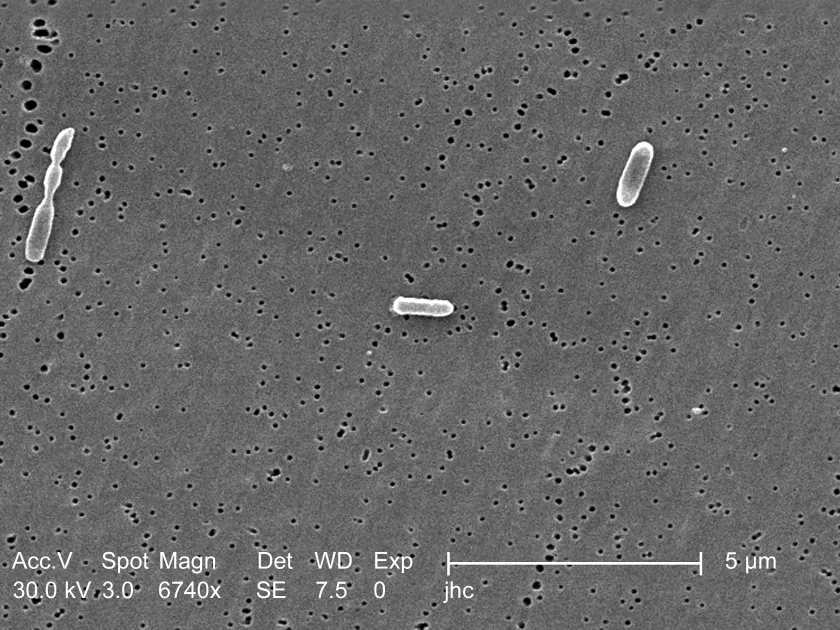
Ralstonia mannitolilytica is a Gram-negative, motile rod-shaped bacterium recognized as a significant plant pathogen capable of infecting the vascular systems of numerous agricultural crops.
This organism is categorized as a facultative parasite, possessing remarkable metabolic adaptability that allows it to survive in diverse environmental reservoirs, including soil and water systems.
Genetically related to other species within the Ralstonia genus, this pathogen is uniquely characterized by specific biochemical traits, such as its ability to ferment mannitol.
The pathogen typically gains entry into the host plant through natural openings like stomata or hydathodes, as well as via mechanical wounds located on the root system.
Upon entry, the bacterium colonizes the xylem, multiplying rapidly and producing extracellular polysaccharides that physically obstruct the movement of water and essential nutrients throughout the plant.
Conditions for development
The development of Ralstonia mannitolilytica is favored by high ambient and soil temperatures, typically ranging from 25°C to 32°C, making the disease most aggressive during the summer months.
Excessive soil moisture and poor drainage are critical factors that facilitate the rapid multiplication and motility of the bacteria within the rhizosphere.
The pathogen can persist in the soil for extended periods, utilizing alternative hosts, weeds, or decaying plant debris as long-term environmental reservoirs.
Transmission within a field often occurs through contaminated irrigation water, the use of unsterilized agricultural tools, or by soil-dwelling pests that damage root systems.
Intensive monoculture cropping systems without adequate crop rotation patterns significantly increase the inoculum load, rendering fields highly susceptible to future outbreaks.
Why it matters
The pathogenicity of this organism lies in its systemic infection process, which often leads to total crop failure within a very short timeframe in infested areas.
Infected produce loses its market value, as it becomes visibly damaged and prone to further deterioration caused by secondary soft-rot bacteria during storage or transit.
The latent phase of the infection poses a severe risk, as plants may appear asymptomatic while already harboring the pathogen, facilitating its clandestine dispersal.
Economic impacts encompass direct crop losses, significant costs associated with containment and sanitation, and the potential necessity of removing land from production.
Furthermore, the presence of this pathogen imposes strict limitations on the movement of plant material and requires the adoption of costly phytosanitary measures.
Protection
Implementing rigorous crop rotation strategies with non-host plant species is a fundamental practice to reduce the population density of the pathogen in the soil.
The use of certified, disease-free planting material is essential to prevent the introduction of the pathogen into unaffected agricultural environments.
Regular sanitation of agricultural tools and machinery is mandatory to prevent the mechanical transmission of bacteria between infected and healthy plots.
Adopting precise irrigation methods, such as drip systems, is recommended over overhead irrigation to maintain optimal soil moisture and reduce surface water contact.
In the event of an outbreak, immediate removal and destruction of symptomatic plants and adjacent soil, followed by soil disinfection with approved bactericides, are necessary to contain the spread.
Discussion
No discussions yet — be the first.