
Bacterial leaf spot of hemp
Pseudomonas cannabina
Description
Symptoms
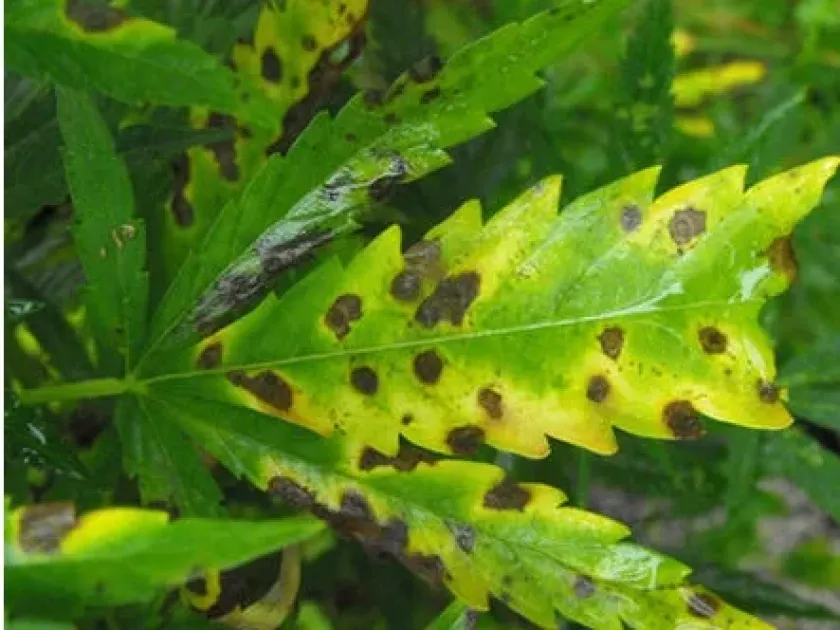
The first clinical signs include small, water-soaked spots on leaves that rapidly enlarge and become necrotic, often turning dark brown or black.
A distinctive yellow chlorotic halo often surrounds the necrotic lesions, which is a classic indicator of the toxins produced by Pseudomonas species.
Under conditions of high relative humidity, a glistening bacterial exudate may be visible on the surface of the lesions, containing millions of bacterial cells.
As the disease progresses, leaves may curl, shrivel, and undergo premature senescence, leading to significant defoliation and reduction in photosynthetic activity.
- Water-soaked spots evolving into necrotic lesions.
- Characteristic chlorotic halos surrounding lesions.
- Leaf distortion and marginal necrosis.
- Bacterial oozing during moist weather.
- Reduced plant vigor and biomass.
Pathogen
The causative agent of this disease is the phytopathogenic bacterium Pseudomonas cannabina, a member of the Pseudomonadaceae family.
It is a gram-negative rod-shaped bacterium known for its ability to invade and colonize the vascular and parenchymal tissues of hemp plants.
The pathogen utilizes type III secretion systems to deliver effector proteins into host cells, effectively suppressing plant immunity and facilitating colonization.
The bacterium is known to persist in soil debris and infected seeds, allowing it to survive between growing seasons and initiate primary infections.
Transmission primarily occurs through water splashing during rainfall, irrigation, or contact with contaminated machinery and tools in the field.
Conditions for development
Bacterial leaf spot thrives in warm, humid climates, where optimal temperatures for bacterial multiplication range from 20°C to 28°C.
Prolonged leaf wetness caused by heavy rains, frequent dew, or overhead irrigation is essential for the bacteria to enter through stomata.
High plant density increases humidity within the canopy, preventing rapid drying of foliage and thus favoring the rapid spread of the pathogen.
Physical injuries resulting from hail, insect damage, or mechanical cultivation provide open wounds that facilitate systemic bacterial infection.
The disease cycle can be completed rapidly under favorable conditions, often leading to secondary outbreaks throughout the vegetative phase.
Why it matters
The infection leads to reduced photosynthetic capacity, which negatively impacts the quality and yield of fiber and biomass in hemp crops.
Severe outbreaks can cause significant defoliation, leading to stunted growth and potentially crop failure in highly susceptible cultivars.
In addition to yield loss, the disease may affect the quality of secondary metabolites, potentially influencing the crop's industrial or medical utility.
Early-season infections are particularly damaging, as they can weaken the plant's structural integrity, making it prone to lodging and secondary pathogens.
Economic losses arise not only from reduced output but also from the increased costs associated with diagnostic testing and chemical control measures.
Protection
The most reliable control strategy involves the use of pathogen-free, certified seeds to prevent the introduction of the bacteria into new fields.
Cultural practices such as strict crop rotation help reduce the soil-borne inoculum levels, preventing build-up of the pathogen over several years.
Deep plowing of crop residues is recommended to accelerate decomposition and reduce the survival of bacteria in the soil environment.
Applications of copper-based bactericides can be effective in limiting the spread if applied preventively or at the very onset of symptoms.
Integrated pest management strategies are crucial to minimize insect damage, thereby reducing the entry points available for the bacterial pathogen.
Discussion
No discussions yet — be the first.