
Plant pseudomonadosis
Pseudomonadales
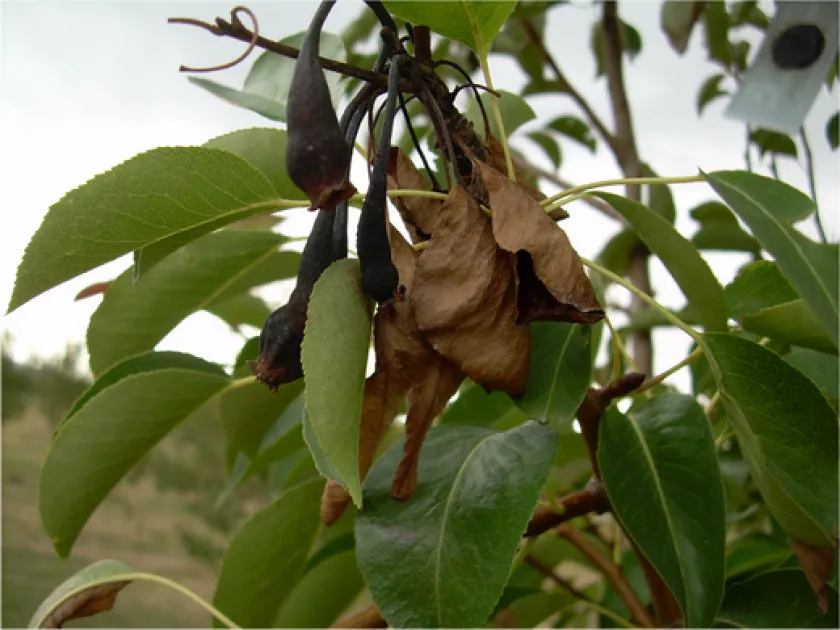
Description
Symptoms
Common symptoms include water-soaked lesions on leaves, which may later develop into dark, necrotic spots often surrounded by a characteristic yellow halo.
Under high humidity, an opaque, sticky bacterial ooze is often visible on the surface of the lesions, containing large numbers of viable bacterial cells.
Vascular system infection can cause systemic wilting, where the plant collapses despite adequate moisture, often showing browning or discoloration inside the stems.
Fruits may develop soft, sunken spots or localized rot that expands rapidly, compromising the structural integrity and marketability of the produce.
Severe infestations lead to premature leaf drop, stunted shoot development, and the eventual death of the affected plant organs or the entire plant.
Pathogen
Plant pseudomonadosis refers to a range of diseases caused by phytopathogenic bacteria belonging to the order Pseudomonadales, primarily within the genus Pseudomonas.
These bacteria are gram-negative, rod-shaped, and possess flagella, enabling them to move through water films on the plant surface to locate infection sites.
They gain entry into plant tissues via natural openings like stomata and hydathodes or through wounds caused by pruning, insect feeding, or environmental stressors.
Once inside, the bacteria multiply rapidly in the intercellular spaces and secrete extracellular enzymes that degrade plant cell walls, leading to tissue collapse.
The pathogen thrives in plant debris, infested seeds, and contaminated soil, allowing it to persist and re-infect new host plants during the subsequent growing season.
Conditions for development
High relative humidity and the presence of free moisture (dew or rain) are essential for the dissemination and successful infection of host plants by Pseudomonas.
The disease development is favored by mild to warm temperatures, typically ranging from 20°C to 28°C, which accelerate the bacterial metabolism.
Poor aeration in greenhouses and dense canopy structures prevent the leaves from drying quickly, maintaining the conditions necessary for bacterial colonization.
Injuries caused by frost, hail, or agricultural machinery provide direct gateways for the bacteria to penetrate the internal tissues of the host.
Improper irrigation practices, such as overhead sprinkling, facilitate the splashing of contaminated water onto healthy leaves, promoting the spread of the disease.
Why it matters
Pseudomonadosis poses a significant threat to global agriculture, affecting diverse high-value crops including tomatoes, beans, peppers, and various orchard fruits.
The disease reduces the photosynthetic capacity of plants, leading to decreased yields, poor growth, and a significant decline in product quality.
Harvested produce infected with Pseudomonas species is prone to rapid post-harvest breakdown, resulting in massive economic losses during storage and transit.
The rapid life cycle of the bacteria allows for explosive epidemics in fields or greenhouses if environmental conditions remain conducive for an extended period.
Once established in a production area, these pathogens can be difficult to eradicate due to their ability to survive in the soil and on various alternative weed hosts.
Protection
Integrated disease management begins with the use of clean, pathogen-free seeds and planting material, complemented by the selection of resistant cultivars.
Cultural practices such as crop rotation, proper sanitation, and the removal of infected plants are fundamental to reducing the initial inoculum levels in the field.
- Ensure good ventilation to keep foliage dry.
- Implement drip irrigation to prevent surface wetness.
- Sanitize tools regularly to avoid cross-contamination.
- Manage insect populations that may serve as vectors.
Copper-based bactericides and fungicides are widely used to create a protective barrier on the plant surface, limiting the success of bacterial entry.
Biological control agents, including beneficial bacteria and antagonistic microorganisms, can be deployed to compete with and suppress Pseudomonas populations sustainably.
Discussion
No discussions yet — be the first.