
Bacterial leaf spot
Moraxellaceae
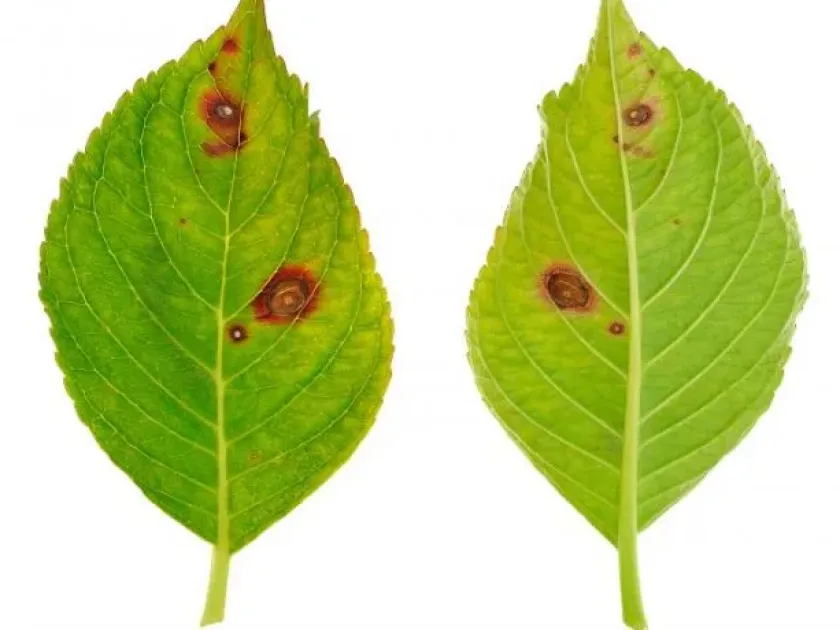
Description
Symptoms
The primary sign of infection is the appearance of water-soaked spots that eventually turn brown or dark in color. These spots may have a yellow halo, indicating active bacterial toxin activity.
Under high humidity conditions, bacterial exudate may be visible on the surface of affected leaves and stems in the form of droplets or a film.
As the disease progresses, the affected tissues die off, forming necrotic zones of irregular shapes, which leads to the gradual drying of the leaf blade.
Stem infection causes tissue softening, which eventually leads to lodging or wilting of the entire plant due to the disruption of vascular conduction.
The root zone is also susceptible to rot, causing growth retardation, yellowing of leaves, and subsequent death of the crop in the early stages of development.
Pathogen
The pathogens of the disease group associated with the Moraxellaceae family are Gram-negative aerobic bacteria. In agronomy, they often act as opportunistic pathogens or co-agents during the development of bacterial necrosis.
These microorganisms are characterized by rod-shaped or coccobacillary cell structures. They possess high metabolic activity, allowing them to rapidly colonize damaged plant tissues.
Bacteria of this family can produce specific enzymes that break down plant cell walls, which facilitates the penetration of the pathogen into the plant organism.
Transmission occurs through contaminated seeds, plant debris, as well as insect vectors that transfer bacteria from diseased plants to healthy ones.
In addition to primary infection, these bacteria are often found within complex microbial communities, increasing the aggressiveness of other plant pathogens during disease outbreaks.
Conditions for development
Optimal conditions for the development of the disease are high relative humidity levels, exceeding 80 percent.
A temperature range between +20 and +28 degrees Celsius is considered the most favorable for the active multiplication of bacterial cells and their colonization of plants.
Frequent rainfall, overhead irrigation, or the presence of heavy dew on plants promote the rapid spread of the infection throughout the field.
Mechanical damage caused by hail, insects, or improper field operations serves as an entry point for the pathogen into the plant.
Deficiency of nutrients or weakened plant immunity due to adverse environmental conditions drastically increases the susceptibility of crops to bacterial infection.
Why it matters
The main harm consists of a significant loss of marketability, rendering the produce unsuitable for commercial sale.
The disease provokes a decrease in photosynthetic intensity, leading to general plant stunting and reduced total yield metrics.
During epiphytotic development, the pathogen can destroy up to 50–70 percent of vegetable or grain crops within a short period.
The presence of infection in storage facilities contributes to rapid spoilage of fruits, as the bacteria easily transition into an active rot phase.
Long-term persistence of bacteria in the soil and on plant debris creates risks for future crop rotations, making it difficult to grow susceptible crops on infested sites.
Protection
To prevent the spread of the disease, it is necessary to strictly follow crop rotation, excluding the return of susceptible crops to the same area for at least 3–4 years.
The use of certified and treated seed material serves as a primary barrier, protecting future crops from early-stage infection.
Timely management of insect pests, which act as mechanical vectors of the bacterial infection, is a critical control measure.
The application of copper-based fungicides and bactericidal agents helps to suppress primary infection centers and slow down the spread of the disease in crops.
- Deep plowing to destroy plant debris.
- Spatial isolation of fields.
- Timely removal and destruction of heavily affected plants.
- Optimization of irrigation and nitrogen fertilization.
Discussion
No discussions yet — be the first.