
Mollicutes
Mollicutes
Description
Symptoms
The most common symptom caused by mollicutes is yellowing, often called "yellows," which affects the foliage due to the disruption of chlorophyll synthesis and sugar transport.
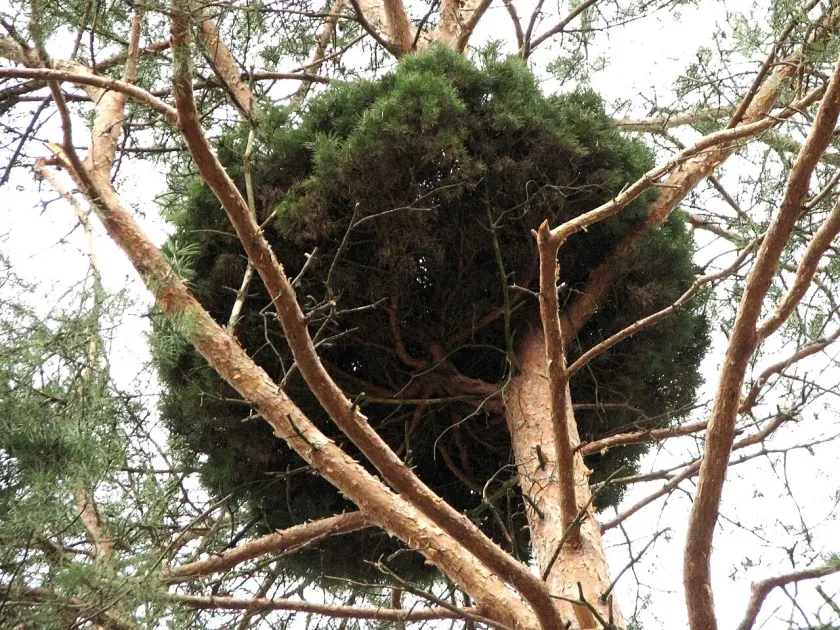
Plants often exhibit "witches' broom" symptoms, characterized by the proliferation of axillary buds resulting in dense, stunted, and bushy growth patterns instead of normal, healthy stems.
Reproductive development is frequently disrupted, leading to phyllody, where flowers are transformed into leaf-like structures, or virescence, where petals turn green and sterile.
General dwarfing is a hallmark of infection; the internodes become shortened, and the entire plant assumes a stunted, bushy appearance that significantly deviates from the normal phenotype.
Root systems in infected plants often appear underdeveloped or necrotic, which impairs the plant's ability to take up water and nutrients, further exacerbating the symptoms of wilting.
Pathogen
Mollicutes are a class of bacteria distinguished by the absence of a cell wall. In agriculture, the most significant members are phytoplasmas and spiroplasmas, which are specialized pathogens that colonize the phloem tissue of plants.
These organisms have small genomes and lack the genetic machinery to synthesize essential components, making them obligate parasites that depend entirely on the host plant for survival.
Their life cycle is inextricably linked to insect vectors, particularly leafhoppers and planthoppers. The pathogen replicates within the insect's gut and migrates to the salivary glands, where it is injected into the plant.
Once inside the plant, mollicutes multiply within the sieve tubes and disrupt the translocation of photosynthates, leading to widespread systemic physiological disorders.
Because they lack a cell wall, they are resistant to common antibiotics like penicillin. However, they are sensitive to tetracyclines, though this treatment is usually impractical in large-scale field applications.
Conditions for development
The distribution of mollicutes is governed by the population dynamics of their insect vectors. Warm, arid environments typically favor the migration and reproduction of these insects.
Field density and poor management of alternative host plants are critical drivers of disease spread. Mollicutes often persist in perennial weeds, acting as reservoirs during the winter.
The movement of infected nursery stock is a primary cause of long-distance transmission. Because the pathogen is systemic, it spreads throughout the entire plant, ensuring that any propagated material remains infected.
Favorable weather conditions that accelerate plant metabolism and insect activity can lead to rapid disease outbreaks during the growing season.
Lack of crop rotation and neglect of surrounding vegetation often facilitate the persistence of the pathogen in the agricultural landscape, creating a continuous cycle of infection.
Why it matters
Mollicute infections are responsible for significant losses in a wide range of economically important crops, including fruits, vegetables, and ornamentals, causing substantial yield reductions.
Marketable quality is severely degraded; fruit size and flavor are often compromised, making the produce unsuitable for sale or long-term storage.
The chronic nature of these diseases often necessitates the removal and destruction of entire orchards or fields, leading to massive financial losses for producers.
Because these pathogens are systemic, they weaken the overall vigor of the plant, making it more susceptible to opportunistic secondary infections and environmental stressors.
The difficulty of early detection means that infected plants often serve as invisible sources of inoculum, spreading the disease to healthy plants before symptoms become evident.
Protection
Strict phytosanitary protocols are essential, including the use of certified pathogen-free planting material to prevent the introduction of the disease into new areas.
Vector management is the most critical control strategy; this involves the application of insecticides to reduce populations of leafhoppers and other known carriers during peak migration times.
Sanitation practices, such as the removal and destruction of infected plants and the elimination of weeds that act as alternate hosts, are vital for breaking the disease cycle.
Implementing isolation zones or protective covers in high-value greenhouse operations can effectively prevent insect vectors from reaching the crop.
Ongoing research into breeding for genetic resistance remains the most sustainable approach to mitigating the damage caused by mollicutes in large-scale agriculture.
Discussion
No discussions yet — be the first.