
Milkweed yellows
Milkweed yellows
Description
Symptoms
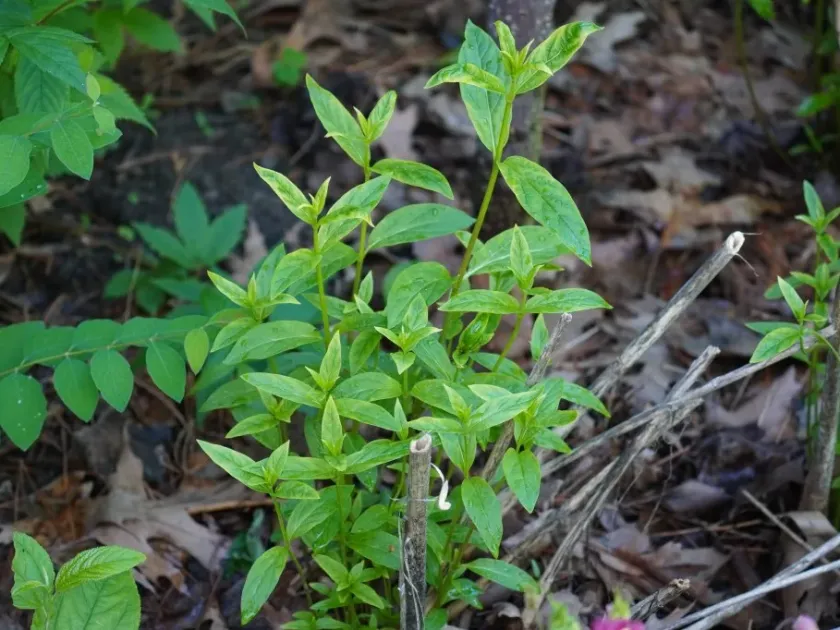
The primary symptom of Milkweed yellows is yellowing or chlorosis, which initially appears on young leaves and the growing tips of the plant. As the disease progresses, the entire foliage may lose its green color and turn pale yellow or lime-green.
Plants often exhibit severe morphological changes, including the development of "witches' brooms." This is characterized by the proliferation of stunted, spindly lateral shoots that sprout from a single node, giving the plant a dense, bushy appearance.
Reproductive organs are significantly affected by the infection. Flowers frequently show signs of virescence, where petals turn green, or phyllody, where floral parts develop into leaf-like structures, rendering the plant sterile.
General growth is severely inhibited. Infected milkweed plants usually stop growing in height, and the root system begins to wither due to the lack of sugars normally transported from the leaves via the phloem.
In later stages of the disease, the entire plant may show premature senescence and wilting. The combination of chlorosis, stunting, and reproductive failure makes infected plants easily recognizable in a population.
Pathogen
Milkweed yellows is a systemic plant disease caused by phytoplasmas, which are specialized bacteria belonging to the mollicutes class. These pathogens lack a cell wall and reside exclusively within the phloem sieve elements of their host plants.
The causative agent is closely related to the Aster Yellows (AY) phytoplasma group. Because they cannot survive outside a host, phytoplasmas rely entirely on their hosts to provide the necessary environment for replication and transmission.
Transmission occurs specifically through insect vectors, most notably phloem-feeding leafhoppers such as Macrosteles quadrilineatus. Once the insect ingests the phytoplasma from an infected plant, it carries the pathogen internally for the remainder of its life.
The disease is considered a major threat to various plants within the Apocynaceae family, specifically the Asclepias (milkweed) genus. Once inside the plant, the pathogen spreads through the sieve tubes, colonizing all systemic parts of the host.
As obligate parasites, phytoplasmas cause fundamental disturbances to plant physiology. They effectively turn the plant into a reservoir, ensuring that any feeding insect acquires the infection, thus continuing the disease cycle within the ecosystem.
Conditions for development
The spread of Milkweed yellows is highly dependent on the activity of leafhopper populations. Warmer spring and summer temperatures favor the movement and feeding patterns of these vectors, which are the main engines of the epidemic.
Environmental conditions that allow for the year-round survival of vectors and reservoir plants are critical. In regions with mild winters, the phytoplasma can overwinter in perennial weeds or herbaceous hosts, maintaining a persistent inoculum source.
Optimal temperature ranges between 20°C and 25°C facilitate the rapid multiplication of phytoplasmas within both the plant and the insect vector. Heat stress or excessive dry conditions may impact vector behavior, but generally do not cure the disease.
Field margins and areas with poor weed management are high-risk zones. Many wild plant species act as asymptomatic hosts, keeping the pathogen present even when the target milkweed species appear healthy.
The presence of dense vegetation around planting sites often contributes to localized outbreaks. This creates a bridge for leafhoppers to migrate from wild infected areas into domestic or cultivated patches of milkweed.
Why it matters
Milkweed yellows causes severe economic and ecological harm by preventing seed set and reducing the longevity of the plants. Infected milkweed colonies often collapse within a few seasons, leading to significant loss of biodiversity.
For conservationists and nurseries, the main threat is the complete sterilization of the plants. Since affected milkweeds cannot produce viable seeds, the genetic potential of the population is lost, and the plant cannot regenerate naturally.
The disease depletes the resources of the plant, as the disrupted phloem prevents the translocation of carbohydrates. This systemic exhaustion leaves the plant vulnerable to secondary infections, such as root rot or environmental stress.
Rapid spread within a garden or a natural habitat is common once the vector population reaches a certain density. This creates a cycle where more plants are infected, leading to more vectors, and eventually wiping out the entire local host population.
Control of the disease is hampered by the inability to treat systemic phytoplasma infections. Once a plant is symptomatic, it acts as an infection hub, posing a constant risk to all neighboring host plants.
Protection
The most effective strategy is the immediate removal and destruction of all symptomatic plants. Roguing infected individuals is essential to reduce the inoculum level and protect the remaining healthy plants in the area.
Integrated pest management must focus on controlling leafhopper populations. Regular application of systemic insecticides during peak migration periods can reduce the frequency of disease transmission by minimizing vector feeding.
Sanitation practices involving the removal of weeds around milkweed patches are mandatory. Eliminating alternative hosts helps break the pathogen’s cycle and reduces the number of sources from which insects can acquire the phytoplasma.
Propagation should only be done using certified, disease-free material. Avoid collecting seeds or cuttings from plants that show any signs of stunted growth or abnormal yellowing, as phytoplasmas can be latently present.
Monitoring the field for early signs is critical. Early detection allows for a quicker response, potentially containing the outbreak before it spreads through the entire colony or crop, thereby saving surrounding plants from infection.
Discussion
No discussions yet — be the first.