
Micromonosporosis
Micromonospora chalcea
Description
Symptoms
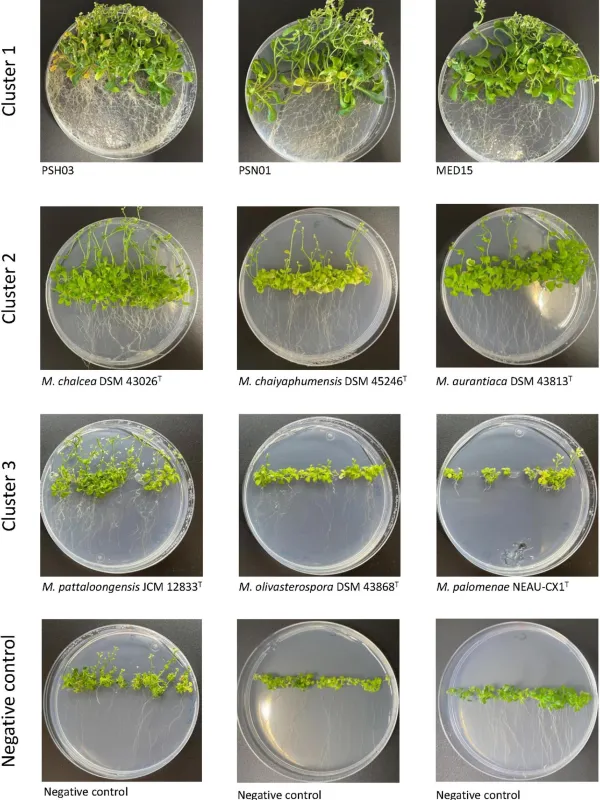
The primary symptom of the disease is the suppression of root system growth, which leads to stunted development of the entire plant.
Seedlings often exhibit browning and necrosis of primary roots, which can turn dark gray due to the colonization of the bacterial mycelium.
Plants affected by the disease frequently show signs of chlorosis, caused by the impaired uptake of water and essential nutrients by damaged roots.
In cases of severe infection, rotting areas may develop on the roots, especially in high-moisture conditions, which can lead to seedling damping-off.
Diagnostic identification under a microscope reveals the characteristic fine, branching filaments that are specific to the Micromonospora genus.
Pathogen
The causative agent of the disease is Micromonospora chalcea, a species of soil actinomycetes belonging to the order Actinomycetales. These are gram-positive, aerobic bacteria that form a branching mycelium.
This microorganism is widely distributed in various soil types, particularly those rich in organic matter. They are known for their ability to produce various biologically active substances.
While Micromonospora chalcea generally exists as a saprophyte, it can exhibit pathogenic properties toward the roots and seedlings of various agricultural crops under specific stress conditions.
Unlike many other pathogens, these actinomycetes are capable of surviving for long periods in the soil by forming spores that are highly resistant to environmental stressors.
The interaction between the pathogen and the plant rhizosphere is complex, often depending on the overall microbial balance of the soil environment.
Conditions for development
The disease tends to develop most aggressively in heavy, waterlogged soils where aeration is poor and oxygen levels are restricted.
Moderate temperatures during the active growing season provide the ideal environment for the proliferation of Micromonospora chalcea in the soil profile.
Soil pH levels play a significant role, as the pathogen generally thrives in neutral to slightly alkaline environments.
The presence of uncomposted plant debris provides an abundant food source, encouraging the initial growth and spread of the pathogen population.
Monocropping practices often lead to an accumulation of the pathogen in the topsoil, increasing the risk of infection for subsequent planting cycles.
Why it matters
The damage caused by micromonosporosis primarily includes a reduction in seed germination and the loss of young seedlings, leading to reduced crop stands.
Compromised root systems restrict the plant's ability to absorb nutrients, significantly impacting growth and final yield potential.
The disease often serves as an entry point for secondary pathogens, contributing to the development of complex root rot diseases.
Plants that survive initial infection often remain weakened throughout their life cycle, resulting in lower product quality and harvest volume.
Economic impacts include the need for reseeding, additional labor, and the potential for long-term soil health degradation if left unmanaged.
Protection
Crop rotation is the most effective preventative measure to break the life cycle of the pathogen and prevent its buildup in the soil.
Improving soil drainage and physical structure is essential for maintaining proper aeration and reducing the moisture levels favored by the pathogen.
Treating seeds with high-quality systemic fungicides or biological seed dressings can provide protection during the critical early stages of development.
Balanced fertilization and the use of well-composted organic matter help promote plant vigor and strengthen natural resistance to infection.
- Implementing soil aeration techniques.
- Using biological antagonists for soil treatment.
- Correcting soil pH to unfavorable levels for the pathogen.
Discussion
No discussions yet — be the first.