
Micromonosporosis
Micromonospora
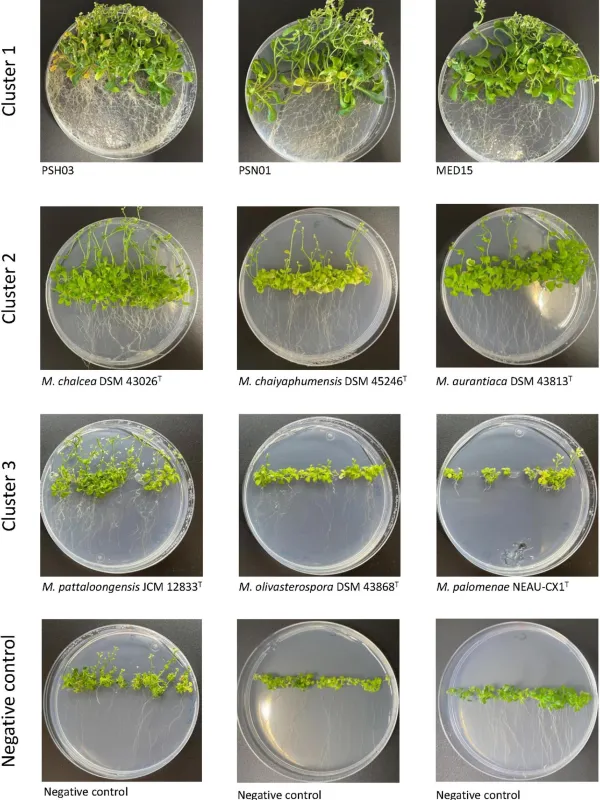
Description
Symptoms
The primary sign of infection is yellowing and wilting of the lower leaves, which gradually spreads up the stem. Plants become stunted and appear depressed.
When inspecting the root system, necrosis and softening of tissues are observed. The roots acquire a brown or dark brown hue and gradually rot, which leads to the death of the plant.
A faint coating can sometimes be seen on the affected areas of roots and stems. However, the disease often manifests latently until the plant begins to lose turgor rapidly during daylight hours.
Another characteristic symptom is the deformation of roots and the blockage of the vascular system, which prevents the normal transport of water and nutrients from the soil.
In cases of severe disease progression, plants may lodge, as the root system is unable to hold the aerial part in an upright position due to extensive rot processes.
Pathogen
The causative agent of the disease is bacteria of the genus Micromonospora, which belong to the group of actinomycetes. These are Gram-positive microorganisms that usually live in the soil as saprotrophs, decomposing organic residues.
Under certain conditions, these bacteria exhibit pathogenic properties toward higher plants. They form characteristic mycelial structures producing single spores at the ends of hyphae, which gave the genus its name.
Microorganisms are capable of surviving in the soil substrate for a long time by forming resistant structures. Their life cycle is closely linked to the mineralization processes of organic matter in the rhizosphere.
The pathogen can affect both the root system and the root collar of plants. Infection penetrates through micro-cracks or tissue damage caused by pests or mechanical factors.
The biology of Micromonospora is characterized by high adaptability, which makes it difficult to control the spread of this pathogen in intensive farming conditions.
Conditions for development
High soil moisture and poor aeration promote the development of micromonosporosis. Water stagnation in the root zone is a critical factor for bacterial activation.
Optimal temperatures for pathogen growth are in the range of 20–28 degrees Celsius. Waterlogged and heavy-textured soils are most prone to the risk of infection.
Violation of crop rotation and monoculture contribute to the accumulation of pathogenic inoculum in the soil. The more organic residues left after harvesting, the higher the bacterial population density.
Damage to the root system by pests (such as wireworms or nematodes) significantly increases the probability of infection by opening "gates" for pathogens.
The use of unverified seed material or infected seedlings often becomes the primary source of initial infection in new fields or greenhouses.
Why it matters
Micromonosporosis causes serious damage to yield, leading to premature plant death. Losses can reach significant volumes in the early stages of plant development.
The disease negatively affects product quality: fruits are formed smaller, and plants lose immunity to other secondary infections due to their weakened state.
A high degree of infection leads to sparse crop stands, making it impossible to achieve the planned yield and leading to additional costs for reseeding.
The pathogen can persist in the soil for a long time, limiting the use of affected areas for sensitive crops for several years.
The economic damage is exacerbated by the need for expensive protective measures and the costs of soil disinfection in protected ground.
Protection
The main method of control is adherence to crop rotation, which excludes returning susceptible crops to the same place for at least 4–5 years.
It is important to ensure proper drainage and soil aeration to eliminate moisture stagnation. It is necessary to maintain an optimal soil pH balance.
It is recommended to use healthy planting material and treat seeds with certified preparations. The use of biological fungicides based on antagonists helps to reduce the infectious background.
- Deep plowing to incorporate plant residues.
- Control of soil pest populations.
- Regular application of organic fertilizers to stimulate beneficial microflora.
- Removal and destruction of diseased plants with a root ball.
In greenhouses, an effective preventive method is soil sterilization or complete substrate replacement when outbreaks are detected.
Discussion
No discussions yet — be the first.