
Liberibacter
Liberibacter
Description
Symptoms
Symptoms vary significantly depending on the host species. A common characteristic is chlorosis, beginning with the yellowing of leaf margins.
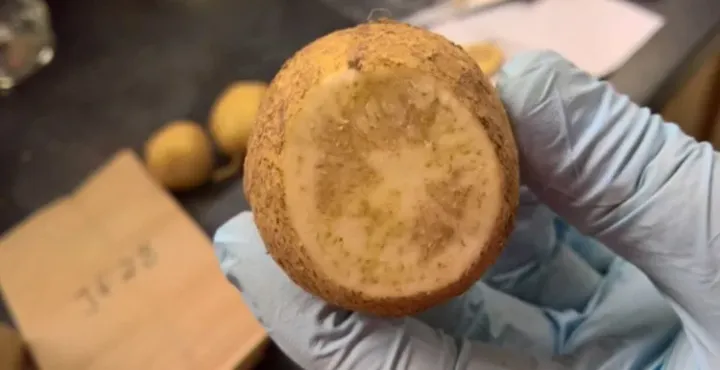
In nightshade crops like potatoes and tomatoes, symptoms include upward leaf curling and a characteristic purple or reddish discoloration.
Infected plants often show stunted growth, shortened internodes, and produce weak, underdeveloped fruits or tubers.
In citrus, the infection causes Huanglongbing (HLB), where fruits remain small, misshapen, and bitter even when mature.
The root systems of infected plants gradually decay, eventually leading to the wilting and total death of the host plant.
Pathogen
The disease is caused by unculturable bacteria of the genus Liberibacter, which belong to the alpha-proteobacteria group. They are localized exclusively within the plant phloem.
These microorganisms lack cell walls, making them highly susceptible to environmental factors outside of a host or vector.
The primary transmission method is through insect vectors, specifically psyllids (jumping plant lice), which feed on the plant sap.
These bacteria exhibit unique specialization by circulating within the insect body, where they not only survive but also multiply, ensuring infection throughout the insect's life.
Transmission can also occur via grafting if infected scions are used, highlighting the importance of certified propagating material.
Conditions for development
The development of the disease is strictly correlated with the population density of its psyllid vectors, which thrive in warmer, drier climates.
Optimal conditions for pathogen spread usually coincide with the peak activity periods of the insect vectors during spring and summer.
The presence of reservoir hosts is critical, as the bacteria can overwinter in these plants, providing a continuous source of inoculum.
High-density planting and poor orchard sanitation create a microclimate that favors the rapid concentration and spread of psyllid vectors.
A significant risk factor is the movement and introduction of infected nursery stock from regions where the disease is already established.
Why it matters
Liberibacter is considered one of the most destructive plant pathogens worldwide, causing catastrophic economic losses in citrus and potato industries.
Infected trees become economically non-viable, as both the quality and yield of the harvest decline to unacceptable levels.
The disease leads to the total degradation of entire orchards or fields, necessitating complete removal and replanting of crops.
The lack of effective curative treatments for infected plants makes this pathogen a major threat to global agricultural security.
The spread of this pathogen often results in strict international trade restrictions and quarantine protocols, limiting agricultural exports.
Protection
The primary strategy for control relies on rigorous quarantine measures to prevent the entry of infected material into healthy zones.
Using certified, pathogen-free nursery stock is the cornerstone of effective disease prevention programs.
Regular insecticide applications are necessary to manage and reduce the populations of psyllid vectors in the field or orchard.
Infected plants should be identified, removed, and destroyed immediately upon detection to break the cycle of transmission.
- Continuous monitoring of vectors using yellow sticky traps.
- Establishment of buffer zones around highly valuable plantations.
- Implementing integrated pest management (IPM) techniques.
- Reporting suspected symptoms to local agricultural authorities.
Discussion
No discussions yet — be the first.