
Leafhopper-borne phytoplasma
Leafhopper-borne phytoplasma
Description
Symptoms
Early symptoms typically include chlorosis, where leaves turn yellow or reddish. This is often followed by stunted growth, as the plant fails to allocate sufficient nutrients to its developing tissues.
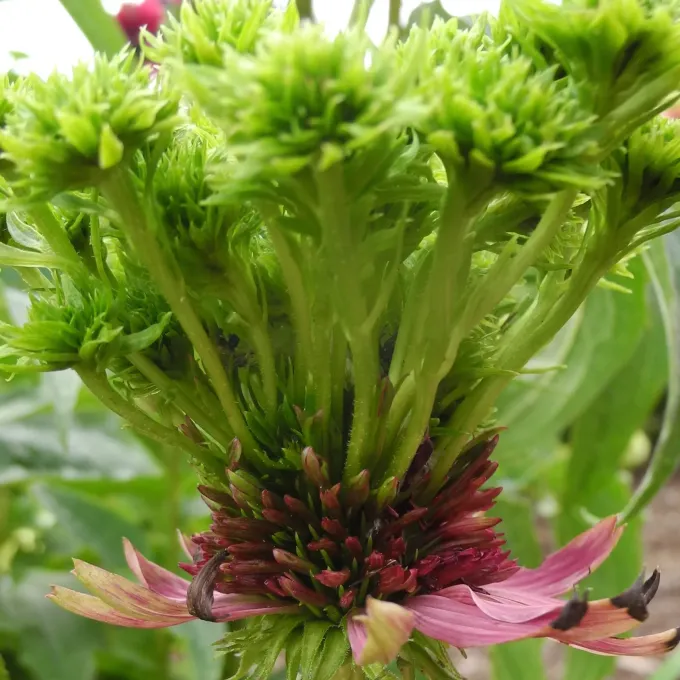
A classic sign of phytoplasma infection is the proliferation of shoots, known as a witches' broom. This happens because the pathogen disrupts hormonal signaling, leading to excessive lateral bud development and shortened internodes.
Floral symptoms are often dramatic, involving virescence (greening of petals) or phyllody, where flowers are transformed into leaf-like structures. These changes render the plants sterile and result in total crop failure.
Root systems are also severely affected, showing necrosis and reduced vigor. This limits the plant's ability to uptake water and minerals, making it increasingly susceptible to secondary infections and environmental stress.
- Yellowing and curling of leaf margins.
- Deformed or green-colored flower parts.
- Reduced fruit size and poor seed quality.
Pathogen
Phytoplasmas are specialized microorganisms belonging to the class Mollicutes. As prokaryotes lacking a cell wall, they are highly dependent on their hosts, surviving strictly within the plant phloem or the body of their insect vectors.
The disease is characterized by systemic infection of the phloem tissue. Phytoplasmas colonize sieve tubes, disrupting the transport of nutrients and photosynthates, which eventually leads to the starvation and physiological decline of the host plant.
The primary transmission mechanism involves insects of the order Hemiptera, specifically leafhoppers (Cicadellidae). Transmission is circulative and propagative: the insect acquires the pathogen while feeding and remains a carrier for its entire lifespan.
These pathogens affect a wide array of crops, including vegetables, cereals, fruit trees, and grapevines. Common examples include Aster Yellows and various types of Stolbur, which pose a significant threat to global agriculture.
Unlike many viruses, phytoplasmas multiply within both the plant host and the insect vector. This biological feature makes them highly resilient and difficult to manage once established in an area.
Conditions for development
The spread of phytoplasma diseases is heavily dependent on leafhopper populations. Warm, dry weather conditions promote higher insect activity and migration, accelerating the rate of infection across fields.
Alternative hosts, particularly perennial weeds, are critical for the survival of the pathogen. These weeds act as reservoirs that bridge the gap between growing seasons, ensuring the pathogen persists on the farm.
The incubation period within the plant is temperature-dependent. Higher temperatures generally facilitate faster systemic movement of the phytoplasma within the phloem, causing symptoms to manifest more rapidly.
Human activity is a major factor in distribution, particularly through the transport of infected planting stock. Cuttings, tubers, and nursery plants can carry the pathogen into previously disease-free areas.
Epidemics often occur when high temperatures coincide with large insect vector populations. Managing these variables is the cornerstone of preventing large-scale field losses.
Why it matters
Phytoplasma infections cause severe economic losses by reducing yields and compromising the quality of produce. Affected fruits or tubers are often smaller, malformed, and unsuitable for market consumption.
The disease severely impacts seed production. Seeds harvested from infected mother plants often show low germination rates and can carry the pathogen, leading to diseased progeny in the next cycle.
For perennial crops like grapes or fruit trees, a phytoplasma outbreak can lead to the need for orchard or vineyard replacement, which represents a massive long-term financial burden for growers.
Because there is no known cure for infected plants, the focus must remain on mitigation. The inability to reverse the disease process makes prevention the only viable management strategy.
Operational costs increase significantly due to the need for intensive insecticide applications and the requirement for quarantine procedures to prevent further pathogen spread within the region.
Protection
Effective management requires strict control of leafhopper vectors using systemic insecticides. Timely applications during peak insect activity periods are essential to reduce transmission rates.
Weed management is a crucial preventive measure. By removing perennial weeds in and around the field, growers eliminate the reservoir hosts that keep the pathogen present in the environment.
Always utilize certified, disease-free planting material. In cases where vegetative propagation is necessary, consider heat treatment protocols to eliminate phytoplasmas from the tissues before planting.
Spatial isolation between new crops and existing, potentially infected plots can significantly slow the movement of vectors and the spread of the pathogen through the agroecosystem.
Breeding and planting resistant cultivars are the most sustainable long-term solutions. Developing plant varieties that can tolerate or resist infection helps stabilize production without constant reliance on chemical controls.
Discussion
No discussions yet — be the first.