
Papaya erwinia
Erwinia mallotivora
Description
Symptoms
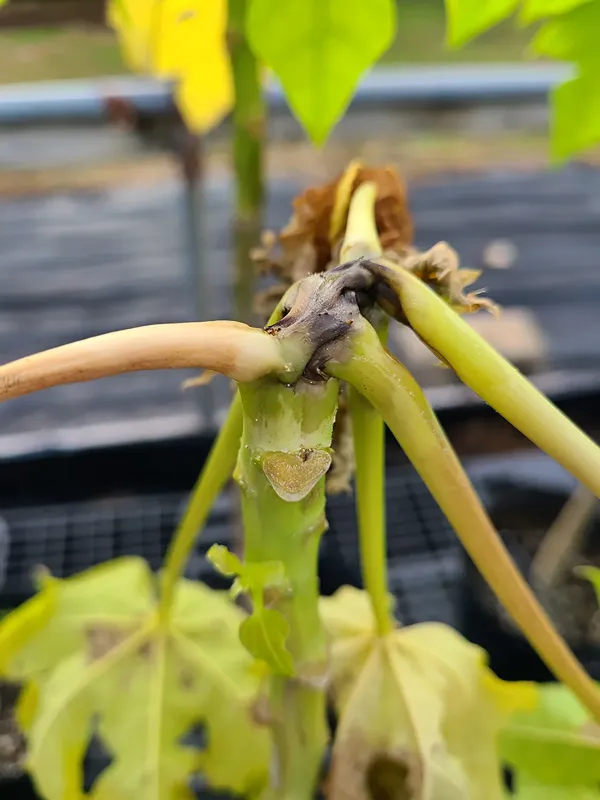
The first symptoms appear as small, water-soaked spots that quickly turn dark and expand. On leaves, these spots develop into necrotic lesions surrounded by yellow halos.
A diagnostic sign of the infection is the presence of bacterial exudate — sticky, yellowish droplets that ooze from the affected tissues during periods of high humidity.
Deep cankers or ulcers form on the stems, which can weaken the trunk to the point of breaking. In severe cases, the apical bud dies, causing the cessation of vertical growth.
Fruits are also highly susceptible; they exhibit sunken, dark, and soft spots, which lead to rapid decay and make the fruit completely unmarketable.
Affected internal stem tissues often emit a strong, foul-smelling odor, characteristic of advanced bacterial decomposition of plant cell wall components.
Pathogen
The causal agent of this disease is the Gram-negative bacterium Erwinia mallotivora. It is a severe pathogen responsible for systemic bacterial infections in various parts of the papaya plant.
The disease is categorized as a bacterial necrosis or bacterial rot. Recent molecular research has confirmed this bacterium as the primary agent responsible for the specific erwinia disease in papaya.
The pathogen enters the plant tissues through natural openings such as stomata or via wounds created by insects, mechanical damage, or environmental factors like hail.
Once inside, the bacteria move through the vascular system, effectively blocking the transport of water and nutrients, leading to rapid systemic wilting and eventual plant death.
The survival of the bacterium outside the host is relatively short, yet it can persist in infected plant debris and soil, serving as a reservoir for subsequent infections.
Conditions for development
The development of the disease is favored by consistently high temperatures (ranging from 25–30°C) combined with high relative humidity, typical of tropical regions.
Dense planting configurations that restrict airflow create a stagnant microclimate, which significantly accelerates the spread of Erwinia mallotivora within a plantation.
The presence of water films on leaves due to frequent rainfall or dew is essential for the germination of bacterial cells and their subsequent penetration into the host.
Insect pests that feed on papaya tissues are major contributors to the spread of the disease, as they act as vectors and create entry points for the bacteria.
Cultural practices, such as excessive nitrogen fertilization, result in succulent, lush growth that is significantly more vulnerable to bacterial colonization.
Why it matters
Papaya erwinia is considered one of the most destructive diseases, capable of destroying up to 90% of the crop on a plantation within a very short period.
The total loss of fruit quality and the death of productive plants result in severe economic losses for farmers, threatening the viability of the enterprise.
The need for intensive roguing (removal) of infected plants increases labor costs and necessitates the financial burden of replanting large sections of the farm.
Because the infection is systemic, it is extremely difficult to treat once established, leaving removal as the only viable management option for containment.
The presence of this pathogen in a region often triggers strict phytosanitary regulations, limiting the ability to trade or move agricultural products.
Protection
Effective management begins with strict sanitation, specifically the use of pathogen-free seeds and seedlings from certified nurseries.
- Regular inspection and prompt roguing of infected plants.
- Sanitization of pruning tools to prevent cross-contamination.
- Integrated Pest Management (IPM) to control insect vectors.
- Proper spacing and drainage to improve air circulation.
- Avoiding unnecessary wounds to the plant during routine cultivation.
The application of copper-based bactericides can help reduce the bacterial population on the surface of the plant but should be used primarily as a preventative measure.
Developing and planting resistant or tolerant papaya cultivars remains the most sustainable long-term solution for combating the impact of this serious disease.
Discussion
No discussions yet — be the first.