
Chrysanthemum yellows
Chrysanthemum yellows
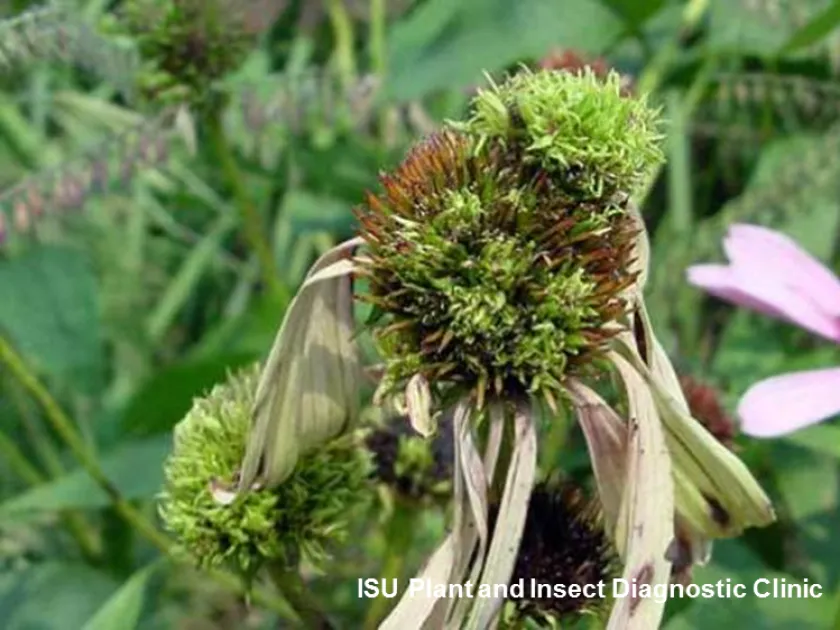
Description
Symptoms
The most prominent symptom is chlorosis, where leaves turn a pale yellow or lime-green color, often starting at the terminal shoots.
Affected plants exhibit distinct stunting, resulting in significantly shorter stems and internodes compared to healthy specimens.
A proliferation of secondary shoots is common, leading to a crowded, bushy appearance often referred to as "witches' broom" formation.
Flowers are severely affected, showing abnormal development, greening of petals (virescence), or complete sterility of the floral buds.
In advanced stages, the plant displays overall wilting and decline as the systemic damage to the vascular system prevents proper water uptake.
Pathogen
The causative agent of Chrysanthemum yellows is a specific phytoplasma, a specialized type of bacteria that lacks a cell wall and resides in the phloem of infected plants.
These pathogens are obligate parasites that cannot survive outside of their host plant or their insect vector, making them highly specialized in their life cycle.
Once inside the plant, the phytoplasma multiplies within the sieve tubes, effectively clogging the nutrient transport system and causing systemic decline.
It is not a fungal or typical viral disease, meaning that standard fungicides or antiviral agents are ineffective against this type of infection.
The persistence of the pathogen in the host plant ensures a continuous source of inoculum for vectors that feed on the infected tissues.
Conditions for development
The disease is transmitted primarily by phloem-feeding insects, most notably leafhoppers, which act as biological vectors.
The transmission occurs when an insect feeds on an infected plant, acquires the phytoplasma, and later transmits it to a healthy host during feeding.
Environmental conditions that favor the rapid reproduction and migration of leafhoppers increase the incidence of the disease in gardens and greenhouses.
Warm temperatures and high humidity enhance both insect activity and the physiological processes within the plant that facilitate infection.
The movement of asymptomatic plant cuttings is the most common way the disease is introduced into new locations or commercial facilities.
Why it matters
Chrysanthemum yellows is highly destructive to floral quality, rendering plants unsalable due to their stunted growth and deformed blooms.
It poses a significant risk to biodiversity and commercial stocks, as there is no cure for an infected plant, and it must be discarded.
The infection can spread rapidly within a planting site if vectors are present, leading to potential loss of the entire collection.
The hidden nature of the pathogen, which can exist in plants without immediate obvious symptoms, makes early detection and containment difficult.
Long-term economic impact includes not just the loss of current stock, but the potential for soil and environmental contamination through alternative weed hosts.
Protection
Rogueing and destroying symptomatic plants is the primary control measure, as there are no chemical treatments available to clear the phytoplasma.
Integrated Pest Management (IPM) focusing on the control of leafhoppers using appropriate insecticides is crucial to preventing the spread.
Maintaining a weed-free environment is essential, as many common weeds can serve as reservoirs for the pathogen and harbor insect vectors.
Propagation should only be performed using certified disease-free stock to ensure that no latent infection is passed on to new generations.
Physical barriers such as insect-proof netting in greenhouses provide an effective defense against the introduction of infected vectors.
Discussion
No discussions yet — be the first.