
Canadian peach pitting
Canadian peach
Description
Symptoms
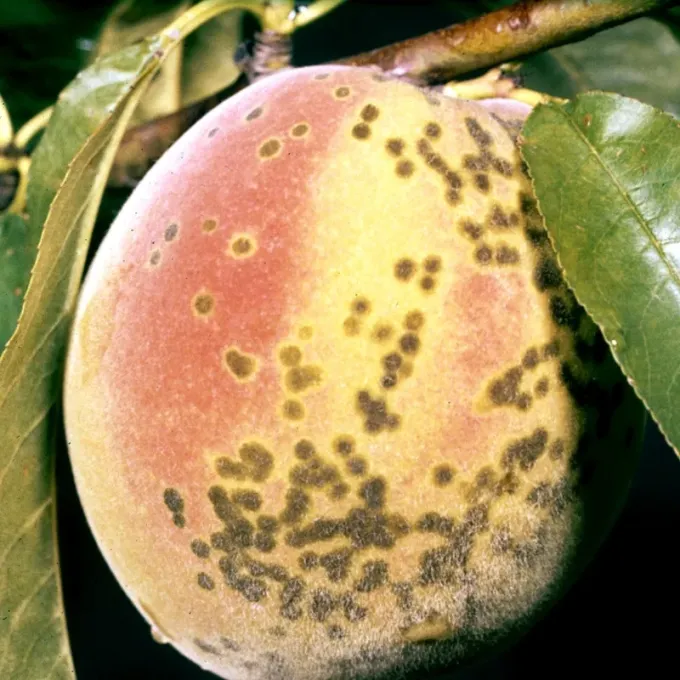
The primary symptom of Canadian peach pitting is the development of distinct deformations on the fruit surface. During the ripening phase, small pits or depressions appear on the skin, often accompanied by a color change to lighter or reddish hues.
When the fruit is sliced, the tissue underneath the pits shows structural changes. These areas become tough, fibrous, and develop a corky texture, which renders the fruit unacceptable for consumption or market sale.
Leaves on infected trees may display chlorosis or mild leaf curling, which can sometimes be confused with other horticultural issues. However, the combination of pitted fruit and foliage irregularities is a strong indicator of the disease.
In advanced stages, fruit size is significantly reduced, and the overall fruit quality declines. Premature fruit drop is also commonly observed, leading to substantial yield losses for the grower.
Because the visual symptoms can overlap with other viral or physiological disorders, laboratory testing is often necessary to confirm the presence of the specific viral pathogen.
Pathogen
Canadian peach pitting is caused by a virus that specifically affects Prunus species. The infection is systemic, meaning the pathogen spreads through the entire vascular network of the host plant.
The primary method of transmission is the use of infected propagation material, such as budwood or rootstocks. If a young tree is infected at the nursery level, it may remain asymptomatic for several years.
Mechanical transmission is a critical pathway, occurring through contaminated pruning tools. If tools are not disinfected between trees, the sap from an infected plant can transmit the virus to healthy specimens.
Insect vectors that feed on the phloem of infected peach trees may also play a role in the local spread of the virus within an orchard, facilitating the formation of new disease foci.
Once a tree is infected, the virus becomes an permanent part of its biological system, as there are currently no chemical treatments available to cure the plant of the viral infection.
Conditions for development
The proliferation of the disease is heavily dependent on the quality of initial planting stock. Using nursery material that has not been properly indexed for viruses is the most common cause of orchard infection.
High-density planting environments can exacerbate the spread of the virus. In such conditions, tools and potentially root grafting facilitate the movement of the pathogen between closely situated trees.
Environmental stressors such as drought, extreme temperature fluctuations, or nutrient imbalances can compromise the tree's health, making the expression of viral symptoms more rapid and severe.
The spring pruning season represents the highest risk period for disease transmission. Fresh wounds on the bark and branches serve as entry points for the virus when contaminated tools are used.
The absence of an active monitoring program allows the virus to persist in an orchard, slowly infecting nearby healthy trees and creating an environment of continuous disease pressure.
Why it matters
The economic impact of this disease is severe, primarily due to the complete loss of marketable fruit quality. Pitted peaches are not suitable for fresh retail or commercial food processing.
Infected trees experience a decline in vigor and growth over time. The reduced production of new shoots and metabolic stress eventually lead to a decrease in overall tree lifespan and productivity.
The presence of the virus poses a permanent threat to neighboring healthy trees. Infected plants serve as a reservoir for the virus, potentially necessitating the removal of entire blocks of the orchard.
Management costs increase significantly due to the need for extra monitoring, removal of symptomatic trees, and the replacement of lost orchard assets.
The lack of curative measures means that orchardists must rely entirely on prevention, which can be challenging if the disease is not identified early in its lifecycle.
Protection
The cornerstone of managing Canadian peach pitting is the use of virus-free, certified nursery stock. This is the only effective way to prevent the establishment of the disease in an orchard.
Strict disinfection of all pruning equipment is mandatory. Growers should sterilize tools between each tree using high-concentration alcohol or appropriate chemical disinfectants to prevent cross-contamination.
- Regular orchard scouting during the fruit development stage.
- Immediate identification and removal of any trees showing symptoms.
- Complete sanitation, including the removal of roots and stumps, of infected plants.
- Control of potential insect vectors through integrated pest management.
- Selection of resilient or virus-tolerant rootstocks during orchard establishment.
If the disease is suspected, producers should contact their local plant protection agency or agricultural extension office to facilitate diagnostic testing and receive official management guidelines.
Prevention must be a continuous, proactive strategy, as even a single infected tree can compromise the long-term health and profitability of the entire planting.
Discussion
No discussions yet — be the first.