
Bacterial grain rot of rice
Burkholderia glumae
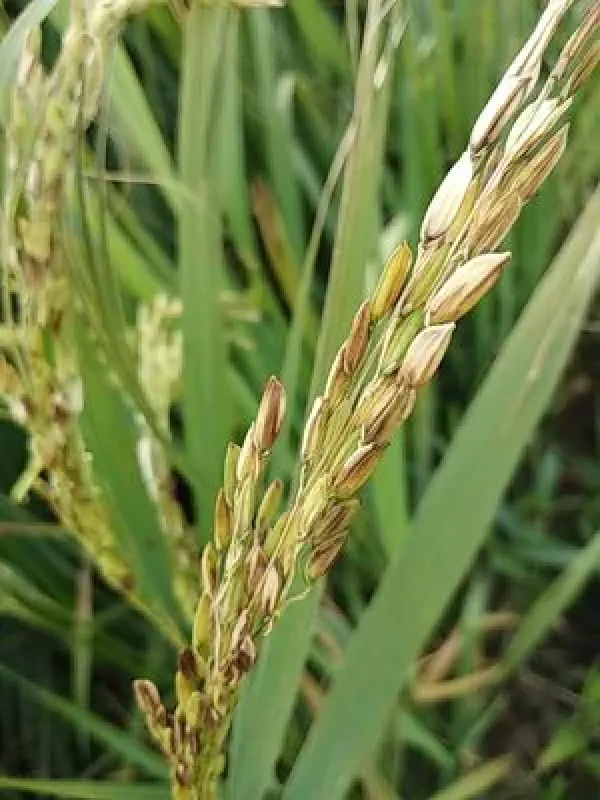
Description
Symptoms
The most distinctive symptom is the discoloration of panicles, appearing as brownish or greyish lesions during the grain-filling stage. Infected grains become shriveled, light, and empty.
Initial signs include necrosis of the glumes, which disrupts the pollination process and prevents the development of the endosperm. In humid conditions, a bacterial ooze may be visible on the surface of affected parts.
Affected panicles often appear blighted or scorched, while the leaves and culms frequently remain green. This contrast is a diagnostic hallmark that helps distinguish this disease from others.
Internally, damaged grains contain a dark, decomposed mass of tissue. In severe cases, the entire panicle turns dark brown or black, resulting in significant yield loss.
The disease usually presents in localized patches within a field. Since visual symptoms can be subtle early on, laboratory analysis is often required for definitive diagnosis.
Pathogen
The causative agent of this disease is the Gram-negative bacterium Burkholderia glumae, which belongs to the Burkholderiaceae family. This pathogen is highly motile in aqueous environments, facilitating its spread across rice fields.
Classified as a bacterial disease, it primarily attacks the reproductive organs of the rice plant. The bacterium produces a toxin called toxoflavin, which is responsible for inducing necrosis and cellular death in the grain.
The pathogen can persist for extended periods in infected seeds, crop debris, and soil. Infected seed serves as the primary inoculum source, making strict seed health certification a crucial management step.
Burkholderia glumae exhibits optimal growth under warm, humid conditions. It is known for its ability to rapidly colonize the panicle tissues during the flowering and grain-filling stages.
Due to its resilience and high reproductive rate, the bacterium can cause widespread damage within a short timeframe if environmental conditions favor its development.
Conditions for development
The development of Burkholderia glumae is heavily favored by high air temperatures (ranging from +30°C to +35°C) coupled with high humidity during the flowering phase.
Frequent rainfall and persistent morning fogs during the panicle emergence stage facilitate the spread of the bacteria via water splashing and aerosols, which are critical for floral infection.
High planting density restricts airflow through the crop canopy, maintaining a microclimate with elevated humidity that is highly conducive to bacterial proliferation.
Excessive application of nitrogenous fertilizers promotes vigorous vegetative growth and extends the flowering period, thereby lengthening the window of vulnerability to infection.
Nighttime temperatures remaining above +23°C accelerate the metabolic processes of the bacteria, significantly increasing the risk of an outbreak in the field.
Why it matters
The primary economic impact is a severe reduction in grain yield and quality. Infected kernels are shrunken and deformed, rendering them unfit for milling or human consumption.
Infected seeds exhibit poor germination rates and reduced seedling vigor. Using such material for subsequent seasons leads to poor field establishment and disease carryover.
Bacterial grain rot negatively affects milling quality: damaged grains are fragile and prone to breakage during processing, leading to high milling losses and reduced market value.
Under epidemic conditions, yield losses can exceed 50%. This poses a major financial threat to rice producers and can jeopardize the economic sustainability of rice-growing operations.
The presence of the pathogen in harvested grain may trigger quarantine measures, limiting international trade opportunities due to stringent phytosanitary standards.
Protection
The foundation of effective control is the use of high-quality, disease-free certified seeds. Treating seeds with authorized bactericides is a mandatory preventive practice.
- Adjusting planting dates to ensure that the flowering phase does not coincide with peak temperature and humidity periods.
- Balanced nutrient management, prioritizing potassium to strengthen plant tissue against bacterial invasion.
- Aggressive weed management to remove alternative hosts that harbor the pathogen in the field.
- Selecting and planting rice cultivars with proven genetic resistance to bacterial panicle blight.
Chemical control during the flowering stage is difficult to execute; therefore, management focus is placed on preventive cultural practices and minimizing favorable environmental conditions for the pathogen.
Post-harvest management, including deep plowing to incorporate crop residues, is essential to reduce the primary inoculum load in the soil for the next season.
Discussion
No discussions yet — be the first.