
Burkholderiosis
Burkholderia
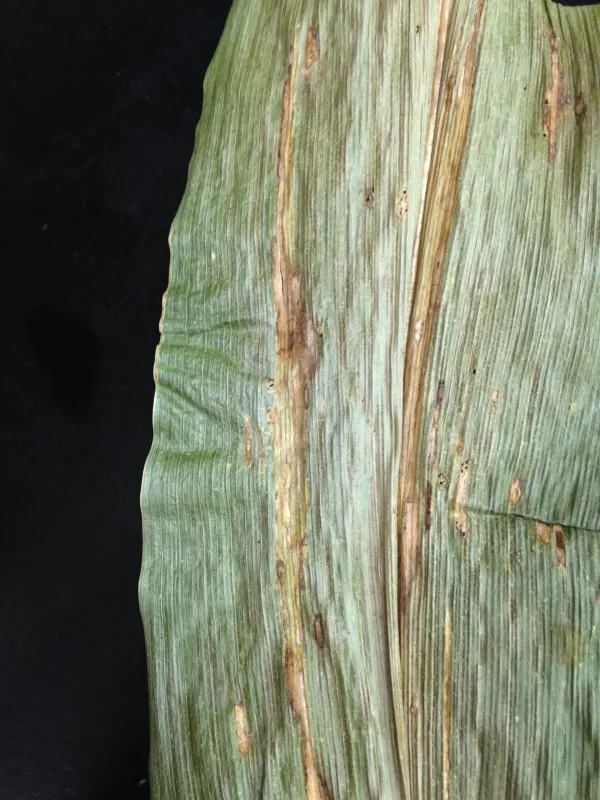
Description
Symptoms
The primary symptom of burkholderiosis is sudden wilting of the plant. Unlike other wilting diseases, the leaves often remain green initially, as the blockage of water transport occurs rapidly within the vascular bundles of the plant.
In the early stages, plants may recover their turgor during the cooler evening and night hours. However, this recovery period decreases as the bacterial population increases within the xylem, eventually leading to permanent wilting and death of the plant.
A diagnostic sign is the darkening of vascular tissue within the stem. If a freshly cut stem is placed in a glass of water, milky-white strands of bacterial slime will stream out from the vascular bundles, confirming the presence of the pathogen.
In tubers and roots, the disease manifests as a browning of the vascular ring. As the infection progresses, the tissues may become soft and watery, often emitting a foul odor due to the secondary invasion of opportunistic microorganisms that break down the plant structure.
Latent infection is a key challenge in field diagnosis. Symptomless plants can be colonized by the bacteria, unknowingly spreading the pathogen through soil drainage or agricultural practices, which requires rigorous lab testing for early identification.
Pathogen
The causative agent of burkholderiosis is the bacterium Burkholderia species, with Burkholderia solanacearum being the most notorious in agricultural practice. These Gram-negative, rod-shaped bacteria are highly adaptable, inhabiting vascular tissues where they cause systemic infections.
These bacteria survive in a wide variety of environments, including soil, water, and infected plant debris. Their ability to persist in the soil for several years, even in the absence of a host plant, poses a major challenge for soil management and crop protection.
The host range of these bacteria is extremely broad, affecting hundreds of species including solanaceous crops, legumes, and bananas. This wide range of hosts makes it nearly impossible to eliminate the pathogen through simple crop rotation schemes alone.
Transmission occurs through contaminated irrigation water, infected seeds, tubers, and transplants. Furthermore, agricultural equipment serves as a primary vector for moving the pathogen between fields, especially if sanitization protocols are not followed during field operations.
Given its impact on yield, the pathogen is classified as a quarantine organism in many countries. Its ability to remain in a latent state, where the plant shows no symptoms while still carrying the bacteria, is a critical factor in its global spread and persistence.
Conditions for development
High temperatures are the most critical factor for the rapid development of burkholderiosis. The pathogen thrives in warm environments, typically between 25°C and 35°C, which accelerates bacterial multiplication within the host.
Moisture plays a vital role in disease spread. Waterlogged soils, excessive irrigation, or heavy rainfall increase the motility of the bacteria, allowing them to enter the plant through root tips and naturally occurring wounds or injuries.
Soil structure and aeration significantly influence bacterial survival. Compacted, poorly drained soils facilitate the persistence of Burkholderia. Conversely, well-drained soils may reduce the pathogen's longevity, though they do not guarantee complete eradication.
Agricultural management practices, such as excessive nitrogen fertilization, can lead to succulent growth that is more susceptible to bacterial invasion. Balanced fertility, emphasizing potassium and calcium, can sometimes improve the physical resistance of plant tissues.
The presence of alternative weed hosts acts as a reservoir for the bacteria, keeping the pathogen population high throughout the year. Controlling these weeds is essential for limiting the disease potential in fields intended for future planting.
Why it matters
The economic impact of burkholderiosis is severe, with potential losses reaching 100% in highly susceptible crop varieties. Entire fields can be rendered worthless within a single growing season once the infection is established.
Marketable quality is severely compromised, as infected produce cannot be stored or transported. Even if the fruit appears healthy at harvest, latent bacteria can trigger rapid decay during post-harvest storage, leading to substantial financial losses.
Quarantine restrictions imposed on infested land create long-term economic burdens. Producers are often forced to avoid planting profitable crops for many years, which can disrupt established agricultural cycles and decrease farm profitability.
The costs associated with diagnostic testing, field decontamination, and the purchase of disease-free propagation material increase the overall production costs, making the crop less competitive in the global market.
Social and local environmental impacts include the loss of agricultural heritage in regions where specific traditional crops can no longer be grown safely, forcing farmers to shift toward less productive or unfamiliar agricultural practices.
Protection
The first line of defense is the use of certified pathogen-free seeds and planting material. Strict adherence to quality standards at the nursery level is essential to prevent the introduction of the bacteria into healthy fields.
Effective crop rotation involving non-host species, such as cereals or grasses, should be practiced for several years to decrease the bacterial inoculum density in the soil. This helps interrupt the life cycle of the pathogen.
Sanitation is paramount. All tools, machinery, and footwear must be thoroughly cleaned and disinfected before moving between different plots of land. Irrigation water must be managed to avoid contamination from drainage runoff from potentially infected sites.
Integrated pest management to control soil-dwelling pests is necessary to minimize root injuries. Healthy root systems are significantly more resistant to initial colonization by Burkholderia compared to damaged ones.
Biological control using beneficial microbes, such as Bacillus subtilis, can help suppress the population of the pathogen in the rhizosphere. While chemical treatments are rarely effective for systemic vascular diseases, preventative biological applications can provide a measure of protection.
Discussion
No discussions yet — be the first.