
Brazilian tomato curl
Brazilian tomato
Description
Symptoms
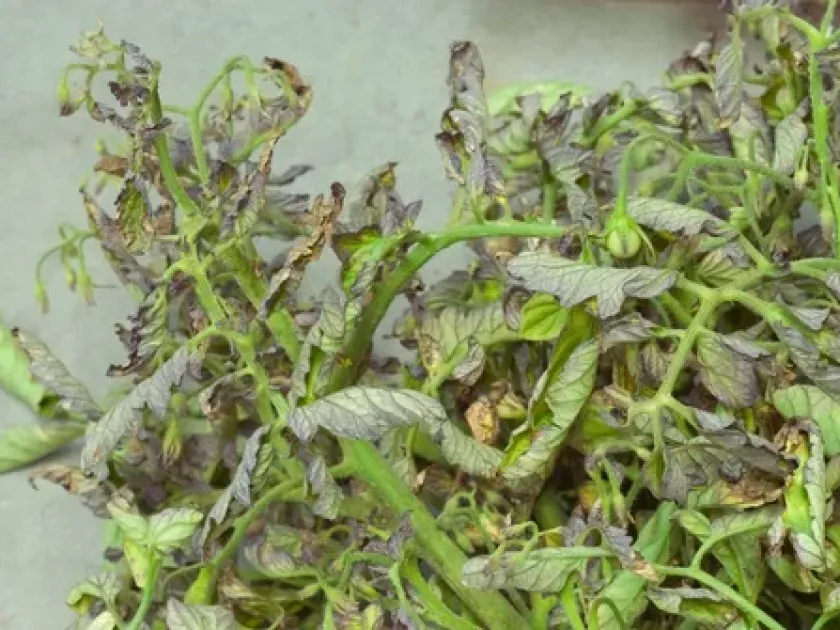
The primary symptoms include pronounced leaf curling, deformation, and a visible reduction in leaf surface area. Affected leaves often develop chlorotic discoloration.
Shoot tips undergo severe twisting, leading to stunted growth and the formation of dwarfed plant structures. Shortened internodes give the plant a characteristic rosette appearance.
Fruits on infected plants develop abnormally, often appearing small, deformed, or exhibiting necrosis and uneven ripening. Yield loss is substantial due to decreased photosynthetic efficiency.
Mosaic patterns on young leaves, which eventually progress to marginal necrosis, are hallmark signs. The entire plant appears severely stressed compared to healthy crops.
If seedlings are infected early, symptoms appear within 7–14 days post-inoculation, leading to a total loss of commercial fruit quality.
Pathogen
The disease is caused by a virus belonging to the genus Begomovirus, specifically the Tomato severe rugose virus (ToSRV). This virus features a single-stranded circular DNA genome and is transmitted exclusively by the silverleaf whitefly (Bemisia tabaci).
As a member of the geminivirus group, it affects a wide range of agricultural plants. The transmission occurs in a persistent manner: once the whitefly feeds on an infected plant, it remains a vector for the rest of its life.
During feeding, the whitefly introduces viral particles into the plant's phloem tissues. Once inside the systemic circulatory system, the virus begins rapid replication, disrupting the plant's metabolism and photosynthesis.
The progression of the disease is closely linked to the population dynamics of the insect vector. Higher whitefly pressure in the field directly correlates with the speed of infection within the crop.
The genetic diversity of viral isolates allows the pathogen to adapt to various environmental conditions, making the development of resistant varieties significantly more challenging.
Conditions for development
The development of the disease is dependent on the presence of the silverleaf whitefly population. Optimal conditions for its reproduction include high air temperatures and moderate humidity, typical of tropical and subtropical climates.
The presence of weeds surrounding the fields creates reservoirs for the virus during the off-season. These weeds serve as latent hosts, ensuring the pathogen's survival.
Inadequate control of insect vectors in greenhouses and open fields facilitates explosive outbreaks during peak growing seasons.
Using unprotected seedlings raised near infection hot-spots is a major factor in spreading the virus to new agricultural territories.
Poorly timed planting, where the crop's vegetative stage coincides with the peak migration of whiteflies, drastically increases the risk of mass infestation.
Why it matters
Brazilian tomato curl is considered one of the most destructive viral diseases of solanaceous crops in Latin America. Losses can range from 30% to a complete crop failure.
Infected plants cannot be cured, as the virus integrates into the plant's biological processes. This makes the production of high-quality goods from infected areas impossible.
Early-stage infection often leads to plant death or total sterility, preventing fruit formation and significantly increasing production costs due to pest management requirements.
The virus reduces both the quantity and nutritional value of fruits, rendering them unfit for commercial processing or fresh market sales.
Widespread epidemics of this disease can devastate entire farming operations, particularly those specializing in industrial-scale tomato cultivation.
Protection
The primary defense strategy is the total control of the whitefly population. This is achieved through the use of systemic insecticides and constant monitoring of insect levels using yellow sticky traps.
Crucial preventive measures include the eradication of weeds and crop residues that serve as refuges for the virus vector during the off-season.
- Utilizing insect-proof fine-mesh netting to prevent whitefly entry into greenhouses.
- Implementing crop rotation with non-host species for the silverleaf whitefly.
- Planting only verified, healthy seedlings sourced from isolated nurseries.
- Timely rogueing and proper disposal of infected plants to prevent further spread.
The application of biological control agents, such as predatory mites or parasitic wasps, is effective in reducing whitefly numbers in integrated pest management programs.
Discussion
No discussions yet — be the first.