
Description
Symptoms
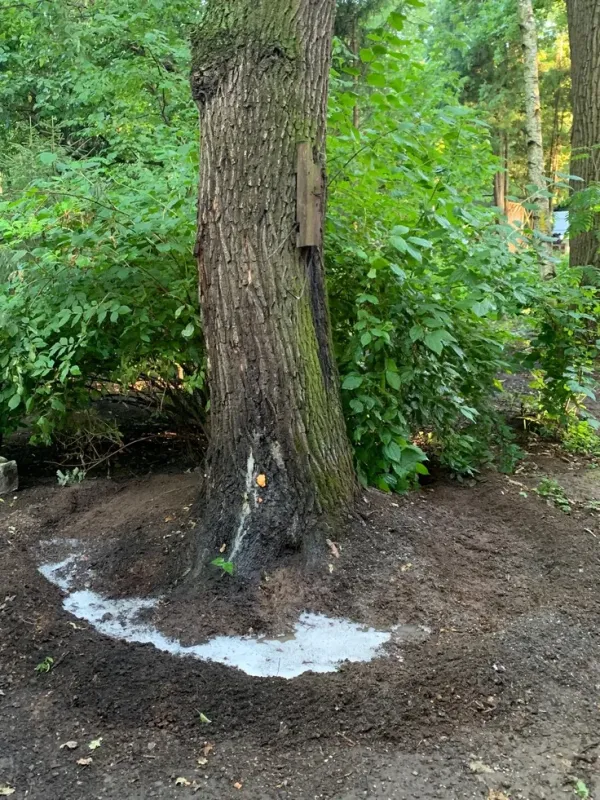
The most visible symptom is the flow of liquid from cracks in the bark, commonly known as "flux." This exudate is often dark and may have a sour odor.
The bark near the affected areas often turns dark, looks water-soaked, and may show signs of decay. Deep cracks or ulcers can develop, exposing the wood inside.
Upon inspection of the inner wood, necrotic zones are visible. The wood in these areas becomes discolored, often appearing gray, brown, or black.
Foliage on infected branches often yellows prematurely, wilts, and drops. This leads to the progressive dieback of branches and, eventually, the entire crown.
High internal pressure can cause the bark to rupture or split, which further facilitates the entry of secondary pathogens like wood-rotting fungi.
Pathogen
The causative agent of the disease is the bacterium Enterobacter nimipressuralis. It is a gram-negative microorganism that specifically inhabits the vascular system of woody plants.
This pathogen colonizes the xylem, which interferes with the tree's normal fluid transport. It is highly adapted to surviving within the interior of the tree trunk.
A unique characteristic of this bacterium is its ability to produce gases, which leads to high internal pressure within the wood tissues.
The infection typically enters the tree through wounds, such as pruning cuts, broken branches, or injuries caused by pests or construction equipment.
Once inside, the bacteria move through the vascular channels, slowly spreading throughout the trunk and weakening the tree's structural integrity.
Conditions for development
The development of wetwood is favored by high humidity and soil moisture. The disease is particularly active during seasons with heavy precipitation.
Mechanical injuries to the trunk are the primary entry point for the bacteria. Any stress on the tree makes it more susceptible to successful infection.
Stressed trees, such as those suffering from drought or nutrient deficiencies, have lower resistance to Enterobacter nimipressuralis.
Boring insects play a significant role in spreading the bacteria. By tunneling into the wood, they directly introduce the pathogens into the vascular system.
Temperature fluctuations can exacerbate the condition by causing internal pressures to change, potentially leading to larger splits in the tree's bark.
Why it matters
The primary harm is the gradual decline and potential death of the tree. Bacterial activity blocks the tree's ability to transport water and nutrients properly.
Internal wood decay weakens the structural integrity of the trunk. This creates a significant safety risk, as affected trees may fall during high winds.
The disease negatively impacts the aesthetic value of urban and forested landscapes, leading to thin crowns and dying branches.
There is currently no cure for wetwood, meaning infected trees must often be removed to protect the health of neighboring trees in the vicinity.
Economic losses are associated with the cost of tree removal and the loss of mature specimen trees that contribute to local ecosystems.
Protection
The most effective management strategy is the early detection and removal of severely infected trees to minimize the spread of the pathogen.
Sanitation is crucial: all pruning tools must be thoroughly disinfected after every cut to prevent the transmission of bacteria between trees.
Proper tree care, including adequate irrigation and fertilization, helps boost the tree's natural defenses against bacterial invasion.
Protecting the tree from mechanical damage is essential. Avoiding unnecessary wounding of the bark significantly reduces the risk of infection.
While there are no chemical treatments to "cure" the internal infection, managing the environment and monitoring the tree's health are the best preventative measures.
Pathogens and affected parts
Affects crops · 1
Discussion
No discussions yet — be the first.