
Actinobacillosis
Actinobacillus lignieresii
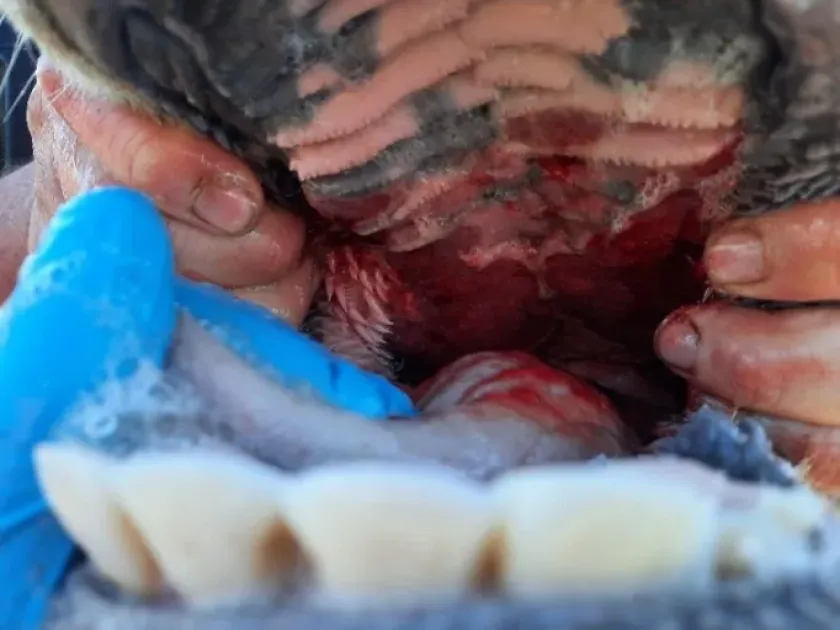
Description
Symptoms
The most iconic clinical sign is the condition known as wooden tongue, characterized by a firm, swollen tongue.
Animals exhibit excessive salivation and have significant difficulty in mastication and deglutition due to painful oral lesions.
Hard, tumor-like nodules develop in the soft tissues of the head, neck, and sometimes the lymph nodes.
These nodules frequently progress to abscesses that rupture, discharging thick, white, or yellowish pus containing small granules.
Chronic cases often result in severe emaciation because the animal is physically unable to consume enough nutrients to survive.
Pathogen
The causative agent of this disease is Actinobacillus lignieresii, a gram-negative, non-motile coccobacillus.
This bacterium is a common inhabitant of the mucous membranes of the mouth and pharynx in healthy ruminants.
It acts as an opportunistic pathogen that only causes clinical disease when mucosal barriers are physically compromised.
Though not a plant pathogen, it is closely linked to agricultural practices involving coarse or stemmy fodder that can cause oral lesions.
The bacteria thrive in environments with organic debris, potentially lingering in moist feed troughs or contaminated bedding.
Conditions for development
The primary trigger for the infection is the mechanical trauma to the oral cavity caused by sharp plant material.
Dry, coarse, or stubble-rich hay is the leading culprit in providing entry points for the bacteria to colonize the sub-mucosal tissues.
Poor sanitation of feeding areas can increase the bacterial load and the risk of exposure for the entire herd.
Environmental factors like crowding and high humidity promote the survival of the bacteria outside the host.
Seasonal shifts often coincide with changes in diet that may introduce more abrasive feed, leading to sudden outbreaks.
Why it matters
Actinobacillosis poses a major economic threat to cattle production through weight loss and reduced feed efficiency.
Treatment costs, including veterinarian consultations and medication, significantly impact the profit margins of livestock operations.
The morbidity rate in a herd can be high if the feeding management remains poor, leading to large-scale productivity losses.
Untreated animals suffer immense pain and may eventually die from starvation or complications of secondary infections.
The necessity for culling severely affected animals results in permanent capital loss for the farmer.
Protection
Effective control relies on improving feed quality and eliminating abrasive components that cause oral injury.
Maintaining strict hygiene in feed bunks and watering troughs is essential to minimize bacterial accumulation.
- Regular inspection of the herd for signs of oral swelling.
- Segregation of infected animals to prevent further spread.
- Systemic administration of antibiotics such as tetracyclines.
- Topical treatment or irrigation of abscesses with iodine-based solutions.
Preventative management, including the careful selection of forage, is the best strategy to maintain herd health.
Discussion
No discussions yet — be the first.