
Bacterial leaf spot of Cattleya
Acidovorax cattleyae
Description
Symptoms
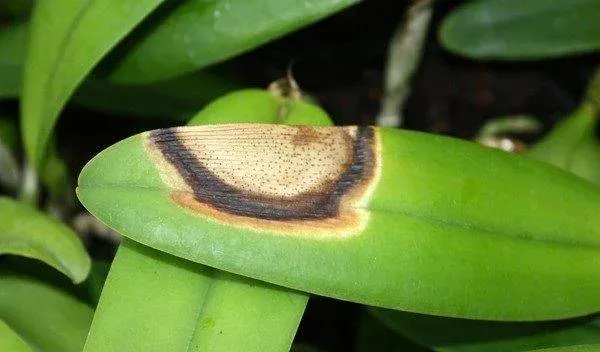
Initial symptoms include small, water-soaked, translucent spots on the leaves. Over time, these spots enlarge and darken, turning brown or black with a distinct yellow halo around the edges.
As the disease progresses, the lesions may coalesce, covering larger areas of the leaf surface. In high humidity, a bacterial ooze may be visible on the surface of the infected spots.
Infection of young shoots or pseudobulbs causes the tissues to become soft, mushy, and foul-smelling. This distinct rot is a hallmark of an advanced bacterial infection in Cattleya orchids.
If the infection reaches the rhizome, the entire plant is at risk of systemic failure. Growth stops, and the plant often wilts due to the obstruction of its vascular system by bacterial colonies.
- Water-soaked lesions on leaves.
- Dark necrotic spots with yellow halos.
- Soft and mushy tissue decay.
- Foul odor emitted from affected areas.
- Systemic death of new growth and pseudobulbs.
Pathogen
The causative agent of this disease is the bacterium Acidovorax cattleyae, which was previously classified as Pseudomonas cattleyae. It is a Gram-negative rod-shaped bacterium that primarily affects orchids.
This pathogen specializes in colonizing the tissues of epiphytic plants. It enters the orchid through wounds, insect feeding sites, or natural openings like stomata, exploiting the host's vulnerability.
Once inside, the bacterium secretes enzymes that break down plant cell walls and middle lamellae. This process leads to rapid tissue necrosis and the collapse of the plant's structural integrity.
The bacterium is known for its ability to survive in moist environments for extended periods. It can persist in potting media, debris, or even on contaminated pots, acting as a constant source of infection.
Spread of Acidovorax cattleyae is highly facilitated by water. Splashing water during irrigation or overhead watering allows the bacteria to move easily between plants in a collection.
Conditions for development
High relative humidity and poor air circulation are the primary environmental drivers for the development of bacterial leaf spot. These conditions prevent proper drying of leaf surfaces.
Warm temperatures significantly accelerate the multiplication of Acidovorax cattleyae. The combination of warmth and moisture creates an optimal environment for rapid bacterial proliferation.
Improper watering practices, such as getting water into leaf axils or young shoots, provide a direct pathway for infection. Water droplets serve as the primary vehicle for bacterial transmission.
Mechanical trauma, such as wounding during repotting or pruning with non-sterile tools, allows the pathogen to bypass the plant's natural physical defenses.
Nutritional imbalances, particularly excessive nitrogen fertilization, can result in soft, succulent tissues that are more susceptible to bacterial invasion than stronger, hardened foliage.
Why it matters
This disease is extremely dangerous due to its rapid progression. A healthy Cattleya can succumb to systemic rot and perish within just a few days if conditions favor the bacteria.
The disease is highly contagious within orchid collections. A single infected plant can quickly become a focus of an outbreak, contaminating nearby plants through irrigation water and tools.
Bacterial leaf spot causes significant aesthetic damage. Even if the disease is halted, the permanent black necrotic scars remain on the leaves, severely reducing the plant's commercial value.
Systemic damage often leads to the death of vital growth points. Since orchids grow slowly, the loss of these points often means the plant loses its ability to recover or bloom in the future.
Large-scale outbreaks result in significant financial losses for orchid nurseries, as infected plants often need to be destroyed to protect the rest of the stock from infection.
Protection
Isolation of the infected plant is the immediate and most critical step. Removing the source of inoculum helps contain the spread of the bacteria within the collection.
Removal of affected tissue must be done using a sterile knife or scalpel. It is essential to cut into healthy tissue to ensure all infected parts are removed, sterilizing the tool after every cut.
Treated cuts should be dusted with charcoal powder, cinnamon, or a copper-based fungicide. Keeping the plant in a dry area with excellent ventilation promotes rapid healing of the surgical wounds.
Application of bactericides or specific antibiotics may sometimes be effective if the disease is detected early, but success depends heavily on the extent of systemic colonization.
Prophylaxis remains the best management strategy. This includes providing adequate airflow, avoiding overhead watering, and ensuring all tools used on orchids are disinfected before and after use.
Discussion
No discussions yet — be the first.