
Zymoseptoria verkleyi
Zymoseptoria verkleyi
Description
Symptoms
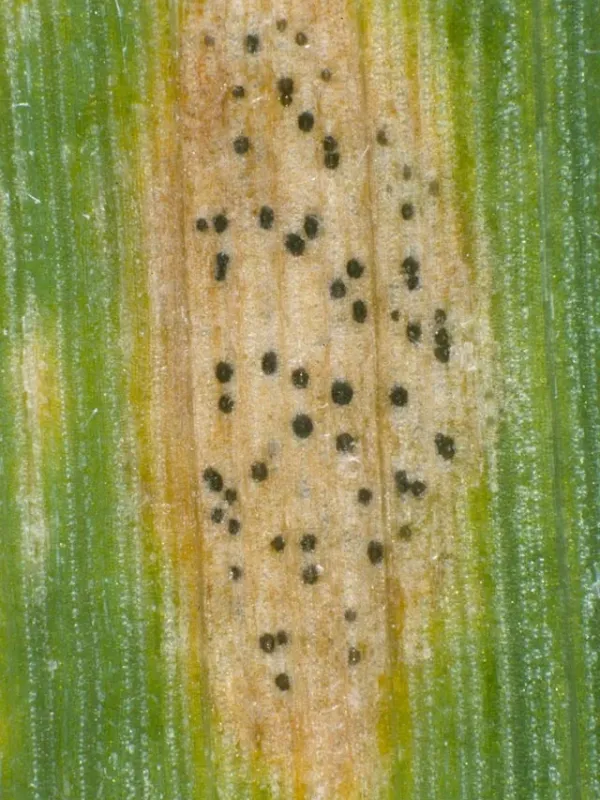
Initial symptoms include small chlorotic lesions on the lower leaves, which eventually develop into brown necrotic blotches with irregular shapes.
Distinct black, pin-head-sized pycnidia appear within the centers of the necrotic spots, which are diagnostic indicators of this fungal infection.
As the disease progresses, these lesions merge, causing widespread yellowing and premature death of the leaf tissue, limiting the plant's photosynthetic ability.
Under high humidity conditions, a greyish-white mass of spores may be visible on the surface of the lesions, aiding in rapid identification in the field.
The infection typically moves upwards from the base of the plant, severely affecting the health of the flag leaf during the critical grain-filling period.
Pathogen
The disease is caused by the fungus Zymoseptoria verkleyi, a specialized pathogen belonging to the Ascomycota division, closely related to the well-known septoria complex.
The pathogen completes its life cycle by producing pycnidia on infected plant tissue, which serve as the primary inoculum for spreading the disease during the growing season.
Biological studies indicate that the fungus thrives as a hemibiotroph, initially infecting living tissue before transitioning to necrotrophic growth.
It survives between growing seasons on crop debris, making it a persistent threat in agricultural fields with continuous cereal production.
Genetic diversity within the Zymoseptoria verkleyi population allows for rapid adaptation to environmental shifts and potentially overcome plant resistance traits.
Conditions for development
Development of the disease is highly favored by cool to moderate temperatures ranging from 15 to 22 degrees Celsius accompanied by prolonged periods of leaf wetness.
Frequent rainfall and high humidity are essential for the release of spores from the pycnidia and their subsequent dispersal to healthy plant tissues.
Fields with dense foliage and poor air circulation create a microclimate that accelerates the progression of the fungal infection within the canopy.
Infected stubble left on the soil surface acts as the primary source of initial inoculum when weather conditions become suitable for infection.
Agricultural practices that promote succulent growth, such as excessive nitrogen fertilization, can make plants more susceptible to the penetration of fungal hyphae.
Why it matters
The primary economic impact is the reduction of functional leaf area, which leads to significant losses in yield and grain quality.
Plants affected by Zymoseptoria verkleyi often exhibit reduced grain weight, poor starch accumulation, and lower test weight in the harvested produce.
In cases of severe infestation, especially during the grain development stages, yield losses can reach double-digit percentages, directly affecting profitability.
The weakened state of the plants makes them more susceptible to other opportunistic pathogens and stress factors, leading to further declines in field performance.
Monitoring for the disease is essential, as late-stage infections on upper leaves can cause drastic reductions in productivity that are difficult to mitigate.
Protection
Integrated management begins with a robust crop rotation strategy, alternating cereals with non-host crops to break the fungal life cycle.
Incorporating crop residue into the soil through tillage helps to reduce the amount of primary inoculum available to infect the next season's crop.
Fungicide applications are highly effective when timed according to the growth stage of the crop, particularly targeting the flag leaf emergence period.
Utilizing resistant or tolerant cultivars is the most sustainable and cost-effective approach to managing the presence of the pathogen in the landscape.
- Using certified, fungicide-treated seeds
- Maintaining optimal plant density to improve air circulation
- Regular field scouting during the vegetative stages
- Implementing balanced soil fertility programs
Discussion
No discussions yet — be the first.