
Septoria leaf blotch
Zymoseptoria tritici
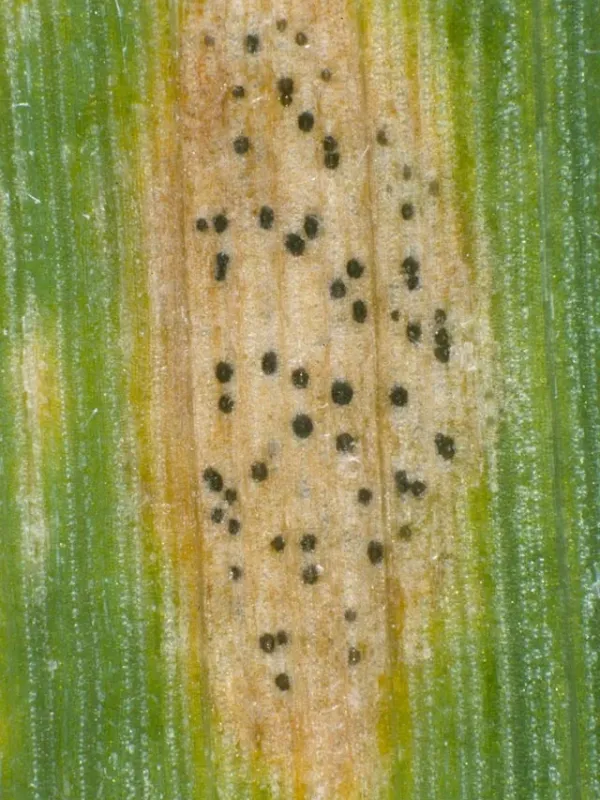
Description
Symptoms
Early symptoms appear as small, chlorotic, water-soaked spots on the lower leaves. As the disease progresses, these spots expand and become irregular or angular in shape.
The lesions eventually turn brown or tan with a yellowish halo. A characteristic feature is the presence of tiny, black, pepper-like spots (pycnidia) embedded within the necrotic lesions.
When environmental conditions are favorable, lesions merge, causing widespread chlorosis and necrosis. The leaves may curl and eventually wither, affecting the entire canopy.
While the disease primarily targets the leaves, in severe cases, it can also infect the leaf sheaths, stems, and glumes of the wheat heads.
The progression of the disease is typically vertical, starting from the lower leaves that have been in contact with infested stubble and moving upwards toward the flag leaf.
Pathogen
The causal agent of this disease is the fungus Zymoseptoria tritici (synonym Septoria tritici), which belongs to the Ascomycota phylum. It is one of the most common and damaging pathogens of wheat worldwide.
The fungus produces pycnidia, which are small, dark fruiting bodies found within infected lesions. These structures serve as the primary inoculum source for spreading the disease.
Z. tritici survives on crop residues, in soil, or on volunteer wheat plants. During the growing season, rain-splashed spores (conidia) are spread from lower leaves to upper leaves.
The pathogen infects wheat plants by entering through the stomata. After infection, the fungus colonizes the leaf tissue, leading to the development of disease symptoms after an incubation period.
Genetic variability of the pathogen allows it to adapt to different environments and overcome plant resistance, making the disease difficult to manage in intensive wheat production.
Conditions for development
High relative humidity (above 80%) and frequent rainfall are the most critical factors for the rapid development and spread of Zymoseptoria tritici.
The fungus thrives in moderate temperatures, typically between 15°C and 25°C, which are common during the spring growth stages of wheat.
Rain splash is the primary mechanism for dispersing spores. Heavy rainfall followed by periods of leaf wetness significantly increases the severity of the infection.
Dense, lush canopy growth, often induced by high nitrogen fertilization, creates a favorable humid microclimate that promotes infection and rapid colonization by the fungus.
The length of the latent period (time from infection to symptom appearance) is highly dependent on temperature, and shorter periods lead to faster disease cycles.
Why it matters
Septoria leaf blotch is highly destructive and can cause substantial yield losses in wheat, often reaching 20-40% if left unmanaged during severe epidemics.
The primary economic impact stems from the reduction of the green leaf area, which limits the photosynthetic capacity of the plant during the grain-filling stage.
Infected plants produce shriveled grain with lower test weight, which reduces the overall grain quality and value for millers and bakers.
Significant leaf tissue death also makes the wheat crop more susceptible to secondary stresses, including environmental drought and other concurrent fungal diseases.
The persistent nature of the fungus in the soil and on crop residues poses a continuous threat to subsequent wheat crops in the same field if not properly managed.
Protection
Effective management requires an integrated approach that combines cultural practices with the judicious use of fungicides to keep infection below economic thresholds.
Crop rotation is essential to allow for the natural degradation of infested wheat residues, which significantly reduces the initial amount of inoculum in the field.
The selection of resistant or tolerant wheat varieties is the most effective and sustainable strategy to mitigate the impact of the disease in high-risk areas.
Chemical control involving systemic fungicides, such as triazoles or SDHIs, should be applied based on local monitoring and weather-based disease forecasting systems.
Timing of fungicide applications is critical, with a strong focus on protecting the flag leaf, which provides the majority of carbohydrates for the developing grain.
Discussion
No discussions yet — be the first.