
Zymoseptoria pseudotritici
Zymoseptoria pseudotritici
Description
Symptoms
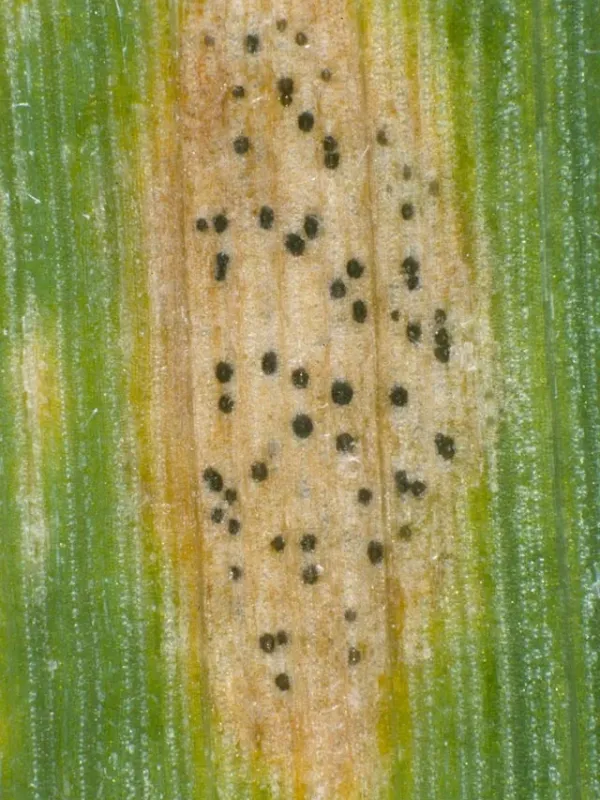
The initial symptoms of infection appear as small, light-colored chlorotic spots on the lower leaves of the cereal plants. Over time, these spots elongate, becoming rectangular or irregular necrotic blotches that run parallel to the leaf veins.
A hallmark diagnostic feature is the presence of pycnidia, appearing as tiny black dots within the center of the necrotic lesions. These structures are visible to the naked eye or under low-magnification lenses and confirm the presence of the pathogen.
As the disease progresses, the lesions expand and coalesce, leading to significant leaf chlorosis and subsequent necrosis. In severe cases, the entire leaf blade may die prematurely, starting from the base of the plant and moving upwards.
High humidity promotes the formation of milky-white or pinkish spore masses (cirrhi) oozing from the pycnidia, which can be seen under high moisture conditions. This visible spore production facilitates the secondary infection cycle on upper leaves.
- Appearance of irregular chlorotic spots.
- Development of characteristic black pycnidia.
- Necrosis and premature browning of leaves.
- Reduced green leaf area impacting yield potential.
Pathogen
Zymoseptoria pseudotritici is a fungal pathogen belonging to the Ascomycota division. It is closely related to the well-known Zymoseptoria tritici, sharing similar morphological traits but possessing a distinct genetic profile that enables it to infect specific cereal host species.
The fungus reproduces both sexually and asexually. The asexual stage, characterized by the production of pycnidia containing conidia, is responsible for the rapid spread of the disease during the vegetative growing season of the host plants.
The pathogen survives the inter-crop period as dormant mycelium or pycnidia on infected crop debris left on the soil surface. This reservoir of inoculum is crucial for initiating the disease cycle when favorable weather conditions return in the spring.
The biological success of Z. pseudotritici is attributed to its high adaptive capacity to environmental shifts. It uses specialized enzymes to infiltrate leaf tissue, effectively colonizing the mesophyll and causing necrotic lesions.
Understanding the unique molecular markers of this species is essential for accurate diagnostics. Due to its frequent co-occurrence with other Septoria species, precise laboratory identification is often required to differentiate it in field samples.
Conditions for development
The development of Zymoseptoria pseudotritici is heavily dependent on cool and humid weather conditions. Frequent rainfall and prolonged leaf wetness periods are the primary drivers for spore germination and infection.
The optimal temperature range for the pathogen's growth typically lies between 15°C and 22°C. High levels of air humidity, such as those caused by persistent fog or dew, significantly accelerate the maturation of pycnidia and the release of conidia.
Dense crop stands create a favorable microclimate that traps humidity within the canopy, preventing rapid leaf drying. This stagnant air environment allows the fungus to establish itself and spread rapidly between the lower and upper foliage.
Agronomic practices that increase nitrogen availability can exacerbate the disease. Rapid, succulent leaf growth induced by excessive nitrogen creates highly susceptible tissue that the fungus can penetrate and colonize with minimal resistance.
Lack of crop rotation and the presence of infected wheat stubble in the field serve as the main drivers for disease outbreaks. The pathogen's ability to persist on residues ensures a recurring risk for subsequent cereal crops planted in the same field.
Why it matters
The primary economic harm caused by Z. pseudotritici is a substantial reduction in grain yield resulting from the loss of functional photosynthetic surface area. By destroying leaf tissue, the fungus reduces the plant's ability to produce carbohydrates.
Severe infection, particularly of the flag leaf, is critical. The flag leaf is responsible for the majority of grain filling; its destruction leads to shriveled grains, lower test weights, and poor-quality yields, affecting the overall market value.
In addition to yield loss, the disease may negatively influence the grain quality parameters, such as protein content and falling number, which are vital for food processing industries. These impacts translate into direct financial losses for the grower.
Plants weakened by this fungal disease are more susceptible to secondary stressors, including other pathogens and drought conditions. This synergy often leads to compounded yield losses during particularly unfavorable growing seasons.
In extreme cases, the infection can significantly reduce the vigor of the plant, potentially leading to lodging if the stems are also compromised. This makes harvesting difficult and may lead to additional grain losses in the field.
Protection
Integrated Pest Management (IPM) is the most effective approach for controlling this pathogen. Crop rotation is essential; alternating cereals with non-host crops helps to break the disease cycle by depriving the fungus of its host substrate.
Cultural methods, such as deep tillage to bury crop residues, are highly recommended. By incorporating infected stubble into the deeper soil layers, growers can accelerate decomposition and reduce the amount of inoculum available for the next season.
The use of resistant or tolerant cultivars remains a cornerstone of disease prevention. Breeding programs continue to focus on enhancing the resistance of cereal varieties to various Septoria species to minimize reliance on chemical inputs.
Chemical control is often necessary during high-pressure years. Fungicides should be applied based on local monitoring and risk assessment, typically during the flag leaf emergence stage to protect the most productive leaves from infection.
Resistance management is crucial when using fungicides. Alternating chemical modes of action, such as mixing triazoles with strobilurins or carboxamides, is necessary to prevent the pathogen from developing widespread resistance to these active ingredients.
Discussion
No discussions yet — be the first.