
Barley speckle leaf blotch
Zymoseptoria passerinii
Description
Symptoms
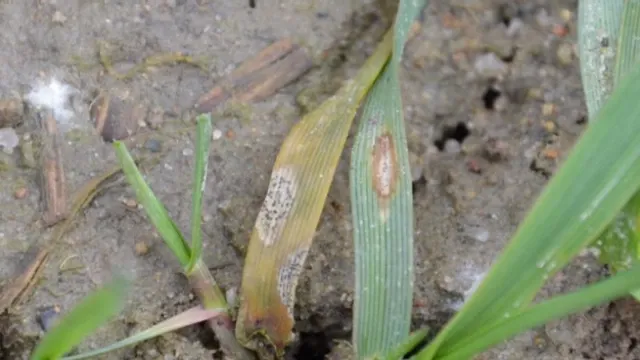
Early symptoms appear as small, chlorotic or greenish-yellow spots on the lower foliage. These lesions gradually expand and often develop a distinct rectangular shape, delimited by leaf veins.
As the spots mature, they turn light brown or straw-colored. A dark, necrotic margin is often visible around the lesion, providing a stark contrast to the surrounding green leaf tissue.
The most reliable field diagnostic feature is the presence of pycnidia. These appear as tiny, dark black specks embedded within the dead tissue of the lesions and are easily visible with a hand lens.
The disease characteristically progresses from the bottom of the plant upwards. As the infection intensifies, the leaves wilt and die prematurely, significantly reducing the green leaf area available for photosynthesis.
Severe infections may lead to extensive necrosis across the entire canopy, making the crop appear prematurely aged and resulting in a scorched appearance during the mid-to-late grain filling stages.
Pathogen
The disease is caused by the fungus Zymoseptoria passerinii (formerly Septoria passerinii). This ascomycete fungus is a highly specialized pathogen that specifically targets barley crops worldwide.
The fungus reproduces through the formation of pycnidia, which are tiny, dark fruiting bodies that develop within the leaf tissue. Inside these structures, conidia are produced and dispersed by rainfall and wind to neighboring plants.
It survives between growing seasons in crop residues left on the soil surface. Infected volunteer barley plants also serve as a vital reservoir for the pathogen to persist until the next spring.
Initial infection occurs when spores are splashed from the soil surface onto the lower leaves of the barley seedlings. As the season progresses, secondary cycles of infection occur, spreading the fungus to the upper, more productive leaves.
The biological success of Zymoseptoria passerinii depends heavily on moisture levels, allowing it to complete its life cycle rapidly under humid conditions, which frequently leads to significant epidemics.
Conditions for development
High relative humidity and frequent rainfall are the primary drivers of disease development. The presence of water films on leaves is essential for spore germination and successful colonization by the fungus.
The pathogen thrives at temperatures ranging from +18°C to +25°C. However, it can remain active under cooler conditions, which often characterizes early spring infection waves in temperate growing regions.
High plant density and lush, thick canopies create a microclimate with reduced air circulation. This humidity trap allows the fungus to flourish and spread rapidly throughout the crop compared to thinner stands.
Excessive nitrogen fertilizer application can exacerbate the disease. High nitrogen levels lead to a succulent growth habit with thinner cell walls, making it easier for the fungal mycelium to penetrate plant tissues.
Mechanical damage from hail, insects, or field operations can facilitate the entry of the pathogen. Once the leaf cuticle is breached, the infection can establish itself much faster than on intact surfaces.
Why it matters
The primary impact of barley speckle leaf blotch is a reduction in the photosynthetic capacity of the plant. Since grain fill relies on the uppermost leaves, their premature death significantly limits yield potential.
Grain quality is negatively affected, leading to shriveled kernels and reduced test weight. This reduction in grain fill translates directly into lower overall production volume and economic losses.
Severe infestations can lead to significant yield losses, often ranging from 15% to 30%. In highly favorable conditions for the fungus, these numbers can be even higher, especially in susceptible cultivars.
The stress caused by the infection weakens the barley plant, making it more prone to lodging and susceptible to secondary opportunistic diseases, further compounding the degradation of crop health.
Farmers face not only the risk of lower yields but also the added financial burden of applying fungicide treatments to control the disease, which is necessary when threshold levels are exceeded.
Protection
Crop rotation is a fundamental management practice. By rotating away from barley for at least two years, farmers can significantly reduce the amount of inoculum present in the field soil.
Tillage practices that bury crop residues help to accelerate the decomposition of infected stubble, thereby reducing the survival rate of the fungal spores before the next season begins.
The use of resistant or tolerant cultivars remains the most effective and sustainable long-term solution. Breeding programs continue to prioritize resistance to Zymoseptoria passerinii.
Fungicide application is recommended when weather forecasts predict extended wet periods or when early disease symptoms appear. Systemic fungicides are particularly effective at protecting new growth.
Timing is critical, with applications typically targeted at the stem elongation and flag leaf emergence stages to protect the most important tissues for maximizing grain fill and overall crop yield.
Discussion
No discussions yet — be the first.