
Banana sooty blotch
Zasmidium musae-banksii
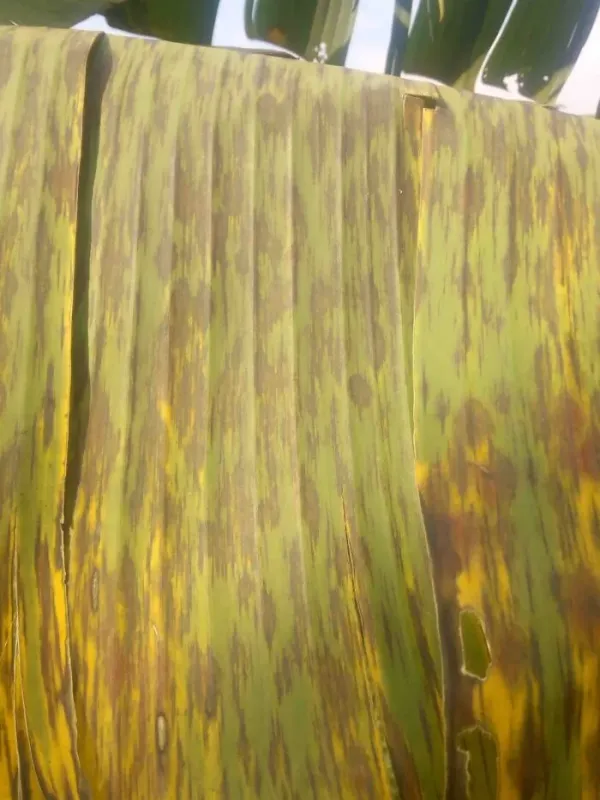
Description
Symptoms
Initial symptoms are characterized by irregular, faint, olive-to-black spots appearing on the adaxial surface of the banana leaves.
These spots eventually develop a dark, soot-like fungal growth that can often be rubbed off the leaf surface with physical pressure.
The discoloration typically follows the distribution of moisture, appearing along the leaf margins or near the midribs where dew accumulates.
While the infection is mostly superficial, it significantly impacts the aesthetic quality of the crop, creating a dirty appearance on the leaves.
In severe cases, the soot-like patches can become dense, reducing the effective light-harvesting surface of the leaves.
Pathogen
The disease is caused by the fungus Zasmidium musae-banksii, a pathogen that primarily affects the foliage of banana plants in tropical environments.
Historically classified under different names, this fungus is known for creating surface-level blemishes rather than invading deep internal tissues.
The pathogen propagates through spores that are easily disseminated by rain splashes and wind currents within plantation rows.
As an ascomycete fungus, it relies on high humidity and leaf surface moisture to complete its life cycle and establish new infection colonies.
Survival is maintained through overwintering on debris and infected leaves left on the ground, serving as a reservoir for recurring seasonal infections.
Conditions for development
Development is heavily favored by prolonged periods of high relative humidity, typically exceeding 80 percent in tropical climates.
Optimal temperatures for spore germination and mycelial growth range between +22 and +29 degrees Celsius, typical of banana-growing regions.
Poor plantation management, such as high plant density and lack of pruning, creates stagnant air conditions that promote the disease.
Frequent rainfall and heavy nocturnal dew provide the water film necessary for the fungal spores to colonize the leaf tissue effectively.
Low-lying areas or plantations with poor drainage systems often experience higher disease pressure due to increased ambient moisture.
Why it matters
The primary concern is the reduction in commercial value, as the dark blotches can stain the fruit bunches and reduce market appeal.
Though rarely lethal to the entire plant, the disease interferes with photosynthesis by masking portions of the leaves with fungal growth.
Secondary issues include increased operational costs for cleaning produce and applying fungicides during the growing season.
Heavy infection stress may cause premature senescence of leaves, potentially shortening the productive lifespan of the banana plant.
The accumulation of spores also complicates post-harvest storage, increasing the risk of quality loss during transportation to international markets.
Protection
Cultural practices such as regular de-leafing and the removal of infected plant debris are essential to lower the inoculum potential.
Improving air circulation through proper spacing and canopy management is a highly effective non-chemical method of control.
Fungicide programs utilizing protective or systemic chemicals can be applied strategically based on weather forecasts and monitoring.
- Sanitary removal of infected leaves.
- Optimizing spacing between banana pseudostems.
- Using copper-based or triazole fungicides.
- Monitoring weather patterns for high-risk humidity events.
Maintaining a balanced fertilization program helps ensure the plants remain vigorous enough to withstand minor infections and recover quickly.
Discussion
No discussions yet — be the first.