
Sepia bolete
Xerocomus porosporus
Description
Symptoms
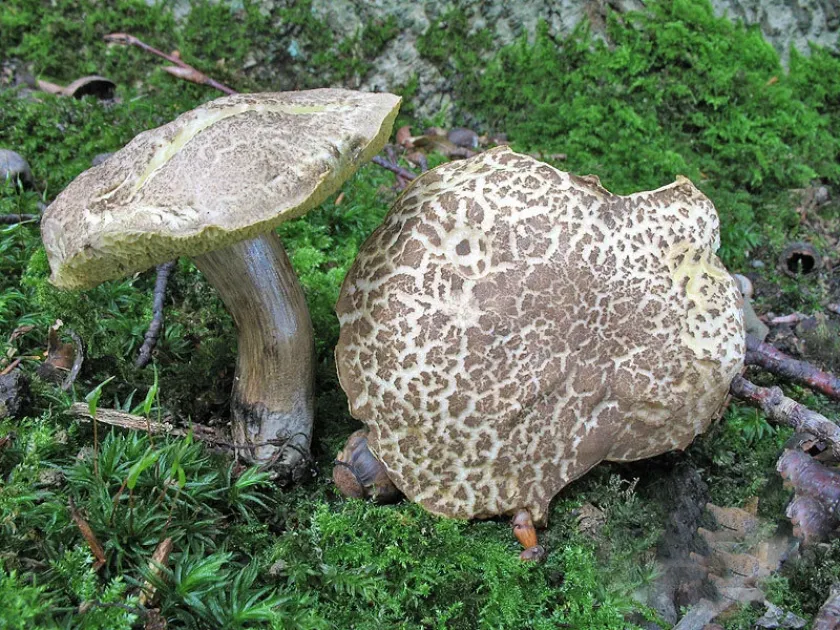
The cap of the sepia bolete is typically olive-brown to dark brown. Its surface often features fine cracks, especially in dry conditions, revealing the paler flesh underneath.
The pore surface is yellowish and turns a distinct blue-green color when bruised or cut, which is a key identifying characteristic of this species in the field.
The stalk is firm, cylindrical, and usually paler than the cap. It may sometimes show faint reddish or brownish hues near the base, with a fibrous internal texture.
The flesh is relatively soft and changes color upon exposure to air, reflecting the enzymatic reactions typical for many boletes within the Xerocomus genus.
- Cap diameter: 4–10 cm.
- Spore print: olive-brown.
- Texture: velvety or matte.
Pathogen
The Xerocomus porosporus, commonly known as the sepia bolete, is a mycorrhizal fungus and is not considered a plant disease or agricultural pathogen.
As a member of the Boletaceae family, this fungus forms essential symbiotic relationships with deciduous trees, particularly oaks, which supports overall forest health.
The organism does not cause any harm to plants. Instead, its mycelium helps host trees absorb water and nutrients from the soil, acting as a natural growth promoter in forest ecosystems.
The specific name porosporus refers to the microscopic features of its spores, which have truncated ends, a diagnostic characteristic used by mycologists for identification.
It plays a critical role in decomposing organic matter within the forest floor, contributing significantly to soil enrichment and nutrient cycling in woodland habitats.
Conditions for development
The fungus thrives in mixed and broad-leaved forests, specifically in habitats where it can establish ectomycorrhiza with root systems of mature deciduous trees.
It requires consistent humidity and well-drained soil rich in organic humus to initiate the development of fruiting bodies during late summer and autumn.
The sepia bolete is highly sensitive to environmental stressors, such as soil compaction or extreme chemical pollution, making it an indicator of woodland health.
Spore dispersal relies primarily on wind currents. Once spores land in suitable forest soil, they germinate and search for a host tree to colonize.
Stability of the forest microclimate, particularly the protective layer of fallen leaves and litter, is vital for protecting the delicate mycelium from desiccation.
Discussion
No discussions yet — be the first.