
Leaf scald of sugarcane
Xanthomonas albilineans
Description
Symptoms
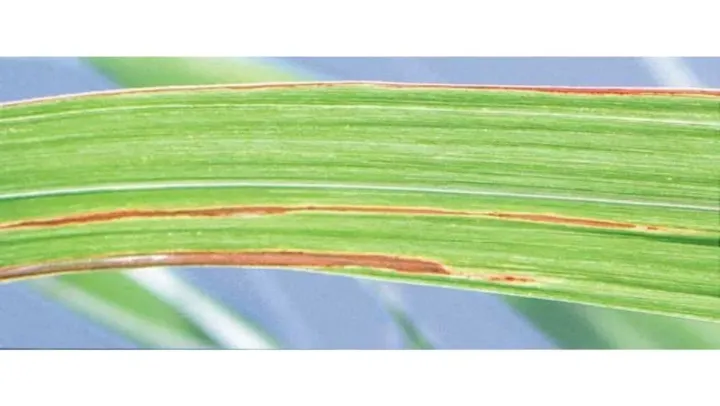
The most distinctive symptom is the appearance of narrow, white or pale yellow pencil-line stripes running longitudinally along the leaf blades.
In systemic infections, plants may show sudden wilting of the entire stalk, which gives the foliage a scorched or burned appearance.
Internal examination of the stalks reveals red or dark-colored vascular bundles, a clear indicator of the bacterial colonization of xylem vessels.
Infected plants often develop lateral shoots (tillers) that appear weak, stunted, and chlorotic, disrupting the normal growth pattern of the cane.
Leaves may dry out prematurely, and in severe cases, the entire clump of sugarcane may die back, leading to significant yield gaps.
Pathogen
Leaf scald is caused by the bacterium Xanthomonas albilineans, a specialized vascular pathogen that inhabits the xylem of sugarcane.
The pathogen is highly systemic, colonizing the entire vascular system of the host plant, including stalks, roots, and apical meristems.
The primary mode of transmission is through infected stalk cuttings used as vegetative planting material in sugarcane cultivation.
The bacterium produces a potent toxin known as albicidin, which interferes with chloroplast development, leading to the characteristic visual symptoms.
Strains of this bacterium vary in pathogenicity, which complicates breeding for resistance across different global regions.
Conditions for development
Mechanical transmission is the most frequent cause of spread, particularly during harvesting or planting when contaminated tools cut multiple stalks.
Environmental conditions such as high humidity, frequent rain, and moderate temperatures promote the movement of bacteria from the vascular system to the leaf surface.
Once on the leaf surface, the bacteria can be disseminated by wind-driven rain or splashing water to neighboring healthy stalks.
The disease tends to manifest more aggressively in fields where ratoon stunting is present or where crop management practices are suboptimal.
Although insect vectors are not considered the primary drivers of epidemics, they can contribute to the localized spread within a plantation.
Why it matters
Leaf scald significantly reduces both the cane tonnage and the sugar content (sucrose levels) of the harvested crop, causing major economic losses.
The disease causes substantial mortality in young plantings, requiring costly replanting and disrupting the farm's multi-year production cycle.
It severely impairs the quality of plant material, making it entirely unsuitable for further propagation and distribution to other areas.
Large-scale outbreaks can force farmers to abandon infected fields, significantly reducing the viability of local sugar industries.
Economic damage is exacerbated by the lack of direct chemical control measures, making management highly reliant on preventative strategies.
Protection
The most important control strategy is the exclusive use of disease-free planting material, often achieved through tissue culture and certification programs.
Rigorous sanitation of all harvesting and planting equipment using chemical disinfectants is essential to prevent the mechanical transmission of the pathogen.
Breeding and planting resistant sugarcane varieties remain the most effective long-term approach to managing leaf scald in commercial farming.
Regular surveillance and the rogueing of symptomatic plants help to identify and contain initial outbreaks before they spread throughout the field.
- Strict adherence to international plant quarantine regulations.
- Avoidance of planting in high-risk, humid environments.
- Testing seed cane batches using sensitive diagnostic tools like ELISA or PCR.
Discussion
No discussions yet — be the first.