
Volvariella taylorii
Volvariella taylorii
Description
Pathogen
Volvariella taylorii is a species of fungus belonging to the Pluteaceae family. It is crucial to clarify that this fungus is not a plant pathogen and does not cause diseases in crops.
Biologically, this species is classified as a saprotroph. It obtains its nutrition by decomposing dead organic matter such as leaf litter, grass clippings, or decaying wood fragments, rather than attacking living plant tissues.
Since this fungus lacks parasitic capabilities, it poses no threat to agriculture or gardening. Instead, it plays an essential role in the nutrient cycle by breaking down organic components into simpler forms.
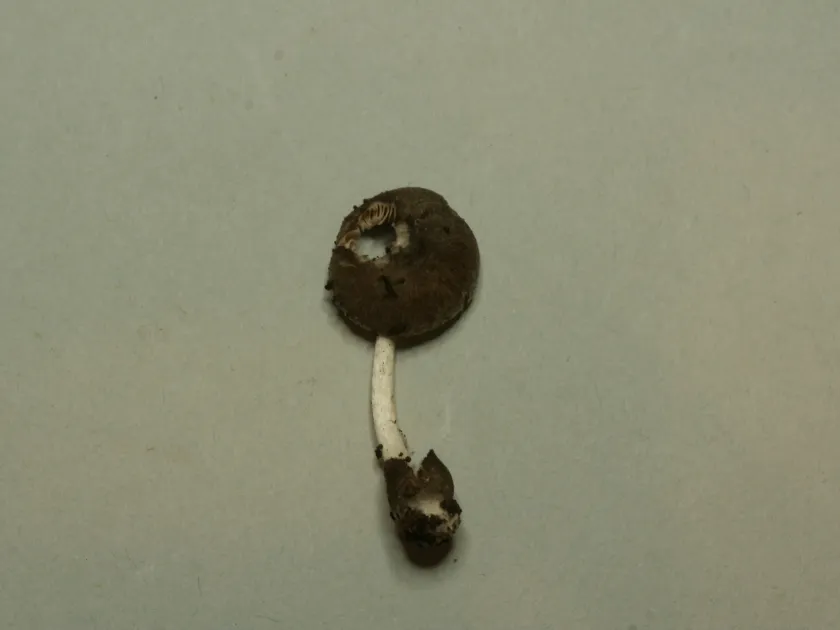
The morphology of the fungus is typical for its genus, characterized by a small cap, gills that turn pink as spores mature, and a volva at the base of the stipe. These features allow it to be identified by mycologists.
From an agronomical perspective, the presence of these mushrooms should be viewed as a sign of healthy soil organic turnover rather than a sign of a pathological or disease-related issue.
Conditions for development
This fungus thrives in moist, shaded environments where organic matter accumulates. It prefers well-drained soils that are rich in decomposing vegetation, providing a steady supply of nutrients for the mycelium.
Growth is typically stimulated by high humidity and moderate temperatures, which are common during or immediately following rainy seasons. These conditions allow the mycelium to expand rapidly through the soil surface.
Volvariella taylorii does not require a living host to survive, as it thrives independently in the soil or on compost heaps where it can efficiently recycle plant debris.
While some people may mistake these mushrooms for threats due to their appearance in fields or gardens, they simply appear when environmental conditions meet their biological requirements for reproduction.
The dispersal of the species relies on wind or water transporting spores to new areas with suitable substrate, allowing the life cycle to continue without impacting cultivated plant health.
Discussion
No discussions yet — be the first.