
Volvariella surrecta
Volvariella surrecta
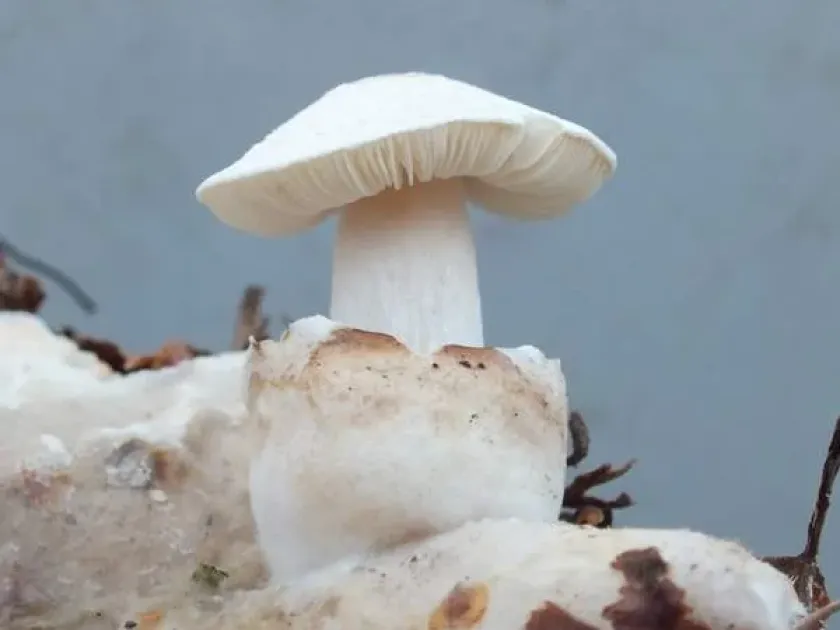
Description
Symptoms
The earliest sign of infection is the appearance of white, fuzzy, or mycelial mats forming on the cap or stem surface of the host mushroom.
As the infection progresses, small, ovate structures develop on the host, which are the burgeoning fruiting bodies of Volvariella surrecta.
Host mushrooms often exhibit severe deformation and growth stuntedness, making the original species almost unrecognizable to observers.
The gills of the host may become discolored or overgrown by the parasite's mycelium, eventually turning pinkish as the parasite releases its own spores.
In advanced stages, clusters of the parasite's fruiting bodies densely cover the host, effectively replacing the visual appearance of the original mushroom.
Pathogen
Volvariella surrecta is a species of mycophilic fungus within the Pluteaceae family, known for its unique parasitic lifestyle targeting other fungal species.
The fungus acts as an obligate parasite, primarily colonizing the fruiting bodies of Clitocybe nebularis (the clouded agaric) within its natural habitat.
The pathogen initiates infection by penetrating the mycelial tissues of the host, establishing a nutrient-absorbing network that drains the host's vitality.
The fungus is characterized by its ability to complete its own life cycle specifically by utilizing the resources of a living or freshly decaying mushroom host.
Scientific interest in this species stems from its specialized ecological role, demonstrating complex interactions between parasitic fungi and their hosts in forest ecosystems.
Conditions for development
The development of Volvariella surrecta is highly dependent on high humidity levels and mild temperatures, typically prevalent in autumn.
The fungus thrives in forest environments where its primary host, Clitocybe nebularis, is abundant and provides a consistent substrate for colonization.
Stable soil moisture and rich organic detritus help the parasite's mycelium survive through unfavorable conditions and periods between host fruiting.
Optimum growth for the parasite's fruiting bodies occurs in a temperature range between 10 and 18 degrees Celsius, characteristic of temperate forest autumns.
Dissemination occurs via spores transported by wind currents, splashing rain droplets, and various insects that frequent the damp forest floor.
Why it matters
The primary impact of Volvariella surrecta is the suppression of the host's normal development and the eventual destruction of its fruiting structures.
In a commercial mushroom cultivation context, the presence of such a parasite could lead to significant crop loss and compromised product quality.
The parasitic activity alters the biochemical composition of the infected fungi, rendering them undesirable or unsafe for consumption.
By interfering with the host's ability to produce spores, the parasite reduces the reproductive success of the Clitocybe population in local areas.
The parasite acts as a localized pathogen that can significantly reduce the yield of healthy mushrooms in regions where host populations are concentrated.
Protection
In wild settings, natural control is the norm, as Volvariella surrecta is part of the ecological balance, requiring no human intervention.
For agricultural settings, rigorous phytosanitary measures are essential, including the immediate removal and destruction of any infected fungal material.
Maintaining optimal environmental controls, such as reducing excess humidity and improving airflow, can significantly discourage the germination of parasitic spores.
Sterilization of equipment and surfaces in mushroom farms is vital to prevent the cross-contamination of healthy mushroom blocks by fungal pathogens.
Implementing a strict monitoring program to detect early signs of mycelial growth on hosts can help contain localized outbreaks before they spread.
Discussion
No discussions yet — be the first.