
Mouse mushroom
Volvariella murinella
Description
Pathogen
Volvariella murinella is a species of fungus within the Pluteaceae family. In agronomic contexts, it is primarily identified as a saprotrophic organism that thrives on decaying organic matter within the soil profile.
The pathogen exists mainly as a mycelial network. While it is not an obligate parasite of living plants, its presence in the root zone can indicate an accumulation of organic debris or poor agricultural hygiene.
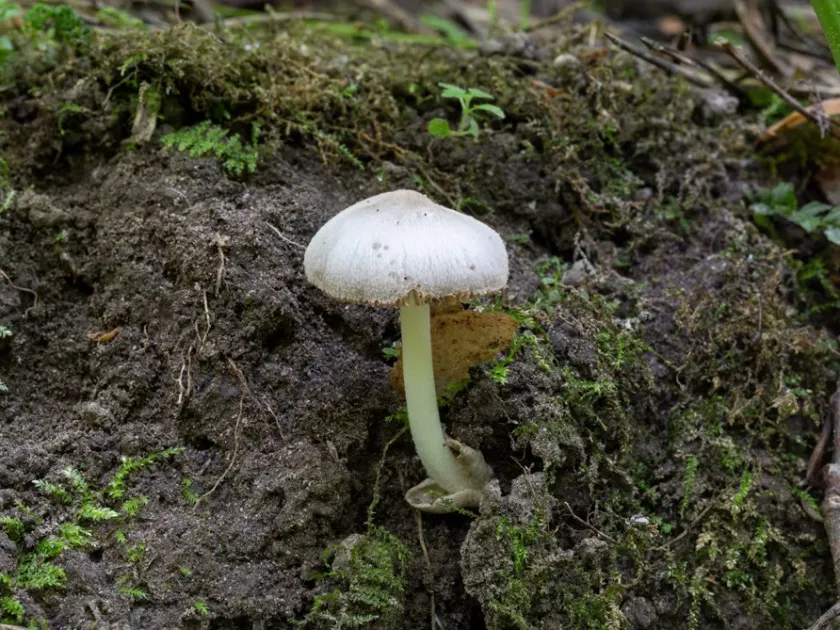
The fungus produces small, mouse-grey sporocarps, which typically appear after significant rainfall or irrigation, signaling the presence of a developed fungal colony in the substrate.
Biologically, the fungus is highly efficient at breaking down cellulose, which makes it a frequent inhabitant of soils rich in straw, mulch, or unharvested plant remains.
Identification of the species is confirmed through mycological analysis of its spores and the characteristic volva located at the base of the stem, distinguishing it from other soil fungi.
Conditions for development
The growth of Volvariella murinella is highly dependent on environmental humidity. A moist substrate combined with temperatures ranging from 18 to 24 degrees Celsius provides the best conditions for mycelial spread.
The presence of uncomposted plant materials provides a necessary energy source for the fungus to establish its colony within the proximity of cultivated crops.
Poorly drained soil or areas with low airflow, such as greenhouses with inadequate ventilation, create a microclimate that strongly favors the colonization of the fungus.
Soil pH plays a minor but relevant role; neutral to slightly acidic soils are typically more conducive to the proliferation of this particular species.
Frequent, shallow irrigation practices that keep the surface layer of soil consistently damp allow the fungus to remain active and potentially colonize the root area of seedlings.
Why it matters
The primary concern regarding this fungus in agriculture is its competitive interaction within the rhizosphere. It can physically occupy soil spaces, hindering the development of fine root hairs.
While the fungus does not typically kill living tissue directly, its activity can lead to a general lack of vigor in crops due to nutrient uptake competition.
The fungus may inadvertently retain excess moisture around the root crown, creating an environment that encourages secondary infections from more aggressive bacterial or fungal pathogens.
Heavy colonization by the mycelium can reduce soil quality and structure, making it more difficult for seeds to germinate and for young plants to establish a firm root system.
Continuous presence of the fungus in a plot can lead to cumulative yield losses as the overall health and immune status of the cultivated plants gradually decline.
Protection
The most effective strategy for managing this fungus is maintaining high standards of field sanitation, including the removal of all harvest residues from the area.
Deep plowing or mechanical turning of the soil is highly recommended to disrupt the mycelial network and expose it to unfavorable drying conditions on the surface.
Improving soil aeration through regular inter-row cultivation helps to decrease the moisture levels in the root zone, effectively deterring fungal growth.
Strategic irrigation management, ensuring the soil is not perpetually soaked, is key to preventing the activation of dormant spores present in the topsoil.
- Practicing strict crop rotation.
- Using bio-fungicides containing beneficial fungi like Trichoderma.
- Implementing efficient drainage systems in greenhouses.
Discussion
No discussions yet — be the first.