
Verticillium wilt
Verticillium vilmorinii
Description
Symptoms
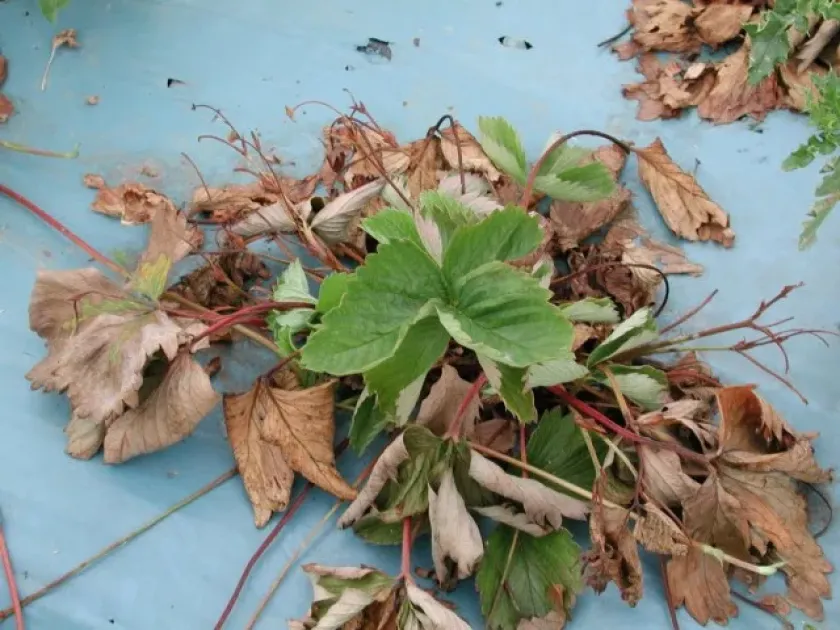
The first external symptoms often appear as localized chlorosis (yellowing) of the lower leaves. This yellowing often occurs in a wedge-shaped pattern on the leaf margin before spreading to the rest of the leaf.
A hallmark sign of the disease is unilateral wilt, where only certain branches or one side of the plant show symptoms, while the rest remains green, creating a stark contrast in the plant's appearance.
Leaves eventually dry out, turn brown, and curl, but they often remain attached to the stem for an extended period, which helps distinguish it from other root-rotting pathogens.
Internal diagnostics involve cutting into stems or petioles; infected plants exhibit a characteristic browning or darkening of the vascular ring due to the accumulation of fungal hyphae and host-defense compounds.
Stunted growth is common in plants infected early in the season, leading to poor fruit development, low vigor, and, in severe cases, the complete collapse of the plant during periods of high demand for water.
Pathogen
Verticillium wilt is caused by soil-borne fungi of the genus Verticillium, primarily Verticillium dahliae and Verticillium albo-atrum. These pathogens are known for their extreme resilience and persistence in various soil types.
The fungus survives in the soil and on plant debris by forming microsclerotia, which are microscopic, durable structures capable of remaining viable for many years in the absence of a host plant.
Infection typically occurs through the root system. The fungus enters via natural openings or wounds created by soil pests, nematodes, or mechanical damage during cultivation, eventually colonizing the xylem vessels.
As a vascular wilt disease, it triggers a systematic response. The fungus produces enzymes and toxins while its mycelium blocks the flow of water and nutrients, leading to the rapid decline of the infected host.
This pathogen has an exceptionally broad host range, infecting hundreds of species, including major agricultural crops like tomatoes, potatoes, strawberries, cotton, and various woody ornamentals.
Conditions for development
The pathogen thrives in moderate temperatures, typically between 18°C and 25°C. These conditions coincide with the active growth phases of many crops, increasing the window of vulnerability.
Fluctuating soil moisture levels, ranging from waterlogged conditions to drought stress, weaken the plant's root system, making it much easier for the fungal hyphae to penetrate and colonize the tissues.
Continuous monoculture is a major driver of disease spread. Repeatedly planting susceptible crops in the same soil allows the population density of microsclerotia to increase exponentially over time.
Environmental movement of the pathogen occurs via contaminated soil particles, infected farm machinery, untreated seeds, and irrigation water that might carry fungal propagules from one field to another.
The presence of certain weeds, which act as symptomless reservoirs for the fungus, complicates management by allowing the pathogen to persist in the field even during fallow periods or crop rotations.
Why it matters
The primary economic impact of Verticillium wilt is the systemic nature of the infection. Once the xylem is blocked, the plant cannot be effectively cured, leading to total yield loss for the individual infected plant.
Field losses can be catastrophic, ranging from minor yield reductions to total crop failure. In perennial crops, such as fruit trees or berries, the disease can lead to the permanent loss of the entire orchard or plantation.
Produce quality is significantly degraded; infected plants produce smaller, unmarketable fruits or vegetables, often with altered chemical compositions that affect flavor and post-harvest storage potential.
Soil contamination is the most persistent problem. Once established, Verticillium remains a significant threat, requiring farmers to switch to resistant varieties or invest in expensive soil disinfestation practices.
Because the disease is difficult to detect until it is well-established, it often spreads silently across agricultural operations before visible symptoms alert the grower to the presence of the pathogen.
Protection
Effective management begins with preventative strategies. The use of resistant or tolerant cultivars is the most reliable way to minimize the impact of the disease in high-risk areas.
Implementing a rigorous crop rotation cycle—incorporating non-host crops like grasses or cereals—is essential to reduce the concentration of microsclerotia in the soil over time.
Biological control agents, particularly beneficial fungi like Trichoderma species, have shown promise in colonizing the rhizosphere and outcompeting the pathogen for space and nutrients.
Sanitation is critical: all infected plant material must be removed and destroyed (preferably by burning) immediately. Tools and equipment should be thoroughly cleaned to prevent moving contaminated soil.
- Select certified disease-free planting material.
- Manage soil pH to optimize plant health.
- Use drip irrigation to prevent water spread.
- Control nematodes to reduce infection entry points.
Discussion
No discussions yet — be the first.