
Verticillium wilt
Verticillium heterocladum
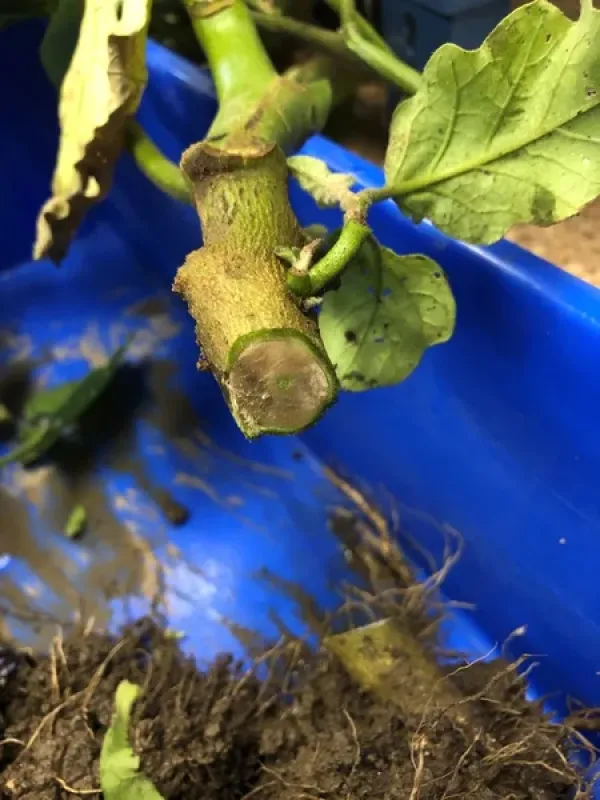
Description
Symptoms
The primary symptom of Verticillium wilt is the yellowing (chlorosis) of the lower leaves, often appearing first on one side of the plant or even on one side of a leaf blade. This yellowing gradually progresses upward as the infection spreads through the vascular system.
Wilting is a major hallmark of the disease, with plants often appearing flaccid during the warmest parts of the day. While plants may regain their turgor overnight during the early stages of infection, the wilting eventually becomes permanent as the vascular blockage worsens.
A diagnostic sign of this infection is the darkening of the vascular tissue inside the stems or branches. When a cross-section of an infected stem is cut, a distinct brownish or black discoloration can be seen within the woody tissue (xylem).
Stunted growth is commonly observed in infected plants, leading to significantly reduced yields or poor fruit quality. If the infection is severe, the leaves will turn necrotic, dry out, and drop prematurely, often leading to the eventual death of the entire plant.
In humid conditions, the pathogen may produce white or gray conidial growth on the surface of the infected plant parts. These spores can easily be spread to healthy plants via water splashes or air currents, exacerbating the disease outbreak.
Pathogen
The causative agent of this disease is the soil-borne fungus Verticillium heterocladum. It belongs to the group of imperfect fungi and is known for its ability to survive in the soil for many years by producing hardy resting structures called microsclerotia.
The pathogen primarily infects plants through the root system, entering through natural openings or physical wounds caused by environmental factors or soil pests. Once inside, the fungus colonizes the xylem, the tissue responsible for transporting water and minerals throughout the plant.
As the fungal mycelium grows within the xylem, it disrupts the flow of water, leading to the characteristic wilting symptoms. Additionally, the fungus produces toxins that damage the internal tissues of the plant, further weakening its physiological functions.
Unlike some other fungal pathogens, this species has a broad host range, allowing it to affect various agricultural crops, including vegetables, fruits, and ornamental plants. It can exist in the soil as a saprophyte, feeding on decaying organic matter until a suitable host is available.
The infection process is highly dependent on environmental conditions, particularly soil moisture and temperature. The fungus remains latent in the soil until it detects root exudates, which signal it to germinate and begin the infection cycle.
Conditions for development
Verticillium wilt thrives in moderate soil temperatures, typically between 18°C and 24°C. These temperatures are optimal for the growth of many common host crops, which creates a perfect environment for the pathogen to thrive simultaneously.
The prevalence of the disease is closely linked to previous cropping history. If susceptible crops have been grown repeatedly in the same soil, the concentration of microsclerotia increases significantly, making the site highly conducive to future outbreaks.
Soil structure and aeration play a role in disease development. Overwatered, poorly drained soils create anaerobic conditions that weaken plant roots, making them more vulnerable to fungal invasion and hindering the plant's ability to resist the pathogen.
The presence of root-feeding pests, such as nematodes, creates physical entry points for the fungus. These pests not only damage the roots but can also act as vectors, transporting fungal propagules directly to the site of infection.
Poor sanitation practices, such as failing to remove crop residues after harvest, provide the fungus with a habitat to survive and multiply during the off-season. Infected debris left in the soil serves as a primary source of inoculum for the next planting season.
Why it matters
The economic impact of Verticillium wilt is significant, as it can drastically reduce crop productivity. In cases of heavy infestation, farmers may suffer total crop loss, rendering fields temporarily unusable for susceptible varieties.
The disease reduces the aesthetic and commercial value of produce, leading to smaller, misshapen fruits and lower quality yields. In perennial plants, the infection is often progressive, leading to the gradual decline and eventual mortality of the plants over several years.
Because the pathogen has a wide host range, it limits the options for crop rotation, often forcing growers to choose less profitable or less desirable crops to maintain field health. This adds an extra layer of complexity to agricultural management.
The persistence of the fungus in the soil for up to seven years means that once a field is infested, it requires a long-term strategy for remediation. This leads to increased costs associated with managing the soil and protecting sensitive crops.
Indirect costs, such as the purchase of fungicides, the implementation of complex disinfection protocols for greenhouses, and the need for frequent labor-intensive monitoring, significantly increase the total cost of production.
Protection
The most effective strategy for managing Verticillium wilt is a long-term crop rotation scheme, ideally lasting 4 to 5 years, utilizing non-host species like cereals or grasses to reduce the fungal inoculum levels in the soil.
Selecting resistant cultivars and hybrids is the cornerstone of sustainable disease management. Breeding programs have successfully developed varieties with robust genetic resistance, which should be the first line of defense for any commercial grower.
In controlled environment agriculture, such as greenhouses, soil sterilization or the use of clean, soilless media is essential. Furthermore, the application of beneficial biological agents like Trichoderma species can help suppress the pathogen's activity in the root zone.
Integrated pest management is crucial to minimize physical root damage. By controlling nematode and soil insect populations, growers can limit the entry points for the fungus, thereby reducing the likelihood of successful infection.
Sanitation is vital; infected plants should be promptly identified, uprooted with as much root mass as possible, and destroyed (burned or buried away from the site). Removing crop debris post-harvest prevents the buildup of the fungal population in the soil for future seasons.
Discussion
No discussions yet — be the first.