
Verticillium wilt
Verticillium albo-atrum
Description
Symptoms
Typical symptoms include the yellowing of lower leaves, often characterized by V-shaped chlorotic zones that develop between the leaf veins.
Plants often exhibit daytime wilting during warmer hours while appearing to recover at night, a phenomenon known as flagging that precedes permanent wilting.
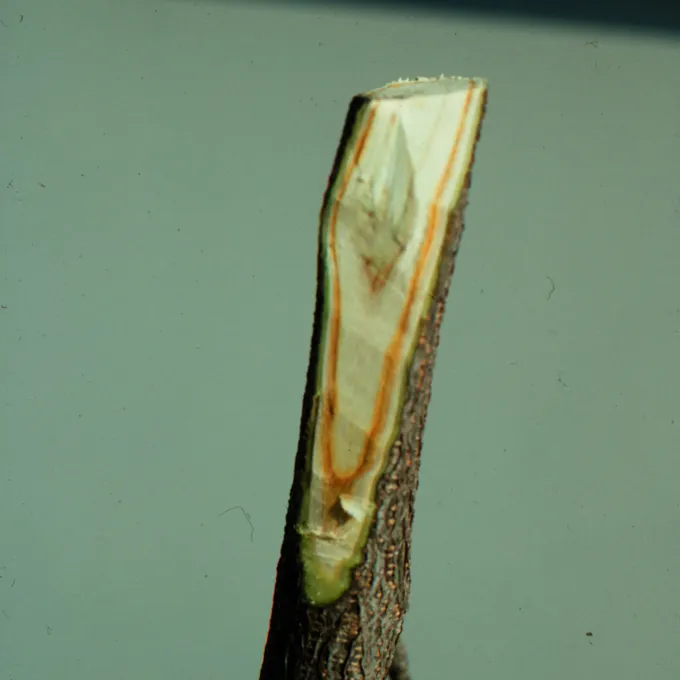
A diagnostic sign can be seen by cutting the stem near the base, revealing a distinct brown or dark discoloration of the vascular tissues.
As the infection advances, leaves curl, turn necrotic, and drop prematurely, leaving the stem bare and resulting in stunted growth of the plant.
Ultimately, the reduced water intake leads to the collapse and death of the entire plant, as the xylem vessels become completely blocked by fungal growth.
Pathogen
The causative agent of this disease is the soil-borne fungus Verticillium albo-atrum, a systemic pathogen that attacks the vascular system of a wide range of host plants.
The fungus produces microscopic, durable structures known as microsclerotia, which allow it to survive in the soil for many years even in the absence of a host.
Infection primarily occurs through the root system, often via microscopic wounds, after which the mycelium colonizes the xylem vessels throughout the plant.
Once inside, the fungus spreads upward, obstructing water flow and producing toxic metabolites that disrupt the plant's normal physiological processes.
This pathogen is highly versatile, capable of infecting hundreds of different species including vegetables, fruit trees, and ornamental plants.
Conditions for development
Development of the disease is favored by moderate soil temperatures and high moisture levels, which facilitate the germination of fungal structures.
Inadequate crop rotation is a primary driver of the disease, allowing the population of microsclerotia to build up to dangerous levels in the soil.
Cultural practices that cause root damage, such as deep hoeing or improper cultivation, increase the risk of the fungus entering the root tissues.
Plants under stress from poor nutrition, particularly potassium deficiency, or those growing in acidic soils are significantly more susceptible to infection.
Contaminated farm equipment, tools, and irrigation water often act as carriers, spreading the pathogen from infested areas to clean fields or greenhouses.
Why it matters
Verticillium wilt causes significant economic losses globally by reducing both the yield and the aesthetic quality of agricultural and horticultural crops.
Infected plants produce fewer and smaller fruits, which often exhibit poor quality, making them unsuitable for market or long-term storage.
The persistence of the pathogen in the soil means that affected fields often require long-term quarantine or the use of expensive soil fumigation techniques.
In commercial nurseries, the disease can lead to the total loss of inventory and the necessity of destroying all plants within an affected batch.
Management costs are high due to the requirement for persistent sanitation, the use of resistant varieties, and the loss of land utility for several seasons.
Protection
Effective control strategies revolve around the use of disease-resistant or tolerant cultivars, which is the most sustainable approach to managing the disease.
Strict crop rotation with non-host crops for a period of at least 4 to 5 years is essential to reduce the concentration of soil-borne microsclerotia.
Sanitation practices, including the removal and destruction of infected plant debris, are crucial to prevent the pathogen from over-wintering in the soil.
- Utilizing disease-free seeds and certified planting material.
- Optimizing fertilizer programs to boost plant vigor and immunity.
- Sterilizing tools and equipment to prevent cross-contamination.
In cases of severe outbreak, soil solarization may be considered to reduce the levels of fungal structures in the topsoil layer during the summer months.
Discussion
No discussions yet — be the first.