
Pear scab
Venturia nashicola
Description
Symptoms
Initial symptoms are characterized by olive-brown, velvet-like lesions that appear on the undersides of young leaves during the early spring.
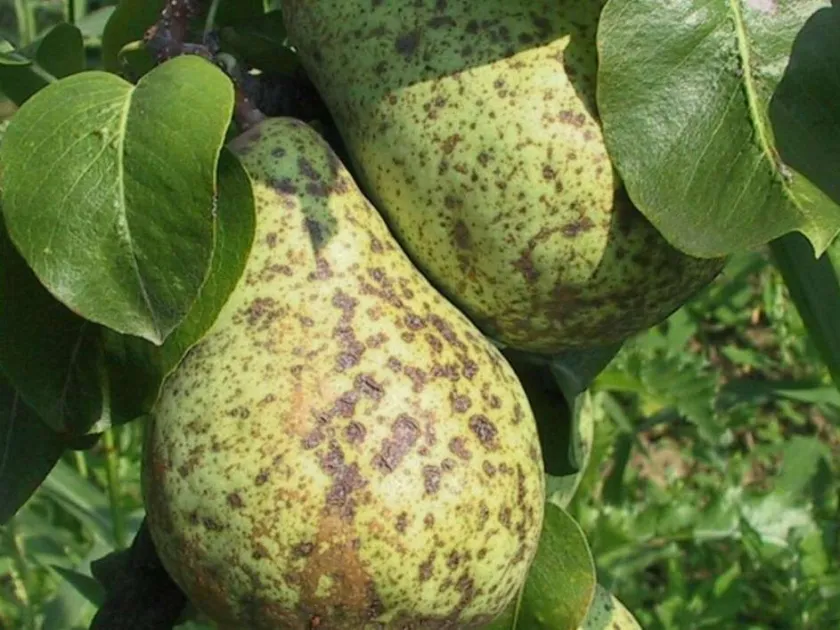
As the disease progresses, dark, corky spots develop on the fruit surface, often causing cracks, deformation, and significant reduction in fruit quality.
Infected shoots may show necrotic lesions, bark splitting, and reduced vigor, which can lead to dieback of twigs if the infection is severe.
The blossom infection leads to withered flower stems and subsequent failure of fruit set, resulting in immediate yield losses for the season.
Later in the season, lesions on the fruit turn darker and harder, sometimes developing into deep pits that allow secondary rot pathogens to enter.
Pathogen
The disease is caused by the fungus Venturia nashicola, which specifically targets Asian pear varieties and can cause significant damage in orchards.
The pathogen completes its life cycle by utilizing both sexual reproduction in fallen leaves during winter and asexual conidia production during the growing season.
The overwintering stage occurs in infected leaf litter, where the fungus produces spores that are released by spring rainfall to begin the infection cycle.
These spores, known as ascospores, are wind-dispersed and act as the primary inoculum for initiating the disease in developing pear tissues.
Once established, the fungus spreads rapidly via conidia through rain splashes and high-humidity air currents, infecting leaves, blossoms, and fruits.
Conditions for development
Venturia nashicola thrives under conditions of high relative humidity and frequent rain events, which are essential for spore germination.
The most dangerous period for infection coincides with the bud break and petal fall stages, when young and susceptible tissues are rapidly expanding.
Orchard microclimates with poor air circulation, often due to overly dense tree canopies, significantly increase the risk of disease outbreak.
Prolonged leaf wetness duration is the primary environmental trigger for the successful colonization of the fungus on host pear tissues.
Temperature plays a crucial role, with mild to moderate temperatures being optimal for the rapid colonization and sporulation of the pathogen.
Why it matters
The economic impact of the disease is severe, as infected fruits are often downgraded or completely discarded due to unsightly scabbing and cracking.
Defoliation caused by leaf infection weakens the trees, reducing their ability to store energy for the next year’s vegetative growth and production.
Weakened trees are more susceptible to environmental stress, including winter cold injury and attacks by various secondary insect pests.
The disease reduces the long-term productivity of the orchard, often necessitating increased investment in chemical control and intensive pruning.
In cases of epidemic infection, total harvest losses can occur if control measures are not implemented during the early stages of bud development.
Protection
Sanitation is the first line of defense; removing and destroying all fallen leaves at the end of the season significantly reduces the primary inoculum.
Strategic pruning to open the tree canopy ensures better light penetration and airflow, which minimizes the duration of leaf wetness and disease pressure.
A structured fungicide application program, targeting critical growth stages, is vital for protecting tissues from infection during wet weather periods.
Incorporating resistant or less susceptible pear cultivars into the orchard management plan provides a sustainable approach to long-term disease control.
- Use of protective copper-based sprays in early spring.
- Monitoring weather patterns to time fungicide applications.
- Balancing fertilizers to prevent excessive succulent growth.
- Implementing biological control agents when appropriate.
Discussion
No discussions yet — be the first.