
Willow scab
Venturia martianoffiana
Description
Symptoms
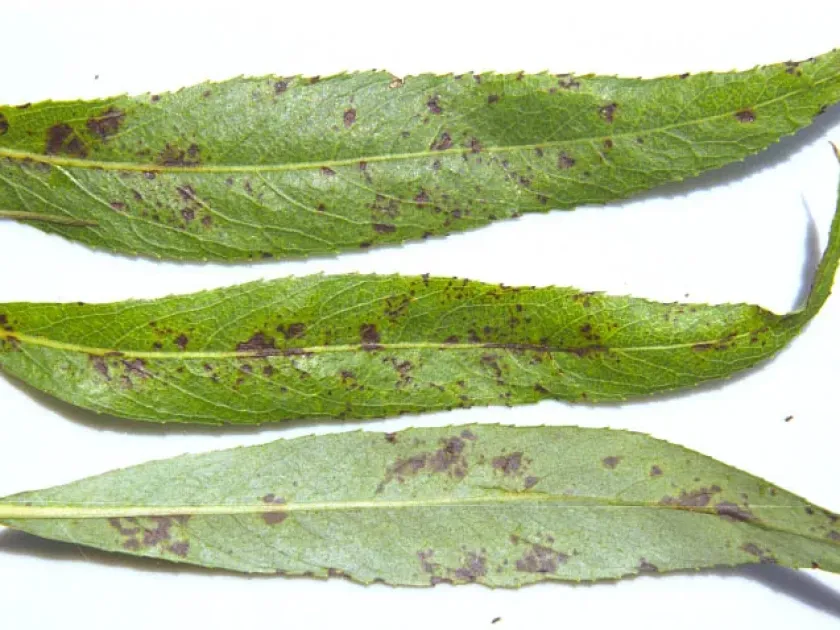
The most recognizable sign of willow scab is the appearance of dark, almost black, irregular lesions on leaves. These spots can expand rapidly, often causing the entire leaf to wither and curl.
In humid conditions, a characteristic olive-black, velvety layer forms on the undersides of the leaves. This represents the sporulation of the fungus, confirming the presence of Venturia martianoffiana.
Young shoots are particularly susceptible to the infection. Infected branches often show signs of curling or wilting, followed by necrotic lesions that result in the tip of the branch dying back.
Premature leaf drop is a common consequence of heavy infection. The tree loses its photosynthetic capacity early in the season, which severely hampers its growth and ability to store reserves for winter.
Repeated annual attacks lead to visible crown deformity. The persistence of the infection causes twigs to become stunted, twisted, and brittle, significantly reducing the aesthetic value of the tree.
Pathogen
The disease is caused by the ascomycete fungus Venturia martianoffiana. It is a specialized pathogen that primarily targets species within the Salix genus, affecting various willow varieties in nurseries and natural stands.
The fungus overwinters in the form of mycelium or pseudothecia within infected shoots and fallen leaves. This allows the pathogen to survive harsh winter conditions and remain ready for infection the following spring.
As temperatures rise and moisture becomes available, the fungus produces ascospores. These spores are released and disseminated by wind and rain, triggering the primary infection cycle on newly emerged leaves and succulent shoots.
The fungus invades plant tissues through stomata or mechanical wounds. Once inside, the mycelium spreads intercellulary, drawing nutrients from the host and causing significant cellular damage.
Secondary infections are driven by conidia, which are produced throughout the growing season. These asexual spores facilitate rapid spread of the disease under favorable environmental conditions, leading to multiple infection cycles per season.
Conditions for development
High relative humidity and frequent rainfall are the primary drivers of willow scab development. Moisture is essential for the germination of spores and their subsequent penetration into the host tissue.
The pathogen thrives at temperatures ranging from 15°C to 22°C. Spring weather, characterized by mild temperatures and regular precipitation, provides the optimal window for the initial outbreak.
Dense planting schemes that restrict airflow through the canopy create a microclimate with prolonged leaf wetness. This stagnant environment promotes the accumulation and spread of fungal spores.
Trees stressed by poor soil conditions, nutrient deficiencies, or insect damage are highly susceptible. A weakened host has a compromised immune response, making it easier for the fungus to establish itself.
Low-lying areas or sites with poor drainage are high-risk zones for infection due to the persistent humidity. Such environments often lead to severe localized outbreaks if not managed correctly.
Why it matters
Willow scab causes significant damage in both commercial nurseries and landscape settings. Infected trees suffer from reduced vigor, stunted growth, and loss of commercial marketability due to unsightly lesions.
The disease negatively impacts the tree's health by disrupting photosynthesis. The inability to produce sufficient carbohydrates leaves the tree vulnerable to secondary infections and environmental stressors.
Winter hardiness is significantly reduced in heavily infected trees. Because the tree fails to accumulate adequate energy reserves, it is prone to cold damage or frost kill during winter months.
In decorative settings, the visual impact is profound. Distorted branches, black spots, and leaf dieback ruin the intended aesthetic effect of the willow, often requiring extensive corrective pruning.
Left unmanaged, chronic infections can lead to the complete decline of younger trees. If the infection reaches the main branches, the structural integrity of the plant is compromised, necessitating removal.
Protection
Sanitation is the cornerstone of disease management. Removing and burning infected shoots and raking up fallen leaves drastically reduces the primary inoculum source for the following season.
Pruning should be performed during dry weather, ensuring that all infected tissue is removed. It is essential to cut back into healthy wood to ensure no fungal mycelium remains in the stump.
Promoting good air circulation is vital. Thinning the canopy and maintaining appropriate spacing between trees helps dry foliage faster after rain, making it difficult for the fungus to germinate.
Chemical control involving fungicides may be necessary in nurseries or high-value landscapes. Applications should target the early stages of spring growth to protect new leaf tissue.
- Apply copper-based sprays in early spring to prevent initial infection.
- Utilize systemic fungicides (triazole class) during the growing season as needed.
- Focus on balancing fertilization to promote vigorous, yet not overly succulent, growth.
Discussion
No discussions yet — be the first.