
Phoma black stem
Vacuiphoma bulgarica
Description
Symptoms
The disease starts with brown, irregular spots on the leaves, which often feature a yellowish halo. As the infection progresses, these spots expand.
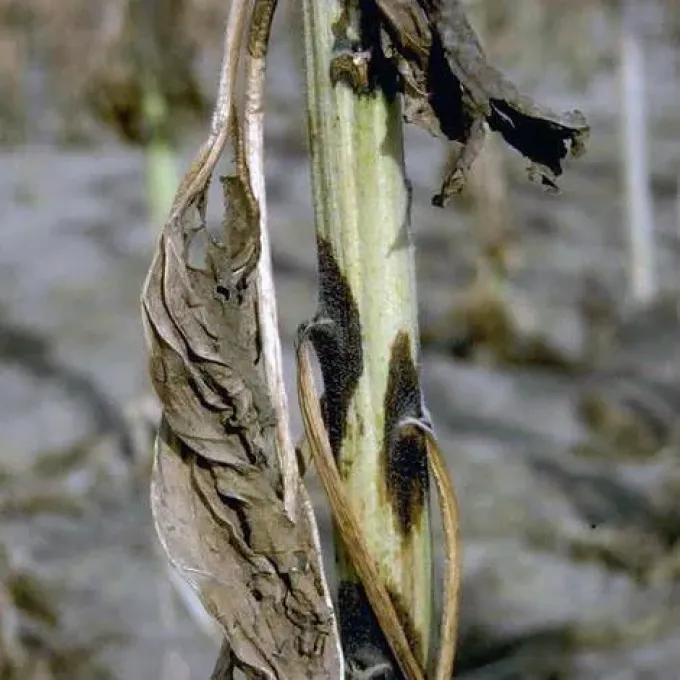
The most distinctive symptom is the development of large dark-brown to black lesions on the stem, typically occurring at the base or around leaf axils.
The internal tissue of the stem becomes brittle and disintegrated (pith destruction), leading to lodging and premature plant death.
Under close inspection, the infected stem surface reveals clusters of small black pycnidia, which are a hallmark of this particular pathogen.
Heavily infected plants often show stunted growth, small and poorly filled heads, and significantly reduced seed yield compared to healthy plants.
Pathogen
The causative agent of the disease is the fungus Vacuiphoma bulgarica (formerly known as Phoma macdonaldii). It is a coelomycetous fungus that specifically affects sunflower crops.
The pathogen survives in the soil and on crop residues as pycnidia and mycelium. It can remain viable for several years, making the field a long-term reservoir for the disease.
During the growing season, the fungus spreads via conidia, which are disseminated by rain splash, wind, and insects. Infection can occur at any stage of plant development.
Once inside the plant tissue, the mycelium colonizes the stem and leaf structures, disrupting the internal physiological processes of the sunflower.
The fungus produces small black fruiting bodies called pycnidia on the surface of necrotic tissues, which serve as the primary source of secondary infection throughout the season.
Conditions for development
Vacuiphoma bulgarica thrives in warm, humid conditions. High rainfall during the sunflower's flowering or grain-filling stages strongly favors disease development.
Optimal temperatures for fungal growth range from +20°C to +25°C, coupled with high relative humidity, which promotes rapid spore germination.
Dense plant stands restrict airflow and maintain a microclimate conducive to infection, allowing the fungus to spread more efficiently across the field.
Plant stress, including drought, nutrient imbalances, or mechanical damage from insect feeding, significantly increases susceptibility to the pathogen.
Excessive nitrogen application can encourage lush vegetative growth that is more prone to rapid colonization by the fungus.
Why it matters
Phoma black stem is recognized as a major disease of sunflowers, frequently resulting in substantial yield losses, often exceeding 50% in severe outbreaks.
The destruction of vascular tissues within the stem prevents the movement of water and essential nutrients, causing the plant to wither prematurely.
Lodging caused by structural stem failure makes mechanical harvesting extremely difficult, leading to additional grain losses during the harvest operation.
Seed quality is severely compromised, resulting in lower oil content and lower thousand-kernel weight, which directly impacts the crop's market value.
Infected seeds can act as long-distance carriers of the pathogen, potentially introducing the disease into previously clean agricultural areas.
Protection
A long-term crop rotation strategy, typically avoiding sunflowers on the same field for at least 7–8 years, is essential to reduce soil inoculum levels.
Selecting and planting genetically resistant sunflower hybrids is the most effective and sustainable long-term management strategy available to farmers.
Proper soil management, including deep tillage to bury crop residues, helps accelerate the breakdown of infected plant material and reduces spore production.
Seed treatment with systemic fungicides provides an important protective barrier for seedlings during the critical early stages of crop development.
Foliar application of fungicides at specific growth stages, such as the 4–6 leaf stage and prior to flowering, can effectively manage the disease and protect yield potential.
Discussion
No discussions yet — be the first.