
Violet smut
Urocystis violae
Description
Symptoms
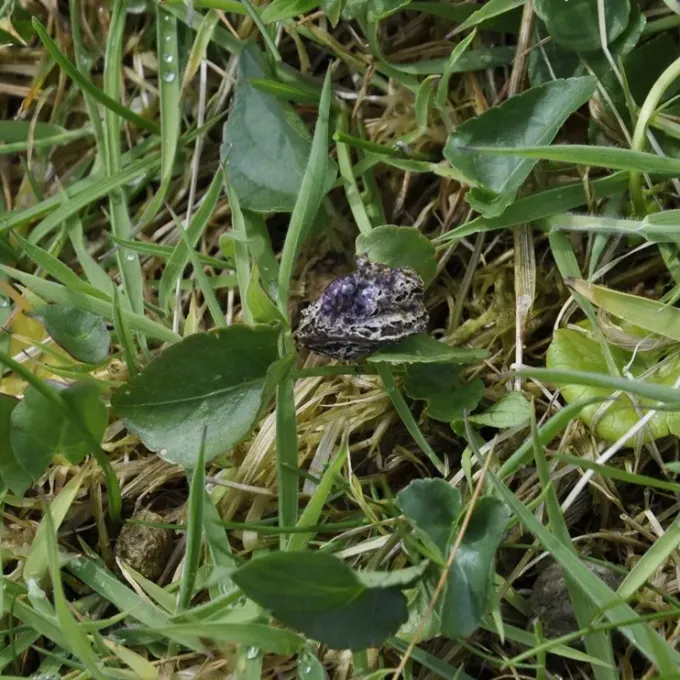
Early symptoms appear as swelling or pustules on the leaves and leaf stalks, which often develop a characteristic greyish or metallic lead-like appearance.
As the spores mature, the outer layer of these pustules ruptures, exposing a mass of dusty, dark brown or black spores, which is a telltale sign of the smut infection.
Severely affected leaves become deformed, curl, and wither prematurely, which significantly compromises the overall vigor and growth of the violet plant.
The infection may become systemic, affecting the development of shoots and leading to distorted growth patterns that make the plant aesthetically unappealing.
As the disease progresses, the ruptured tissues become brittle, allowing the spore dust to spread easily across the garden, endangering neighboring healthy plants.
Pathogen
The causative agent of this disease is the microscopic fungus Urocystis violae, which belongs to the smut fungi group. It is an obligate parasite specifically targeting plants within the Violaceae family.
The fungus overwinters in the soil and on decaying plant debris in the form of chlamydospores, which are highly resistant to adverse environmental conditions and cold temperatures.
In spring, when conditions become suitable, these spores germinate and form infectious hyphae that penetrate the host plant's tissues during its active growth phase.
Dissemination occurs primarily via wind currents, rain splashes, and irrigation water, as well as through contaminated soil carried on tools or garden footwear.
The life cycle of the pathogen is tightly synchronized with the violet's vegetative season, allowing it to build up significant inoculum levels in established garden beds over time.
Conditions for development
Violet smut development is most aggressive under conditions of high humidity and moderate temperatures, typically ranging from 15 to 22 degrees Celsius.
Overcrowded plantings create a microclimate that prevents airflow, leading to moisture retention on the foliage, which is essential for successful spore infection.
Overhead irrigation (sprinkling) is a major risk factor, as water droplets physically move the spores from the soil or infected tissues onto healthy parts of the plant.
Insufficient sunlight and poor ventilation in the growing area significantly lower the plant's natural resistance to fungal entry and establishment.
Poor agricultural practices, such as the failure to rotate crops or using contaminated potting soil, are the primary triggers for widespread outbreaks.
Why it matters
Violet smut severely diminishes the ornamental value of the plants, rendering them unsuitable for decorative garden displays or professional landscaping.
The disease causes a sharp decline in flowering capacity, and in severe cases, it leads to the total cessation of bud formation and plant stuntedness.
The fungus disrupts the plant's metabolic processes and photosynthesis, which weakens the violet's immune system and reduces its overall survival potential.
Persistence of spores in the soil creates a long-term infestation that can make it impossible to grow healthy violets in the same spot for several years.
Financial impact stems from the total loss of plant stocks and the high labor costs associated with soil remediation and intensive disease management programs.
Protection
The most important control strategy is the use of healthy, disease-free planting material and strict inspection of any new plants before introducing them to the garden.
Proper plant spacing is crucial; maintaining good airflow between plants helps to reduce humidity levels and discourages the conditions favored by the fungus.
Infected plants should be removed promptly, including the root ball, and disposed of away from the garden to prevent the release of spores into the local environment.
Systemic fungicides labeled for smut diseases can be applied to mitigate the spread of the infection if detected during the early stages of the disease.
- Deep autumn soil cultivation.
- Avoid overhead watering; use drip irrigation.
- Regular disinfection of garden tools.
- Application of balanced phosphorus-potassium fertilizers.
Discussion
No discussions yet — be the first.