
Fig Rust
Uredo ficina
Description
Symptoms
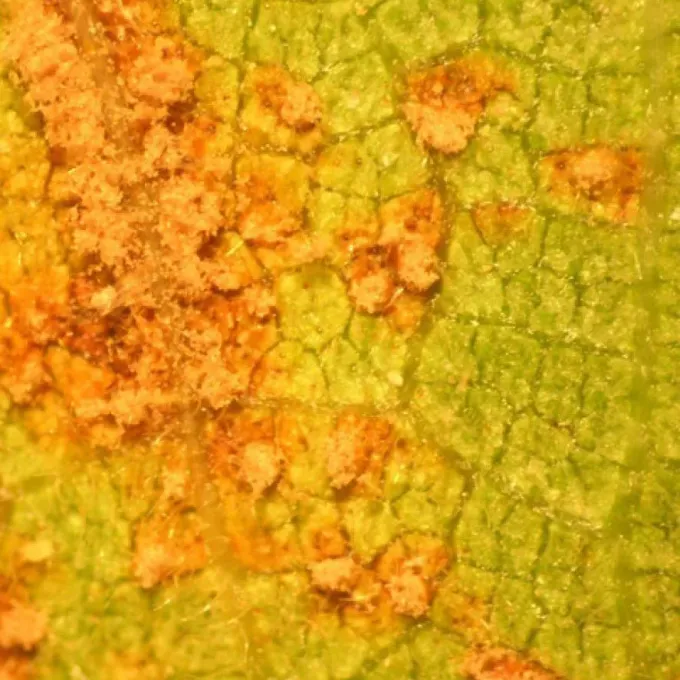
The primary symptom of Fig Rust is the appearance of tiny, yellowish-brown spots on the underside of the leaves.
As the disease progresses, these spots expand, darken, and develop a distinct rust-like coloration across the leaf surface.
Numerous small pustules containing fungal spores form on the lower leaf surface, eventually bursting through the epidermis.
Infected leaves often turn yellow, wither, and drop prematurely, which significantly weakens the overall vitality of the fig tree.
Severe infestations lead to defoliation, which hampers the tree's ability to produce quality fruit and prepare for dormancy.
Pathogen
The disease is caused by the fungus Cerotelium fici, also historically known as Uredo ficina, which belongs to the Basidiomycota phylum.
This pathogen is an obligate parasite that relies on the fig tree for survival, producing spores that travel via wind or water droplets.
The fungus overwinters in fallen leaf litter, acting as a primary reservoir for the infection cycle during the following growing season.
The biological cycle involves the production of urediniospores that allow for rapid secondary infections under favorable environmental conditions.
The fungus is highly specialized, meaning it concentrates its efforts on specific metabolic pathways within the fig plant tissue.
Conditions for development
Fig Rust thrives in environments characterized by high humidity, frequent rain, and warm temperatures during the growing season.
Prolonged leaf wetness caused by heavy morning dew or frequent overhead irrigation provides ideal conditions for spore germination.
Poor air circulation within the tree canopy, often resulting from a lack of proper pruning, facilitates the development of the disease.
Densely planted orchards hinder the drying process of the foliage, allowing the pathogen to spread rapidly between adjacent trees.
The peak of disease activity is typically observed in mid-to-late summer when the weather becomes sufficiently warm and humid.
Why it matters
The most significant impact is the premature loss of foliage, which disrupts the photosynthetic process of the fig tree.
Reduced photosynthetic capacity leads to stunted fruit development and lower overall crop yields throughout the season.
Weakened trees are less capable of storing adequate energy reserves, making them more susceptible to cold stress during winter months.
Constant defoliation weakens the structural integrity and health of the tree over several years, leading to decreased life expectancy.
Commercial producers face financial losses due to the unsightly appearance of infected leaves and the subsequent decline in fruit quality.
Protection
Sanitation is the most effective preventative measure; all fallen leaves should be raked and destroyed to remove fungal overwintering sites.
Proper pruning is essential to improve airflow throughout the canopy, ensuring leaves dry quickly after rainfall or irrigation.
When necessary, apply approved copper-based fungicides or appropriate systemic treatments to manage existing infections.
- Application of Bordeaux mixture during early dormant stages.
- Monitoring the foliage regularly to detect the first rust spots.
- Avoiding overhead watering to keep leaf surfaces as dry as possible.
Maintaining balanced tree nutrition can help the plant better withstand the stress caused by fungal infections during the season.
Discussion
No discussions yet — be the first.