
Tulostoma melanocyclum
Tulostoma melanocyclum
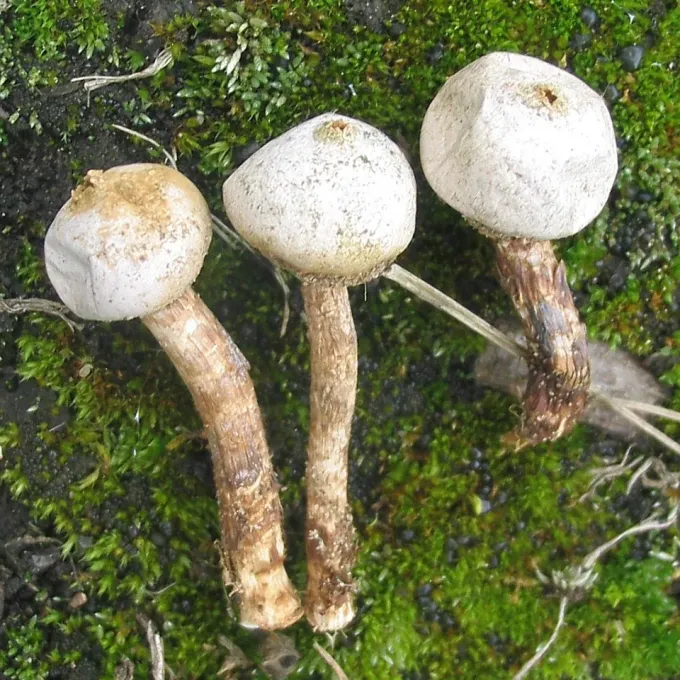
Description
Symptoms
Tulostoma melanocyclum, commonly known as a type of stalked puffball, is a member of the Agaricaceae family. It is characterized by a small, spherical fruiting body perched atop a distinct, elongated stalk.
The most diagnostic feature of this fungus is the presence of a dark, often black-colored ring surrounding the mouth (peristome) at the top of the head, through which spores are dispersed.
The fruiting bodies are often partially buried in sand or dry soil. The stalk can be fibrous or scaly, providing structural support in the sandy environments where the fungus thrives.
Crucially, this organism does not exhibit any symptoms typical of plant diseases, such as leaf spots, wilting, necrosis, or systemic decay in agricultural crops.
Visually identifying the fungus is simple due to its unique shape, but it is important to note that its presence is solely a reflection of soil conditions, not plant infection.
Pathogen
The organism, Tulostoma melanocyclum, is a fungus, but it is not classified as a plant pathogen. It does not cause diseases in agricultural or horticultural crops.
It functions as a saprotroph, which means it obtains nutrients by decomposing dead organic matter within the soil profile. It does not interact with or penetrate the living tissues of crops.
The biological lifecycle consists of a vegetative mycelium stage dwelling in the substrate and the production of fruiting bodies for reproduction, independent of plant physiology.
This fungus possesses no mechanisms for host invasion, toxin production, or vascular disruption, confirming its status as a non-pathogenic inhabitant of the soil.
Within agricultural science, it is considered a neutral member of the soil microbiome, posing no threat to yield or plant health.
Conditions for development
The fungus favors habitats with open, exposed, and sandy soil surfaces. These environments are typically characterized by low organic content and high solar exposure.
Development is highly optimized for arid and semi-arid climates. The species has evolved to tolerate the harsh, dry conditions where many other fungal species would fail to colonize.
Wind is the primary vector for spore dispersal. Spores travel across agricultural landscapes, landing on suitable soil types where they wait for moisture triggers to germinate.
The fungus is frequently observed on disturbed ground, dunes, and dry pastures. It thrives in locations where competition from dense vegetation is naturally limited.
Fruiting body emergence typically occurs during periods of fluctuating moisture, common in late summer and autumn, which helps the fungus complete its reproductive cycle.
Why it matters
Tulostoma melanocyclum poses no harm to agricultural production. It is not a parasite, and therefore, it causes zero economic loss to farmers or growers.
The fungus does not infect roots, stems, or foliage of commercial crops. It does not negatively impact crop quality, shelf life, or overall harvest volume.
Its existence in the field is a sign of a functioning ecosystem where organic matter is being broken down, which is often a beneficial or neutral process.
There is no risk of epidemic spread, as the fungus is strictly adapted to its saprotrophic niche and does not switch to a pathogenic lifestyle on crops.
Labels of "disease" or "pest" applied to this organism are factually incorrect and stem from misidentification of a harmless soil fungus.
Protection
There are no control measures or protection strategies for Tulostoma melanocyclum, as it does not constitute a threat to plant health.
Application of fungicides or chemical treatments targeting this fungus is entirely unnecessary, wasteful, and potentially harmful to beneficial soil microbiota.
If the physical presence of the fruiting bodies is undesirable in a managed landscape, manual removal is the only practical approach, although it is not required for crop protection.
Preventative measures are irrelevant, as the fungus is not a target for disease management programs in any agricultural protocol.
Resources should be prioritized toward managing actual pathogens and weeds that influence crop yield and economic sustainability.
Discussion
No discussions yet — be the first.