
Fringed Tulostoma
Tulostoma fimbriatum
Description
Symptoms
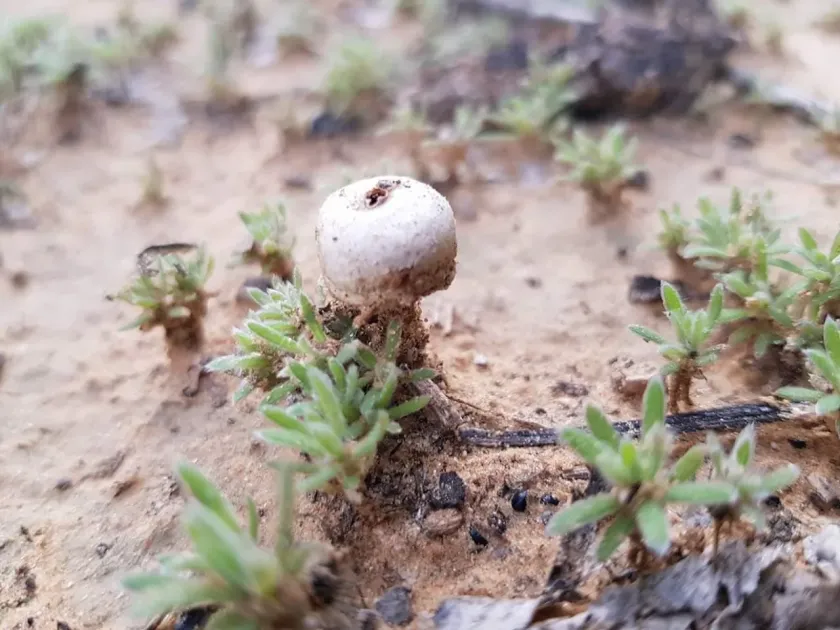
Fringed Tulostoma, known scientifically as Tulostoma fimbriatum, is a stalked puffball fungus. Its physical structure consists of a spherical spore-bearing head mounted atop a firm, cylindrical stalk.
A distinctive morphological feature of this species is the apical pore (stoma) on the top of the head, which is surrounded by a clear, fringed margin. This characteristic is essential for identifying the species.
The color of the fruiting body typically ranges from off-white to ochre or light brown. The outer layer of the head is quite durable, allowing the fungus to survive in various moisture conditions.
As the fungus matures, the internal spore mass turns into a fine powder. These spores are dispersed through the apical pore, triggered by raindrops or physical contact with the fruiting body.
The mycelium of the fungus develops hidden within the soil substrate, making it virtually impossible to observe without microscopic analysis until the fruiting bodies emerge.
Pathogen
It is critical to state that Fringed Tulostoma is not a plant pathogen. It is a saprotrophic fungus that derives its nutrition from decaying organic matter in the soil rather than living plants.
Classified under Basidiomycota, this fungus lacks the pathogenic mechanisms required to invade or damage living plant tissues. It does not induce wilting, rot, or any form of plant disease.
The biological role of this organism is to act as a decomposer, breaking down dead plant material and returning nutrients to the soil ecosystem, which supports soil fertility.
Labeling this species as a disease of crops is a biological error. Its presence in agricultural fields is entirely harmless to the growth and development of cultivated plants.
The fungus lacks the specialized traits found in parasites, and its lifecycle is fully adapted to the decomposition of non-living organic substrates.
Conditions for development
Fringed Tulostoma thrives in open, sunny environments with well-drained, often sandy soils. It is frequently found in pastures, meadows, and areas with sparse vegetation.
The development of fruiting bodies is largely dependent on moisture. Rainfall following a dry spell often triggers the emergence of these structures, as the fungus responds to increased soil humidity.
This species is highly adapted to fluctuating temperatures, allowing it to survive in arid or semi-arid climatic zones where soil moisture can be ephemeral.
Spore dissemination relies on wind and mechanical impact. The mycelium remains dormant in the soil, colonizing organic debris effectively under suitable environmental conditions.
Anthropogenic disturbance, such as intensive tillage or heavy chemical applications, can influence the local population of this fungus, though it usually recovers in undisturbed soil patches.
Why it matters
Fringed Tulostoma causes no harm to agricultural production. There is no record of this fungus damaging crops, infecting plant roots, or reducing yields in any agricultural system.
The economic impact of this fungus is negligible, as it does not compete with crops for resources nor does it cause any physiological distress to cultivated vegetation.
There is no phytosanitary concern associated with this organism. It is a neutral participant in the field's microbial community, contributing to nutrient cycling processes.
Farmers do not need to take action against this fungus, as it is a natural component of the soil biota and poses zero threat to harvest quality.
Its role as a decomposer can be considered indirectly beneficial, as it contributes to the breakdown of harvest residues, helping to maintain soil structure and organic content.
Protection
There are no control measures for Fringed Tulostoma, as it is not a pest or a disease. The use of fungicides or other chemical treatments would be scientifically and economically unjustified.
Agronomic efforts should be focused exclusively on managing actual pathogens. Standard cultural practices, such as crop rotation and soil aeration, are sufficient to manage field health.
If a large amount of fungal activity is noticed, it is advisable to differentiate between beneficial or neutral saprotrophs like Tulostoma and actual plant diseases.
No quarantine or field restrictions are required for this species. It is an innocuous part of the landscape and does not interfere with standard farming operations.
For sustainable agriculture, it is important to recognize common saprotrophic fungi to avoid unnecessary environmental contamination from the overuse of chemical treatments.
Discussion
No discussions yet — be the first.