
Tubulicrinis regificus
Tubulicrinis regificus
Description
Symptoms
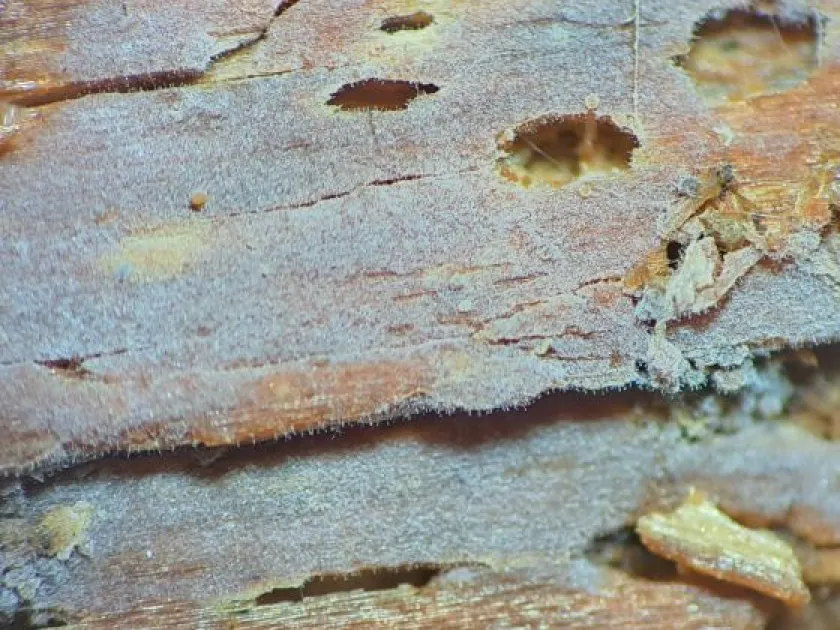
The most visible sign of Tubulicrinis regificus is the presence of its pale, thin fungal crusts on the surface of bark or decaying wood. These structures may appear textured or granular upon close inspection.
Internal symptoms include the discoloration of the wood tissue. As the fungus consumes the cellular structure, the wood softens and loses its mechanical strength, often showing signs of internal rot.
Trees affected by advanced decay may show physiological symptoms in the crown, such as thinning needles or a general decrease in foliage density, as the tree’s water-conducting systems begin to fail.
External identification is frequently complicated because the fungus often develops in hidden niches, such as under loosened bark or within deep crevices on the stem.
Resin flow or bleeding can sometimes be observed on the exterior of the bark near the infection site, representing the tree's attempt to compartmentalize the fungal invasion.
Pathogen
Tubulicrinis regificus is a wood-inhabiting fungus that belongs to the order Hymenochaetales. It is known to colonize various conifer species, contributing to the decomposition of dead or weakened woody tissues in forest ecosystems.
The pathogen produces small, resupinate (crust-like) basidiocarps that are often difficult to identify in the field. These structures serve as the primary source of spore production, allowing the fungus to spread across the forest environment.
Biologically, the fungus utilizes specialized enzymes to break down lignin and cellulose within the host wood. This process effectively cycles nutrients back into the ecosystem, though it can be detrimental when it affects living commercial trees.
The life cycle of the pathogen is sensitive to moisture availability. It thrives when environmental conditions allow for prolonged humidity on the surface of the bark, facilitating the germination of basidiospores.
It is often categorized as a secondary pathogen, frequently establishing itself in areas where the tree's natural defenses have been compromised by environmental stress or previous mechanical damage.
Conditions for development
The growth of Tubulicrinis regificus is highly dependent on humidity levels. Persistent moisture in the wood or high atmospheric humidity provides the ideal climate for colonization and mycelial expansion.
Temperature plays a crucial role in its development, with the fungus favoring moderate climates that characterize the growing seasons in temperate coniferous forests.
Mechanical injuries—such as frost cracks, damage from logging equipment, or animal feeding—provide easy entry points for fungal spores to bypass the tree's external protective barriers.
High forest stand density can limit airflow and increase humidity around tree trunks, creating a favorable microenvironment for the accumulation and spread of fungal spores.
Poor site drainage and waterlogging significantly stress trees, reducing their ability to resist colonization by wood-decay fungi, making them more susceptible to persistent infection.
Why it matters
The primary concern regarding Tubulicrinis regificus is the degradation of timber quality. Infected wood loses its structural integrity, making it unsuitable for high-value construction applications.
As the fungal decay progresses, the tree becomes significantly more susceptible to windthrow and stem breakage, which can cause substantial damage to surrounding vegetation in a forest stand.
Economic losses are common in forestry sectors, as affected trees often require premature removal through sanitation logging, disrupting the intended harvest cycle and resource management plans.
The presence of the fungus weakens the host tree, making it an easier target for secondary infestation by bark beetles and other wood-boring insects, further accelerating tree mortality.
Left unchecked, an infection site can become a source of inoculum that spreads to nearby trees, gradually increasing the scale of the damage across the affected forest area.
Protection
Sanitation logging is the primary method for controlling the spread of the pathogen. Removing infected wood from the stand quickly prevents further spore dispersal and reduces the overall inoculum load.
Implementing measures to avoid physical damage during forest management operations is essential, as maintaining intact bark is the best defense against fungal invasion.
Regular forest health monitoring and inventory surveys help detect early signs of fungal crusts, allowing managers to address localized infections before they become widespread problems.
Applying protective agents to logging stumps or pruning wounds can serve as an effective physical or chemical barrier, preventing opportunistic fungi from colonizing exposed wood.
Forest stand improvement, such as thinning to ensure proper aeration and sunlight exposure, helps maintain tree vigor and creates less favorable conditions for wood-decay fungi to establish.
Discussion
No discussions yet — be the first.