
Tubaria hiemalis
Tubaria hiemalis
Description
Symptoms
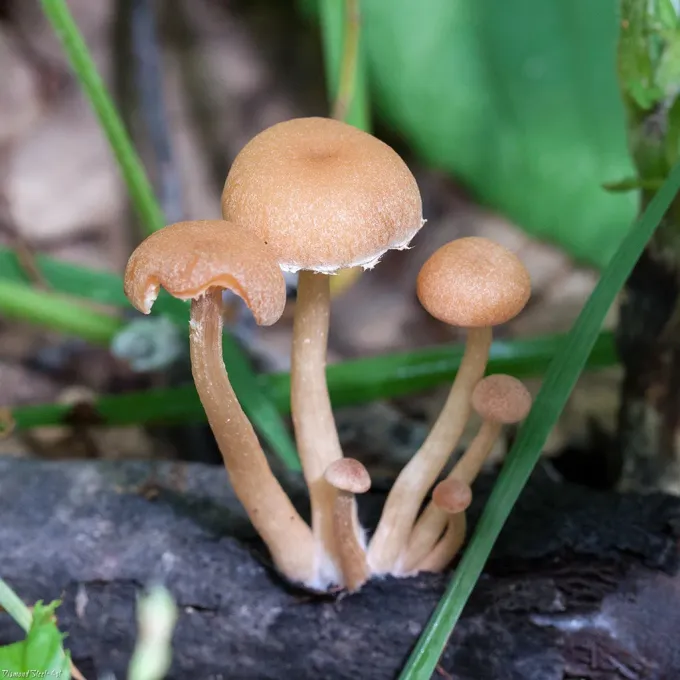
The most visible sign of Tubaria hiemalis is the appearance of small, cap-shaped fruiting bodies. These caps typically measure 1 to 4 cm in diameter and display ochre to reddish-brown hues.
The gills beneath the cap are crowded and typically adnate or slightly decurrent. The stem is slender, fibrous, and often adorned with a white, powdery bloom, serving as a diagnostic trait.
Affected woody substrates undergo gradual structural degradation. The wood becomes brittle, soft, and takes on a bleached or lightened color as lignin and cellulose components are broken down.
In humid conditions, mycelial mats may become visible within the cracks or underneath the loose bark of the colonized wood, indicating an active state of decomposition.
- Fruiting bodies appearing on fallen twigs or decaying wood.
- Visible whitening and softening of the wood tissue.
- Brittle structure in the affected branch or stump.
- Presence of fine fungal hyphae in decaying organic matter.
Pathogen
Tubaria hiemalis, commonly known as the winter twiglet, is a species of fungus in the Tubariaceae family. It is strictly a saprobic organism, meaning it derives nutrients from non-living organic matter.
Unlike parasitic fungi that attack living host tissues, this species focuses its biological activity on the breakdown of dead wood, utilizing enzymatic pathways to digest complex plant polymers.
The biological lifecycle of the fungus is well-adapted to cooler climates. It exhibits significant growth and reproductive activity during late autumn and winter months, hence its common name.
Propagation is facilitated by the dispersal of basidiospores through the air. Once these spores land on a suitable deadwood substrate, they germinate to form a mycelial network.
The fungus is fundamentally a decomposer. Its presence in an orchard or forest environment is a natural part of the nutrient cycling process rather than a sign of a pathological condition.
Conditions for development
The development of Tubaria hiemalis is highly moisture-dependent. It thrives in environments with consistent humidity, particularly during wet autumn and winter seasons.
A temperature range between 5°C and 15°C provides the optimal environment for the mycelium to expand and decompose the substrate effectively.
The availability of dead organic material, such as fallen branches, wood chips, or decaying stumps, is the primary requirement for the fungus to establish its population.
Poor ventilation and constant shading in dense plantations or thickets create a microclimate that retains sufficient moisture for the fungus to maintain year-round activity.
The absence of competing wood-decaying species during the cold season allows this fungus to efficiently occupy and utilize the available woody resources.
Why it matters
From an agronomic perspective, Tubaria hiemalis is not considered a crop pathogen. It does not possess the mechanisms required to invade or damage healthy, living plant tissues.
The fungus plays an ecological role in recycling nutrients by accelerating the decomposition of dead plant materials, which effectively converts organic debris into soil nutrients.
While the fungus itself does not threaten crops, its presence can sometimes be an indicator of poor orchard hygiene, as it requires dead wood to survive and grow.
In some contexts, the excessive retention of water in rotting wood colonized by the fungus could theoretically facilitate the survival of other, more aggressive pathogens.
No direct economic damage to produce or tree health is attributed to this species, as it exclusively feeds on already dead and decaying organic matter.
Protection
Specific control measures for Tubaria hiemalis are generally unnecessary. Management practices focus on maintaining overall sanitation to prevent the accumulation of dead wood.
Clearing away fallen branches, decaying wood debris, and old stumps will effectively remove the substrate required for the fungus to thrive and produce fruiting bodies.
Implementing proper pruning techniques to maintain good airflow through tree canopies prevents the buildup of excess moisture that might otherwise encourage fungal growth.
If wood decay is found on valuable ornamental or fruit trees, regular wound maintenance and the application of protective sealants can help prevent colonization by any fungal species.
Encouraging tree health through proper fertilization and irrigation helps ensure that trees remain resistant to stressors, thereby minimizing the amount of dead wood available for colonization.
Discussion
No discussions yet — be the first.