
Tubaria conspersa
Tubaria conspersa
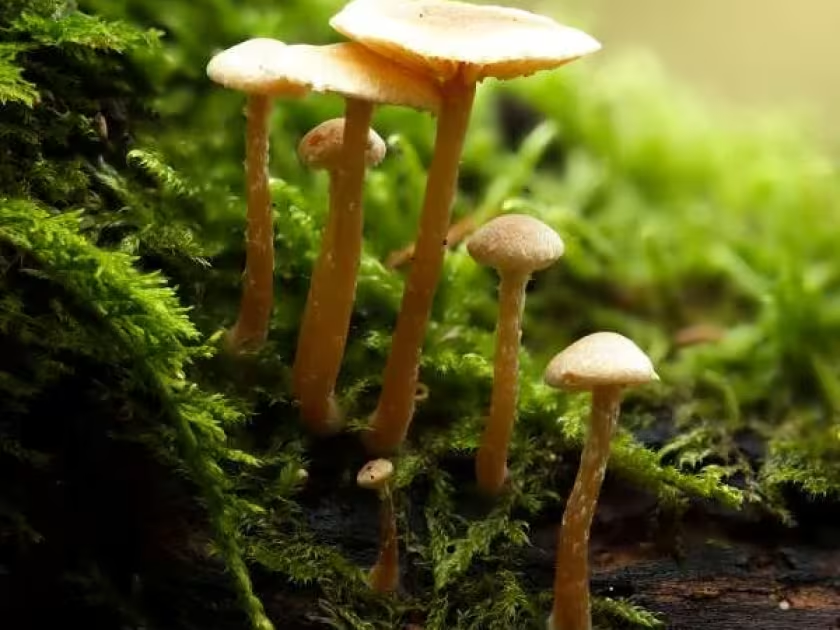
Description
Symptoms
The external presence of the fungus is identified by the formation of small fruit bodies on the substrate. The caps are ochre or brownish with a characteristic scaly texture.
During the early stages of development, the mycelium remains largely invisible as it deeply penetrates the wood fibers. Eventually, small lamellate fruit bodies emerge on the surface.
Signs of its activity are often confused with pathogenic plant diseases; however, Tubaria conspersa is strictly localized to necrotic or dead plant tissues, which serves as a key diagnostic feature.
The presence of this fungus often indicates excessive moisture and organic waste accumulation on the site. Fruit bodies typically appear in clusters on dark, damp substrates.
- Formation of ochre-colored fruit bodies.
- Presence of scales on the cap (especially in young specimens).
- Growth on rotting wood or organic mulch.
- Localization strictly on dead plant tissues.
Pathogen
Tubaria conspersa is a fungus belonging to the order Agaricales. In mycological terms, this organism is not a phytopathogen that attacks living plant tissues but is classified as a saprotrophic fungus.
The primary habitat of this species includes decaying wood, fallen branches, and forest soils rich in organic matter. The fungus plays an active role in the humification process by breaking down cellulose and lignin.
The biology of the organism involves mycelial development within a substrate, feeding on dead organic matter. Unlike parasitic fungi, it lacks the enzymatic capabilities to aggressively penetrate healthy living plant cells.
Microscopically, the fungus is characterized by specific spores and a distinct hyphal structure. Dispersal primarily occurs through the release of basidiospores carried by air currents during periods of high humidity.
From an agronomic perspective, this species is considered an indicator of soil status and organic residue accumulation rather than a threat to crop yields.
Conditions for development
Active development and fruiting of the fungus require stable, high humidity levels in both the substrate and the air. The optimal temperature range for mycelial growth is between +12 and +20 degrees Celsius.
The fungus prefers shaded areas protected from intense direct sunlight, which would otherwise lead to rapid desiccation of the substrate surface.
An abundance of accessible carbon sources, such as decaying wood or plant litter, is essential for the completion of the life cycle and spore formation.
In agricultural settings, distribution is often promoted by the use of poorly composted organic fertilizers or leaving harvesting residues in the field.
Common habitats include damp tree root zones, mulched areas, or field margins where organic matter accumulates over time.
Why it matters
Tubaria conspersa poses no direct harm to cultivated crops. The organism acts as a decomposer, assisting in the cleaning of soil from dead organic material.
Indirect harm may occur if the presence of the fungus signals poor agricultural practices, such as excessive rotting organic matter, which can foster more dangerous pathogens.
Mass reproduction of the fungus may suggest underlying problems with drainage and soil aeration, which can stress the root systems of many cultivated plants.
In certain instances, intense saprotrophic activity can lead to temporary nitrogen deficiency in the soil as microorganisms consume nitrogen to facilitate cellulose degradation.
Consequently, the primary concern is the environmental condition that allows the fungus to thrive, rather than its impact as a direct plant disease.
Protection
Specialized chemical protection methods are unnecessary since the species is not a parasite. Management primarily involves following sanitary practices within the site.
Timely removal of plant debris, branches, and decaying wood from the soil surface is recommended to eliminate the fungal food source and prevent mass reproduction.
Improving soil aeration and ensuring effective drainage are critical preventative measures to avoid excessive moisture accumulation in the root zone.
When using mulch, it is important to monitor its quality and thickness to prevent the creation of anaerobic conditions that favor fungal growth.
If fruit bodies appear, they can be mechanically removed along with a portion of the affected substrate to reduce the spore load on the site.
Discussion
No discussions yet — be the first.