
Tubaria
Tubaria
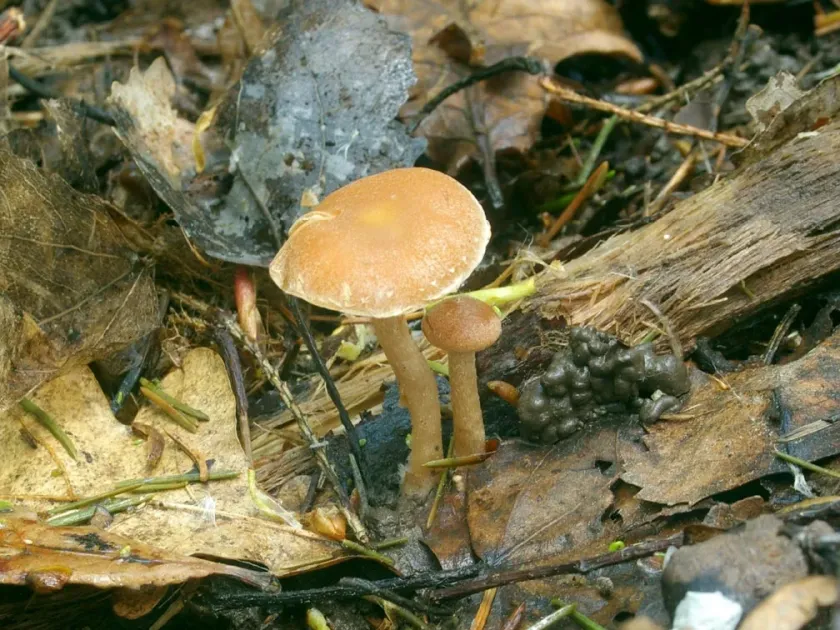
Description
Symptoms
The most visible signs of Tubaria are their small, often ochre or rust-brown colored fruiting bodies appearing on decaying matter.
Microscopically, they are characterized by their lamellate (gilled) hymenophore, with gills typically running down the stem (decurrent).
The mycelium forms a white or yellowish mat under the surface of the substrate or within the decomposing plant material.
Fruiting bodies tend to emerge in small clusters or patches, particularly after periods of prolonged rainfall or in highly humid microclimates.
The presence of these mushrooms is often localized to areas with high concentrations of organic matter, such as wood chips, sawdust, or decaying roots.
Pathogen
Tubaria is a genus of fungi belonging to the Tubariaceae family. It is essential to clarify that these fungi are not plant pathogens and do not cause diseases in agricultural crops.
They are classified as saprotrophs, meaning they obtain nutrients by decomposing dead organic matter, such as wood, leaf litter, and other plant debris.
Through the secretion of enzymes, these fungi play a vital role in soil ecology by breaking down complex organic compounds like lignin and cellulose into simpler substances.
Tubaria does not possess any specialized infection structures, such as haustoria, which would be necessary to parasitize or damage living plant tissues.
Their presence is a biological indicator of active decomposition processes within the soil ecosystem or organic mulch layers.
Conditions for development
The development of Tubaria is heavily dependent on the availability of a suitable substrate, specifically dead wood or organic debris.
High moisture levels are critical for the survival of the mycelium and the emergence of fruiting bodies, making rainy seasons the peak time for their activity.
These fungi prefer shaded, cool, and wind-protected environments where evaporation is low and humidity remains stable.
Optimal temperatures for growth generally fall between 10 and 20 degrees Celsius, typical of spring and autumn climates.
Excessive use of thick organic mulch in gardens can create favorable conditions for their colonization if the layer remains constantly saturated.
Why it matters
Tubaria poses no direct harm to live agricultural crops, as it lacks the physiological capability to attack living plant structures.
However, intensive fungal activity in a thin layer of soil or mulch may cause minor temporary changes in soil nutrient availability due to the rapid metabolism of microorganisms.
In rare cases, dense colonization of organic mulch might influence the moisture-retention properties of the surface layer, which needs to be managed during irrigation.
There is no economic damage associated with this genus, and it should not be categorized as a threat to plant health.
Categorizing Tubaria as a plant disease is inaccurate and misleading in the context of agronomic practice.
Protection
Since Tubaria does not threaten crop yields, no chemical fungicides or special control measures are required or recommended.
General cultural practices, such as maintaining good aeration in mulch layers, can naturally limit the proliferation of these fungi if their presence is undesirable.
Improving soil drainage and preventing waterlogging of the upper soil layers will naturally decrease the suitability of the habitat for these fungi.
Routine cleaning of the garden to remove excessive rotting wood or old plant waste helps manage the overall ecological balance of the site.
Focusing on plant nutrition and health is the correct approach, as Tubaria is essentially harmless to the plants themselves.
Discussion
No discussions yet — be the first.