
Tubakiaceae
Tubakiaceae
Description
Symptoms
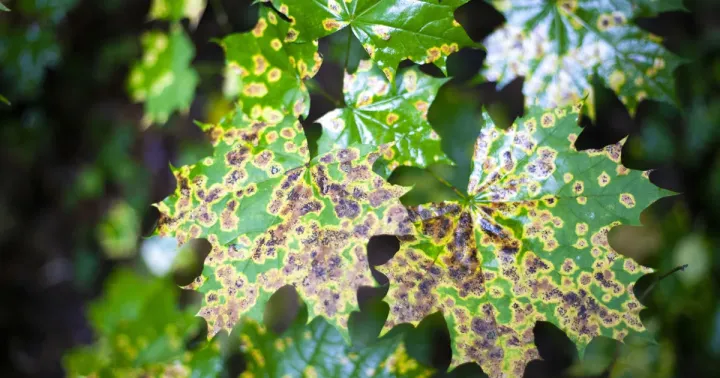
A key symptom of infection by Tubakia species is the appearance of distinct leaf spot symptoms on the foliage of affected crops.
The spots usually exhibit a circular or angular shape, often surrounded by a darker border or halo, which serves as a diagnostic feature.
In the center of the necrotic lesions, small black dots — the fungal fruiting bodies — eventually form and become visible to the naked eye.
Severe infection leads to premature yellowing and leaf drop, which significantly weakens the overall immunity and vigor of the plant.
In young saplings, the fungus can cause damage to shoots and branches, manifesting as localized bark necrosis and subsequent tissue dieback.
Pathogen
The Tubakiaceae family belongs to the order Diaporthales in the class Sordariomycetes. It consists of ascomycetous fungi that act as primary or secondary pathogens of woody plants and shrubs.
The family includes species previously classified within the genera Tubakia, Apiognomonia, and other closely related groups. These pathogens are characterized by their ability to form conidial stromata within host tissues.
The primary mode of reproduction is through conidia, which develop in specialized structures known as pycnidia or on sporodochia beneath the epidermis of infected plant parts.
The life cycle encompasses both asexual and sexual stages, which ensure the survival of the pathogen under extreme environmental conditions.
The biology of fungi in this family is closely linked to the seasonal development cycle of their host plants, making them active during vegetation periods.
Conditions for development
The development of fungal infections caused by the Tubakiaceae family is promoted by high humidity and moderately warm temperatures during the spring and summer.
The infection spreads actively via spores, which are disseminated by rain splash or wind currents from infected plants to healthy ones.
Weakened plants, suffering from nutrient deficiencies or drought-related stress, are the most susceptible targets for these pathogens.
The presence of fallen, infected leaf litter under tree canopies provides favorable conditions for fungal spores to overwinter and trigger re-infection the following spring.
Dense plantings with poor air circulation significantly accelerate the accumulation of inoculum in orchards and forests.
Why it matters
The damage caused by Tubakiaceae results in a systematic reduction of leaf assimilation area, leading to a decrease in photosynthetic efficiency.
During severe outbreaks, plants may lose a significant portion of their canopy, resulting in the depletion of energy reserves stored in the roots.
Prolonged infection by these pathogens makes woody plants more vulnerable to secondary pest infestations and other opportunistic diseases.
In nurseries, this infection can lead to the loss of commercial quality in seedlings and even total mortality of young trees if sanitary protocols are neglected.
The disruption of shoot maturation processes due to premature leaf loss reduces the winter hardiness of crops and their overall productivity in the subsequent season.
Protection
The primary method of prevention is the thorough collection and destruction of all plant debris, fallen leaves, and infected branches during the autumn.
Proper crown pruning is a critical practice, as it ensures adequate airflow and light penetration into the inner parts of a bush or tree.
The application of copper-based fungicides at the onset of vegetation significantly helps to suppress the initial development of spores on young leaves.
Balanced application of mineral fertilizers, particularly potassium and phosphorus, helps to boost crop resilience against Tubakiaceae infections.
- Thinning out dense plantings
- Disinfection of pruning tools
- Treatment with systemic fungicides at the first sign of symptoms
Discussion
No discussions yet — be the first.