
Tubakia leaf spot
Tubakia suttoniana
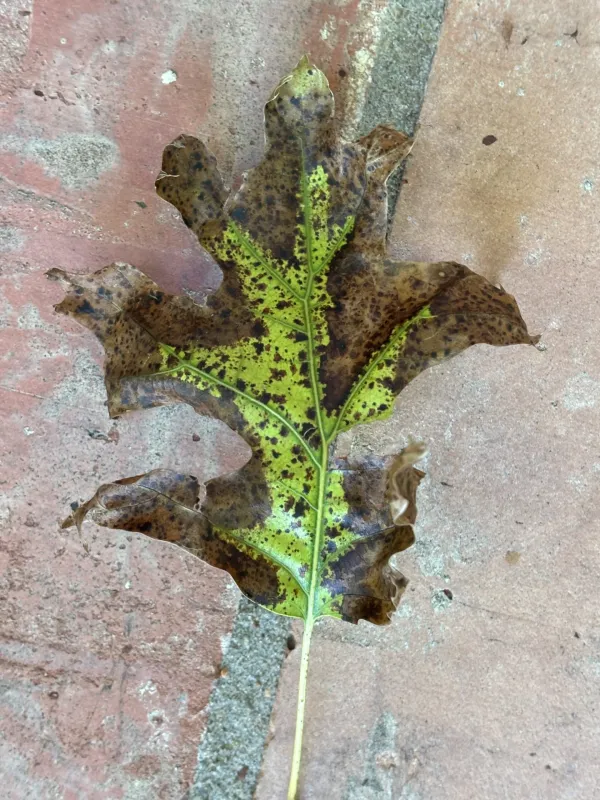
Description
Symptoms
The primary symptoms manifest as brown, reddish-brown, or tan spots on the leaves. These lesions can vary in shape from angular to irregular depending on the host species.
As the infection advances, these spots frequently enlarge and coalesce, potentially causing necrosis of entire leaf sections or leaf margins.
Tiny black fruiting bodies, known as acervuli, appear on the underside of infected leaves, typically within the dead tissue of the spots, visible with a magnifying lens.
Premature leaf drop is a hallmark of severe infection. By late summer, heavily infested trees may appear sparse as foliage falls prematurely due to the disease.
- Irregular brown or reddish leaf lesions
- Chlorotic halos around necrotic spots
- Premature defoliation in late summer
- Visible fungal structures on leaf undersides
Pathogen
The disease is caused by the fungal pathogen Tubakia suttoniana. It is a specialized fungus that targets the foliage of various oak species, leading to aesthetic and physiological damage.
Classified as a leaf spot fungus, the pathogen persists as mycelium in fallen leaves and on small twigs, serving as a primary reservoir for the next growing season.
The life cycle is closely synchronized with the phenology of the oak tree. As temperatures rise in spring, spores are released and disseminated via splashing rain and wind.
This fungus produces conidia, which are responsible for the secondary cycles of infection throughout the summer, often worsening as the season progresses.
Proper identification usually involves laboratory diagnostics, as several other pathogens cause similar leaf spot symptoms on oak trees, necessitating expert verification.
Conditions for development
High humidity and consistent rainfall are the most critical factors for Tubakia suttoniana proliferation. Wet conditions enable spores to germinate and penetrate the leaf cuticle.
Oaks that are stressed by drought, poor soil quality, or mechanical damage are significantly more susceptible to colonization by this opportunistic pathogen.
Dense canopies with poor air circulation retain moisture longer, creating a microenvironment that facilitates rapid disease spread within the tree crown.
Optimal temperatures for fungal growth generally fall between 18°C and 25°C, making warm and wet summers the peak period for infection development.
Lack of sanitation in the garden or forest, specifically failing to remove leaf litter, significantly increases the inoculum pressure for subsequent years.
Why it matters
By causing premature defoliation, the fungus reduces the tree's photosynthetic capacity, which is essential for carbohydrate production and storage.
Chronic annual infection weakens the tree's overall vigor, potentially leading to stunted growth and reduced annual shoot elongation over several years.
A weakened tree becomes more susceptible to secondary environmental stresses, including winter injury, bark beetles, and other opportunistic woody plant diseases.
The aesthetic value of specimen oaks is drastically reduced when the canopy thins prematurely, which is a major concern for landscape and park management.
In nursery settings, heavy infestations can result in significant economic losses, as saplings may fail to meet quality standards due to stunted growth and disfigurement.
Protection
Sanitation is the most effective cultural control; raking and disposing of all fallen leaves under infected trees removes the primary source of overwintering inoculum.
Pruning to improve canopy ventilation can significantly reduce the moisture levels within the foliage, making the environment less hospitable to fungal growth.
Fungicidal applications, particularly those containing copper, can be used as a preventative measure if applied in early spring when the new foliage is emerging.
Maintaining tree health through proper irrigation during droughts and balanced fertilization helps the tree develop natural defenses against the pathogen.
Monitoring the canopy regularly allows for early detection, enabling arborists to implement management strategies before the infection becomes severe or widespread.
Discussion
No discussions yet — be the first.